Spark Accelerator 2025 cohort revealed
Five bold solutions selected to go from pilot to scale taking on big problems affecting children's lives
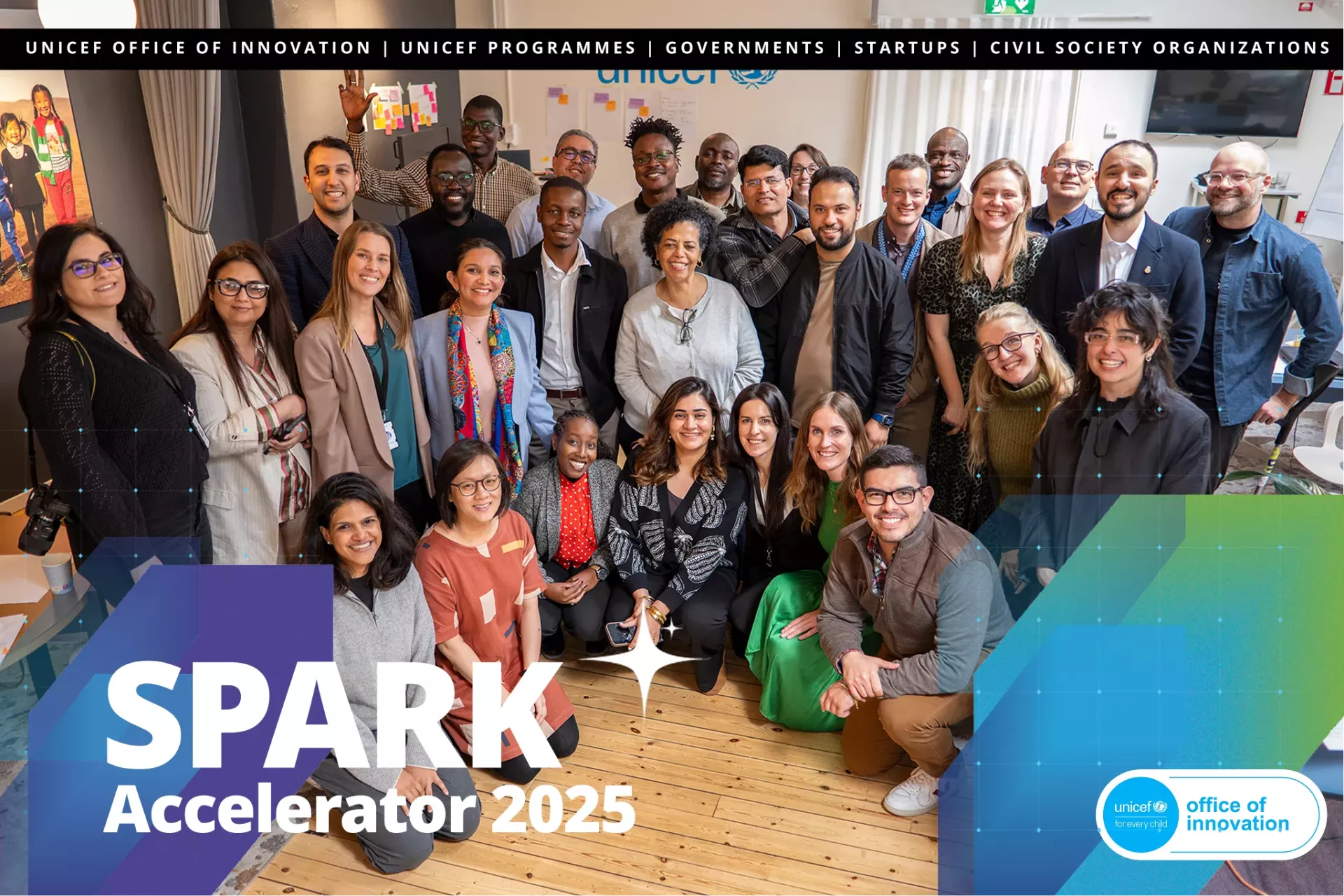
At UNICEF, the true measure of innovation is whether it improves children’s lives. The Spark Accelerator’s mission is to identify promising solutions that work for children and their communities, test them on the ground, and scale them. Through these investments, UNICEF backs the power of local, country-led innovation to drive system-wide change and create lasting change for millions of children.
In response to a call for applications addressing healthcare, climate change, environmental degradation and disasters, 146 proposals from 72 countries were submitted. From a shortlist of eight promising solutions, Spark Accelerator 2025 selected five transformative initiatives to receive funding and mentorship from global experts. These country-focused and led solutions were designed and tested in response to urgent needs — climate resilience, community health, WASH, and sustainable energy access — each with a clear pathway to achieve impact at scale.
“This year’s Spark teams aren’t just solving big problems; they’re rethinking the systems behind them. In a world where SDG progress must accelerate four-fold, their bold innovations show that real change starts with promising pilots, built from the community up.”
Thomas Davin, Director, UNICEF Office of Innovation

With time, funding, and technical support, these bold solutions will be developed and adapted for national systems, building the evidence and partnerships needed to replicate their impact across 10 countries.
Spark Accelerator 2025 is an illustration of organization-wide collaboration to foster a culture of innovation and entrepreneurship with a shared purpose to accelerate results for children. It’s the result of multidisciplinary expertise across the UNICEF Programme Group, coordination by the Office of Innovation and engagement from country and regional office teams and their service partners.
The five solutions sparking impact for children at scale are;
Climate Resilience: MOZN (Libya)
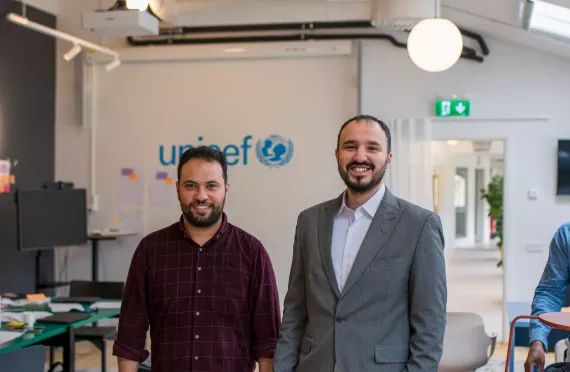
Mozn is Libya’s first youth-led, artificial intelligence (AI)-powered early warning system. It delivers real-time alerts from 45 weather stations, with 100,000 active users and 900,000 followers, and has cut emergency response times by up to 70 per cent. By adding critical hours for action, Mozn enables life-saving interventions for children and communities. In partnership with UNICEF Libya, and Roaya Foundation, Mozn aims to scale nationally to reach 7.6 million people, grow to 1 million active users, strengthen regional capacity, and build a replicable open-source model.
Community Healthcare: HeLPS-NET (The Islamic Republic of Iran)
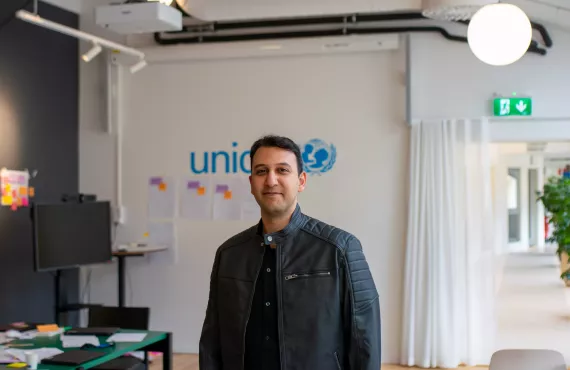
HeLPS-NET is digitizing Iran’s community health engagement within the primary health system, providing AI-driven insights for more than 40,000 health workers and 400,000 volunteers. By connecting government decision-makers to real community needs, it enables more responsive and equitable care across more than 1,000 communities with urgent health needs. In partnership with UNICEF Iran and the Ministry of Health, the team aims to scale to equip an additional 400,000, mostly female, health workers with digital tools by 2027, and set a global standard for gender-equitable, data-driven community health.
Frontier Tech: Map Action (Mali)
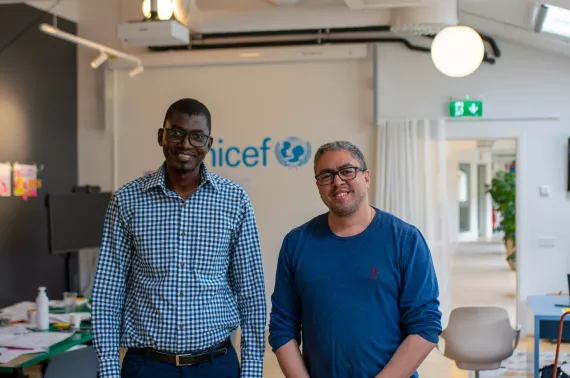
UNICEF Mali is rolling out Map Action, an open-source platform that turns citizen-submitted environmental reports (photos, voice, or text) into real-time, geo-tagged insights using AI, natural language processing, and speech recognition. Communities, even in low-connectivity and multilingual settings, can report incidents offline through a mobile app, while a dashboard ensures faster, more transparent responses. In partnership with UNICEF Mali, Map Action aims to become West Africa’s leading civic tech platform for environmental resilience, reaching 250,000 people in Mali by 2026. The initiative will shift environmental management from reactive to proactive, strengthen resilience in vulnerable communities, and provide a scalable model for replication across the region.
Safe Sanitation: Fresh Life (Kenya)
Fresh Life operates a waterless, climate-resilient sanitation network in dense, underserved urban areas, safely managing waste through a circular system that protects both public health and water sources. The affordable, scalable service already reaches nearly 300,000 people daily. With Spark’s support, and in partnership with UNICEF Kenya, Fresh Life aims to expand coverage by 40 per cent within five years and build a citywide network embedded in public systems, creating an enabling environment for the national adoption of inclusive, climate-smart sanitation.

Renewable Energy: Solar Schools – Project Alpha (Pakistan)
With support from Spark, UNICEF Pakistan and Pakistan’s Ministries of Education and of Climate Change are scaling solar energy in schools nationwide, building on a pilot that reached 78,000 students in 425 education centers. Through Project Alpha’s innovative financing model using Renewable Energy Credits (RECs), schools generate clean energy while sustaining operations through climate-linked revenues. The goal is to expand to 725 schools, providing 110,000 children with climate-resilient learning environments that keep education running through power outages and extreme weather.

Keep the spark alive
Now, each team receives funding and nine months of mentorship to refine their solutions, build evidence, and integrate them into national systems. Too often, innovations fail at this stage — the “missing middle” between a proven pilot and large-scale adoption. Spark 2.0 is designed to close that gap, but success depends on partnership. By connecting innovators with decision-makers, funders, and implementers, UNICEF can help proven solutions go further, faster. We invite you to share their stories, explore their potential, and join the movement to scale impact for every child.
For more information, contact Elinor Samuelsson, Spark Lead, UNICEF Office of Innovation.