AI in Play at SXSW 2027
Vote for us
The pitch
Most AI is built for a world of reliable connectivity, powerful devices, and constant cloud access. Billions of children do not live in those conditions, and that's exactly where UNICEF and Arm are building.
We've submitted a session to SXSW 2027, and we need your vote to make it happen.
The session
In Laos, AI is reading the air a child breathes before she does. In Colombia, an app is helping a child sound out her first word, offline, on an ordinary phone. These aren't concepts. This is AI that works offline, on affordable devices, responding to local needs.
At SXSW 2027, UNICEF and Arm want to bring these stories to the stage, then open up the harder conversation: where should AI actually run? Whose needs should shape it? And what does meaningful scale look like for children?
Why this matters
AI is being built at extraordinary speed, but mostly for people who already have the infrastructure to use it. Impactful AI models run on the edge, on low-cost devices, in classrooms and clinics where connectivity is uneven and limited. Billions of children and young people live in exactly these conditions where edge AI is the best, and sometimes only, solutions not a niche use case.
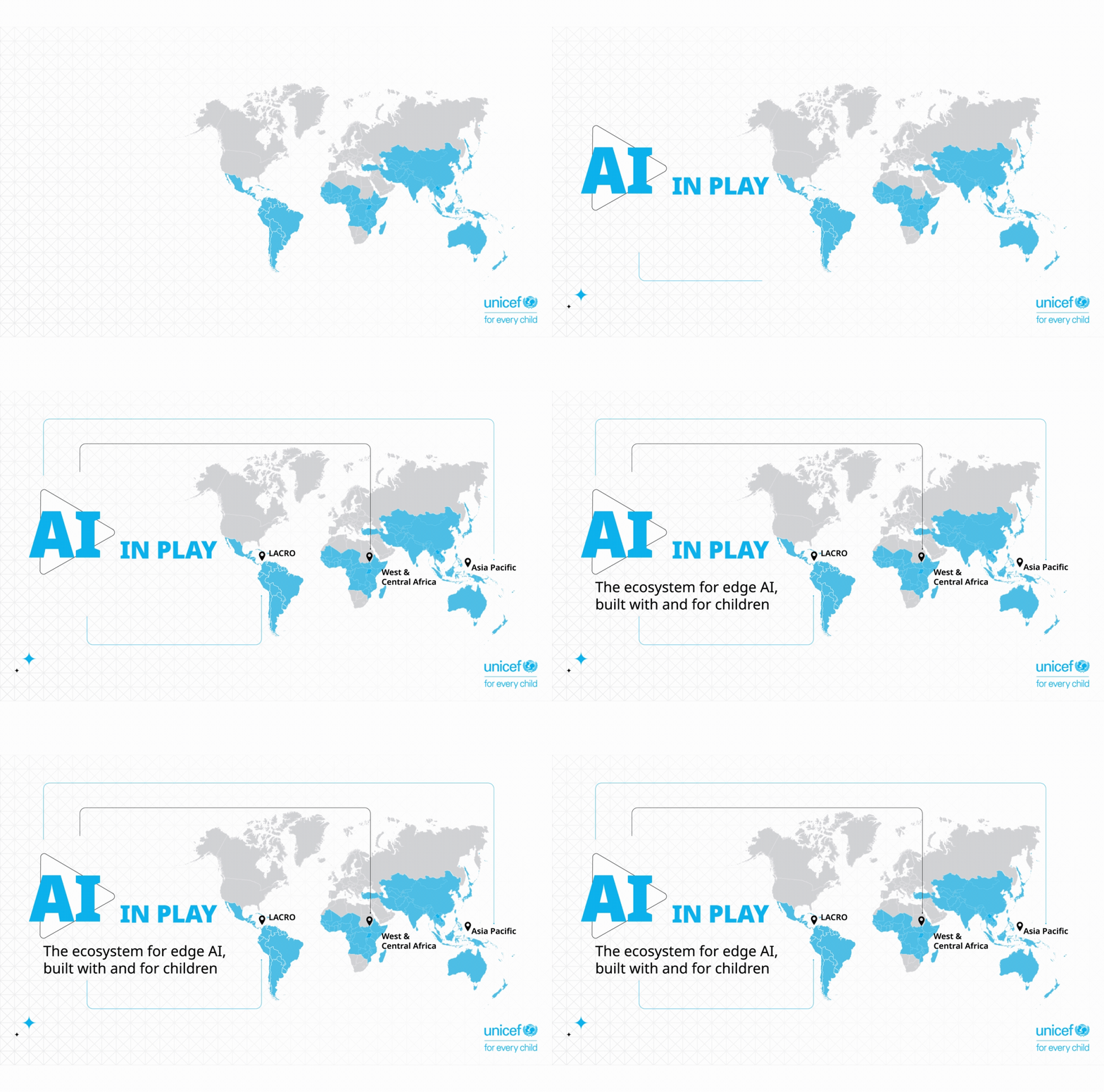
Those that get edge AI right, in the most challenging environments, will get it right everywhere. AI in Play is a global innovation ecosystem designed to close that gap. Co-designed by UNICEF and Arm and open to the tech sector to join. AI in Play ensures the benefits of AI reach the communities that need them most, while preparing the next generation to shape the AI economy.
SXSW is where the tech industry comes to figure out what's next. Help us make responsible, edge AI for children to be part of that conversation.
Find out more about the range of models and solutions AI in Play supports:
AI models and solutions in play
g1
A UNICEF-led initiative that equips students and teachers with the digital skills, tools, cutting-edge technologies and creative problem-solving mindset needed to thrive in an increasingly technology-driven world. By placing hands-on, collaborative and experiential learning at its core, the programme works to bridge the digital divide in education – with a particular focus on girls and underserved communities.
As climate change accelerates, children and their communities are increasingly exposed to extreme heat, floods, droughts and air pollution that threaten access to health services, safe water, nutrition and education.
The climate innovation landscape is expanding rapidly, with growing investment in frontier technologies, data-driven solutions and climate-focused ventures aimed at building climate-resilient communities and systems.
By prioritizing innovations that are locally adaptable, data-driven and child-centred, Climate Ventures will help shift climate technology toward equitable impact for this and coming generations. At its core is a commitment to strengthen the resilience of systems that safeguard children’s wellbeing.
Most AI language models are trained on languages such as English, Mandarin, Hindi or Spanish, which have vast digital archives to draw from. Languages like Bambara, Twi or Mooré have historically had far less data, making AI tools less accurate and less useful for the communities that speak them.
Find out how we're bridging this gap in collaboration with frontier tech start-ups in Ghana, Burkina Faso and Mali.