The First Blue Unicorns
Six standout ed tech solutions to be fast-tracked for scale by the UNICEF’s Global Learning Innovation Hub

Around the world, too many children are being left behind. Displacement, disaster, and deep inequality mean more young learners are out of school or struggling to keep up. Today, nearly two-thirds of 10-year-olds globally cannot read a simple story.
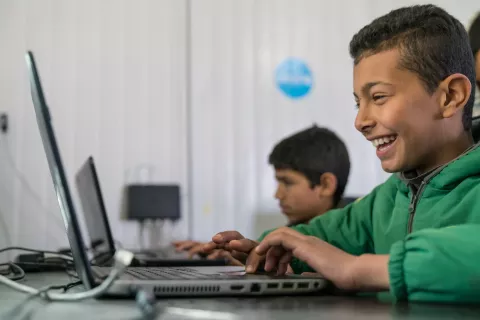
To help close this gap, the UNICEF Global Learning Innovation Hub has selected the first cohort of six EdTech solutions for its Blue Unicorn portfolio. Each one will help deliver digital tools with the potential to accelerate learning for millions of children.
The selected solutions will be piloted and scaled in six Learning Pioneer countries: Egypt, Ghana, Malaysia, Rwanda, Uzbekistan, and Zimbabwe. All activities will be carried out in close collaboration with the respective ministries of education and UNICEF country offices.
Each innovation was chosen for its proven ability to improve literacy, numeracy, teacher effectiveness, or inclusion. Together, they aim to reach over 100 million children, with a strong focus on equity, accessibility and inclusion.
The Blue Unicorn portfolio will help deliver UNICEF’s commitment to address the global learning crisis through practical, evidence-based innovation that delivers real results for children.
“We are building a portfolio of solutions that can bring meaningful learning to millions of children. These ventures represent a new wave of innovation - inclusive, adaptive, and rooted in evidence. We are proud to help them scale in those education systems where children need them most.”
Frank van Cappelle, Head, UNICEF Global Learning Innovation Hub
The selection process
The cohort was chosen through a rigorous multi-stage evaluation process. Solutions were first screened through the Learning Cabinet using the EdTech for Good Framework which assessed their potential for scale, safety, evidence of impact, accessibility, and inclusion of marginalized learners – especially children with disabilities. Final selections were made in collaboration with UNICEF Country Offices and partner governments, with particular attention to contextual fit and readiness for large-scale adoption.
Meet the inaugural cohort
group of inaugural cohort
Focus: Literacy | Model-for-Scale: Malaysia
GraphoGame helps students in kindergarten, primary, and early secondary school build strong literacy foundations leveraging a research-based phonetic approach.
Focus: Literacy and Numeracy | Model-for-Scale: Rwanda
EIDU provides a versatile platform delivering educational content and teacher training. It integrates into school timetables, runs offline on low-cost devices, and uses scientifically proven content.
Focus: Literacy and Numeracy | Model-for-Scale: Rwanda
Angaza Elimu is an adaptive e-learning platform offering personalized learning and enhancing teacher-student engagement to accelerate literacy and numeracy outcomes.
Focus: Numeracy | Model-for-Scale: Malaysia
Eduten is an AI-powered platform that strengthens national curricula through tailored digital exercises and real-time analytics to boost maths skills.
Focus: Numeracy | Model-for-Scale: Ghana & Egypt
Matific delivers interactive maths activities that build confidence and nurture critical thinking, problem-solving, and key 21st-century skills.
Focus: Inclusion and Special Needs | Model-for-Scale: Zimbabwe & Ghana
Cantoo provides over 30 tools designed to support inclusive education, helping students with learning disabilities gain autonomy and succeed academically.
Next steps
Each solution will transition to a structured path toward scale. The journey begins with a six- to eight-month Model for Scale phase, where teams will test their solutions in real-world settings and gather early insights from participating countries. The most promising innovations will then move into a one-year Accelerate phase, expanding their reach, refining their tools based on local feedback, and building stronger evidence of impact.
At every stage, teams will receive hands-on mentorship and collaborate closely with ministries of education and UNICEF country offices to ensure the work is grounded in local needs and realities. By the end of the journey, the most effective and impactful solutions will be ready for wider scale, including long-term partnerships, fundraising support, and potential integration into national education systems.
Contact us: [email protected]