Backing those building responsible AI with and for children
With millions of children using AI, UNICEF is adapting, building and deploying responsible AI systems, and strengthening safety and accountability standards together with tech industry partners

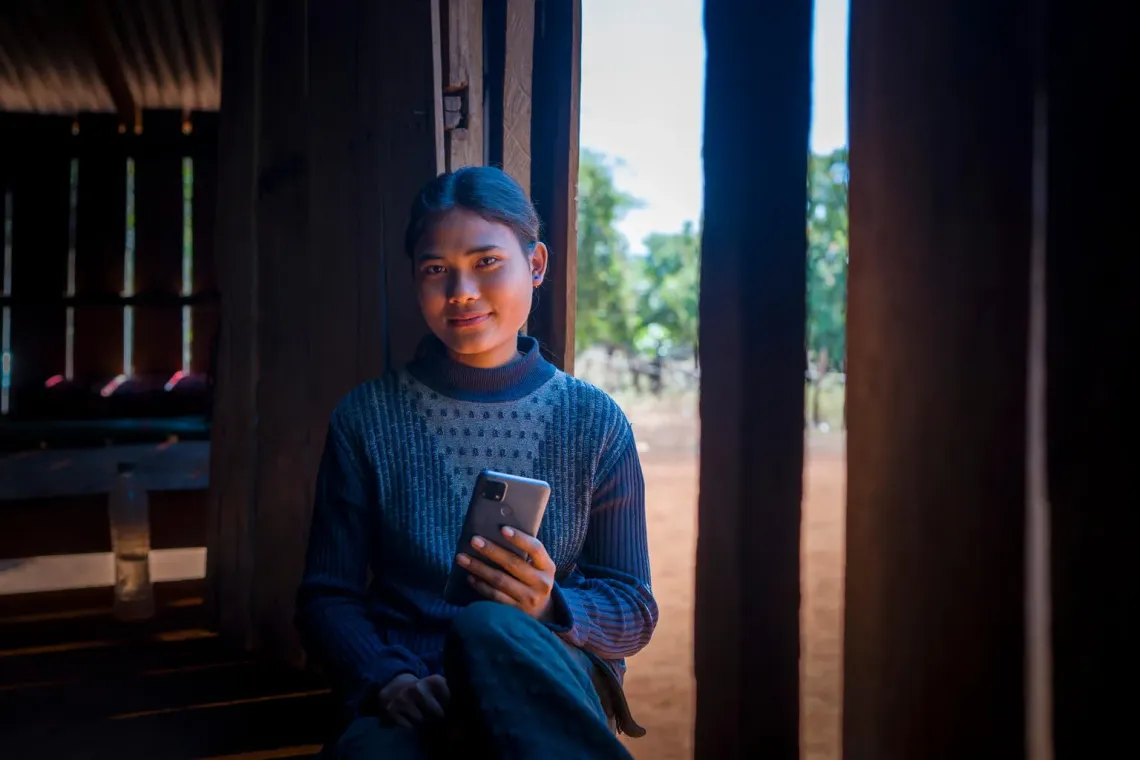
Children and young people are growing up with AI. New UNICEF analysis, drawing on data from 10 countries, estimates that at least 20 million children have already used it, many adopting it more than three times faster than their parents. An estimated 13 million turn to it for learning and homework. More than 2 million, around 1 in 10, turn to it for advice on the things that worry them most.
Yet the evidence on what this means for children – for their learning, development and wellbeing – is only beginning to emerge. A generation is growing up inside a global experiment.
UNICEF is working with partners and allies, including governments and startups, to adapt, build and deploy responsible AI systems that uphold and protect children’s rights: from AI anomaly detection in humanitarian cash transfers to diagnostic tools for community health workers, and from accessible digital textbooks for people living with disabilities to extreme weather early warning systems.
Within this broad portfolio of work, UNICEF’s AI in Play is a partner ecosystem committed to build and scale responsible AI with and for children and young people, designed with safety and transparency from the start and shaped by the rights and realities of childhood.
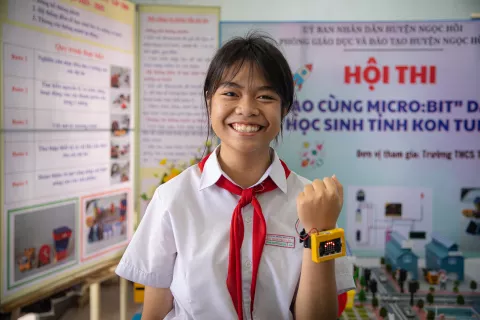
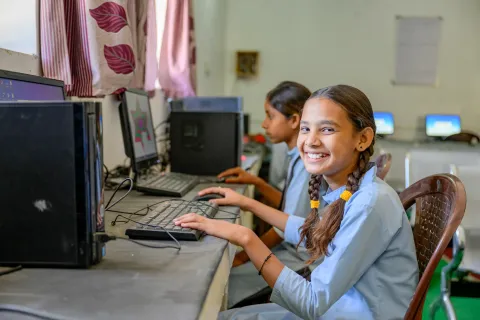
It accelerates the building of AI-enabled solutions addressing learning, health and climate challenges affecting children, and backs diverse AI builders from emerging economies – including young social entrepreneurs living and working in challenging environments. It also supports AI literacy for children aged 10-16 who are our next generation of AI builders and shapers.
UNICEF is calling on governments and private sector partners to embed child rights, especially the right to safety and protection, in global AI governance by:
- investing in research on AI's impact on children’s development and well-being, especially the risks.
- strengthening laws, governance frameworks, and corporate accountability to stop AI-enabled sexual exploitation and abuse.
- ensuring that AI systems are designed with maximum safety and transparency, so all children have a chance to be protected while benefiting from opportunities.
- building AI literacy and providing support for children and their parents or caregivers to thrive in the digital environment.
- investing in digital infrastructure and meaningful connectivity for every child and their parents or caregivers, at home and at school to close the AI divide between and within countries.
AI in Play is created to close the AI divide and grow AI literacy, to build the safety-by-design standards that make systems safer for every child, and to generate the practical evidence that research into AI's impact needs.
The ecosystem is designed to be open to the entire tech sector, so partners who share these values can take up a role that matches their strengths, through technology, capital, knowledge, reach or talent. More partners mean more impact: more building of AI solutions, more support to diverse AI builders, more AI literacy for children, more influence across the industry.
AI in Play is already enabling solutions for children in health, learning and climate:
- Natural language processing means children and their communities in West Africa can access vital health information and services in their own languages.
- Hands-on AI literacy training is supporting the next generation of AI builders
in multiple countries through Tinkering with Tech. - AI-powered air quality monitors in schools in Laos are generating, actionable real-time pollution data, that can be used by students.
Children aren’t waiting for AI to be ready for them. Neither are AI’s diverse builders across the globe. Together, we are backing the responsible AI that children deserve.