AI in Play: Bridging access gaps with language
How local innovators are building AI tools for and with children in classrooms and clinics across West Africa
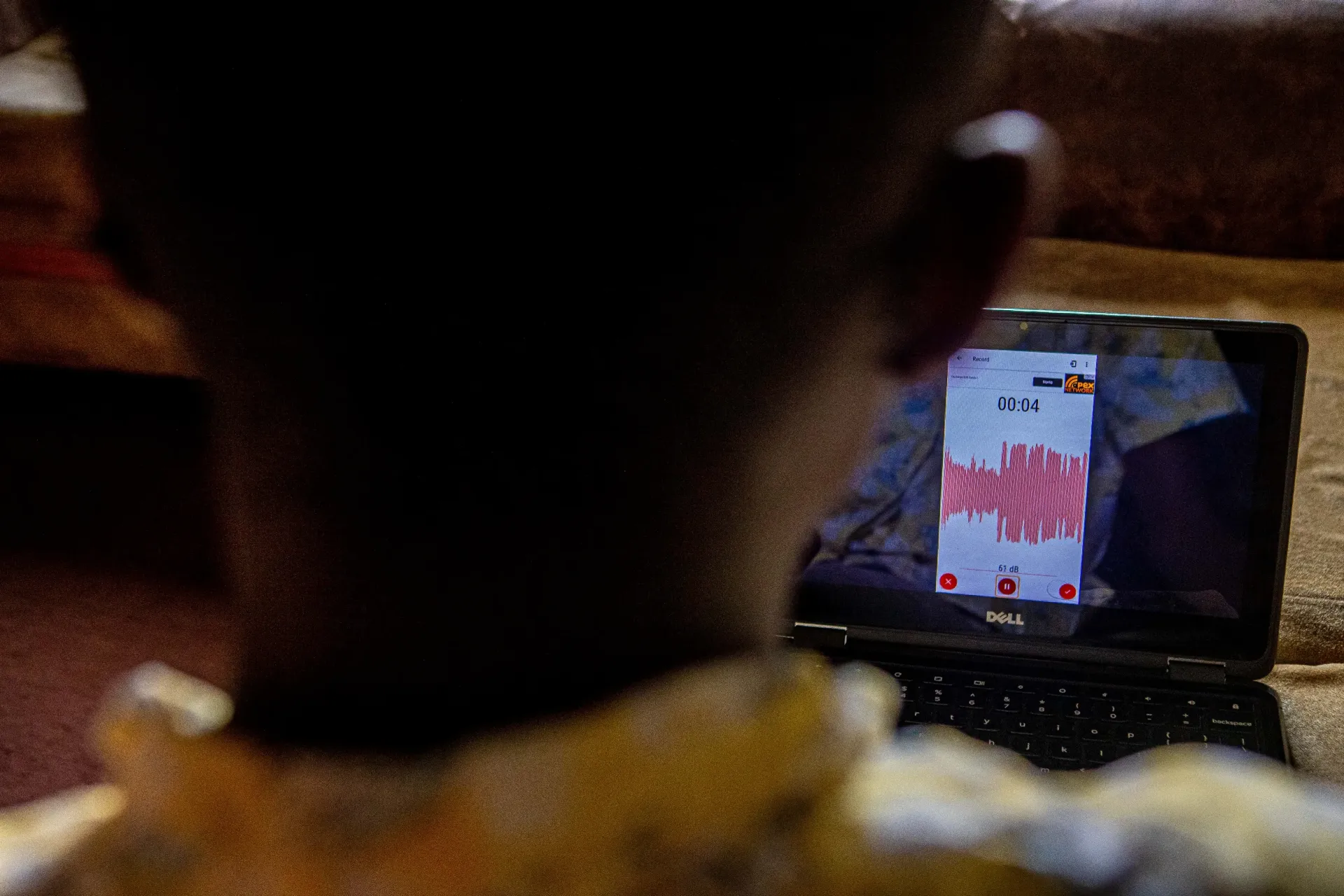
West Africa's 1,600+ languages, its youthful population, and a wave of new AI language models are converging into one of the most exciting opportunities in AI today. When AI tools are trained on the languages people actually think and speak in, a world of learning, health information and opportunity opens up, especially for children and young people.
Building for low-resource languages
Most AI language models are trained on languages such as English, Mandarin, Hindi or Spanish, which have vast digital archives to draw from. Languages like Bambara, Twi or Mooré have historically had far less data, making AI tools less accurate and less useful for the communities that speak them.
This is the challenge AI in Play, UNICEF Innovation's flagship AI ecosystem for children, is designed to solve. It backs diverse technologists developing AI solutions for children in the contexts where they are needed most, helping turn local expertise into tools that work in environments with limited connectivity, data and infrastructure.
In West and Central Africa, this has included mapping the region's startup and language landscape and benchmarking existing models to understand their strengths and limitations. UNICEF has also collaborated with three startups – GO AI Corp (Burkina Faso), RobotsMali, and GhanaNLP – to collect data, fine-tune models and test them in schools and clinics.
The work has delivered measurable improvements. The Bambara word error rate dropped from 42 to 22 per cent, while the character error rate dropped from 15 to 8 per cent (Results as of April 2026). These are real gains from real settings used by children.
Where edge AI meets equity
This work also reflects AI in Play's focus on edge AI. As a founding partner of AI in Play, Arm is helping shape an ecosystem for AI that runs reliably offline, on device and in low-connectivity settings. For a child in rural Mali, what matters is not whether AI runs in the cloud, but whether a device can understand them when connectivity is limited. Together, UNICEF and Arm are helping build AI that is designed for the environments where children live and learn.
A model for language inclusion, everywhere
This work points to something bigger than any one language or country. It's illustrative of how AI can be built with, not just for, the communities it serves: starting with local languages, local startups and local expertise, and scaling from there. This approach to language inclusion offers a model that can extend to other regions where linguistic diversity has long been a barrier to digital access, proving that equity and innovation can, and should, be built-in from the start.
For children, the impact is simple. When digital tools can understand the language they speak at home, they become easier to use, more relevant to their lives and more likely to connect them with the information and services they need. Building those tools requires more than better AI. It requires investment in the languages, communities and organisations that know them best. Together with partners, UNICEF is laying the foundation for a regional approach to AI in West and Central Africa that is locally grounded, ethical and child‑centered, and creating a more inclusive digital future for all.