UNICEF responds to escalating violence in Port-au-Prince
As armed groups aim to tighten their grip on Haiti’s capital, UNICEF and partners are providing a lifeline of support for affected children and families.
- Français
- English
Since 11 November, Port-au-Prince is grappling with yet another wave of violence as armed groups put the city under siege. Hundreds of people have been killed or injured, and 42,000 forced to flee their homes, many for the second or third time. Once considered safer, neighborhoods like Pétion-Ville and Bourdon have become targets, further displacing families and disrupting essential services.
Violence has claimed thousands of lives in 2024, creating one of the most challenging security and humanitarian crises Haiti has faced in recent years. UNICEF is adapting its response to meet the growing needs of children and families in this worsening emergency.
UNICEF’s response
Despite tremendous challenges, UNICEF is delivering life-saving support to the most vulnerable. From displacement camps to water-scarce neighborhoods, the organization is focused on providing immediate relief while planning for longer-term recovery.
- Support for displaced families: Since the latest violence began, UNICEF has provided aid in displacement sites across Port-au-Prince, including Pétion-Ville, where 2,800 people, mostly women and children, have sought refuge. Emergency support, including water, sanitation, child protection and nutrition services, is reaching 50,000 people in 10 densely populated sites.
- Safe water and sanitation: With water supplies disrupted in neighborhoods like Delmas, UNICEF is trucking clean water to displacement sites, addressing immediate needs while preparing for further interventions. These efforts are vital as the spread of cholera continues to threaten children’s lives.
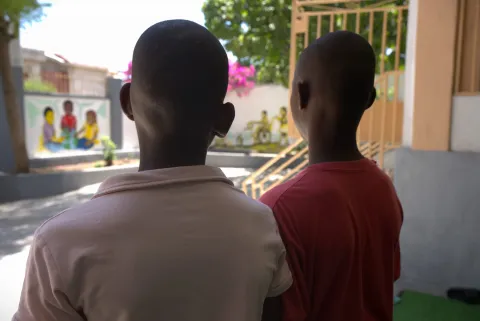
- Child protection: Armed violence has taken a heavy toll on children, with widespread reports of recruitment by armed groups and other grave rights violations. UNICEF and its partner IBESR are working through mobile teams in nine displacement sites to provide psychological support, protect unaccompanied children and deliver gender-based violence (GBV) interventions.
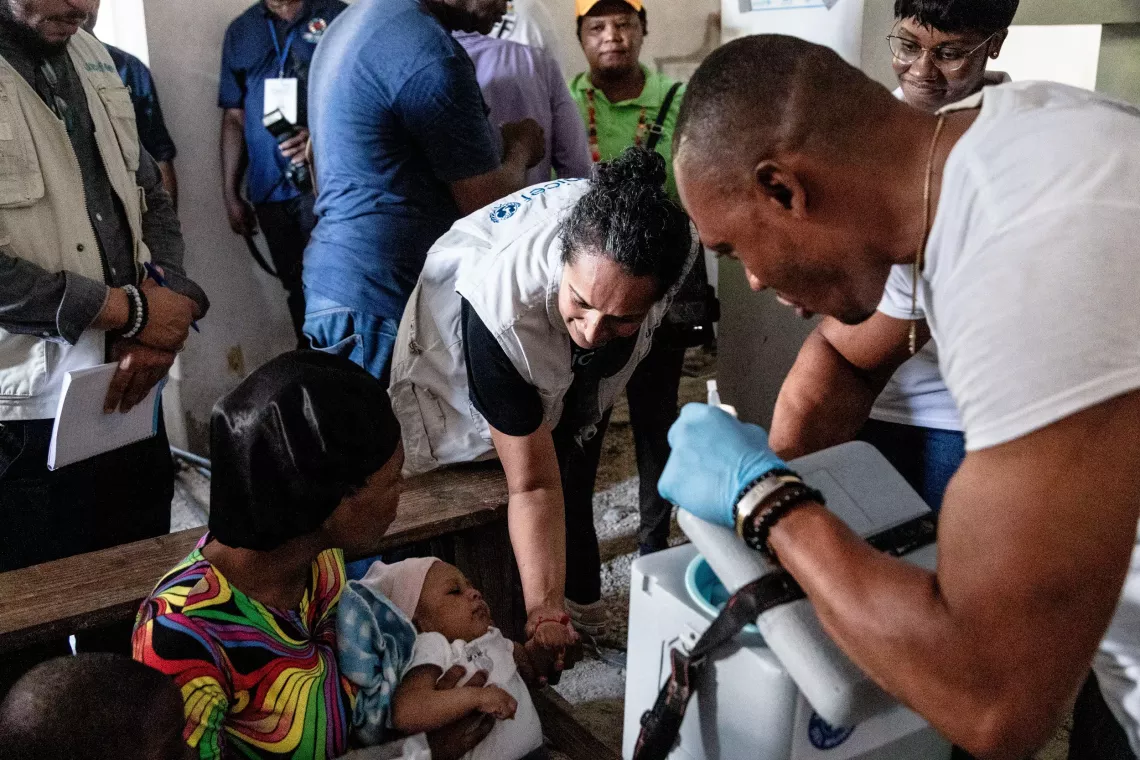
- Health and nutrition: Mobile health clinics supported by UNICEF and partners have reached nearly 16,000 people in November, including children and pregnant women. Despite escalating insecurity, clinics have operated in volatile areas to provide life-saving care. In addition, UNICEF supports health facilities treating children affected by severe acute malnutrition.
- Cash assistance: To help families meet immediate needs, UNICEF is providing cash transfers in displacement sites, reaching thousands of vulnerable households.
Challenges in delivering aid
The volatile and unpredictable security situation presents ongoing challenges. Blocked roads, fuel shortages and threats to staff safety have delayed critical supply deliveries and reduced mobility for humanitarian workers. Armed violence has disrupted UNICEF’s ability to assess and sustain its interventions, further complicating operations.
However, UNICEF continues to adapt, coordinating with partners and using alternative means such as sea and air transport to move supplies and reach those in need.
Working together for Haiti’s children
The crisis in Port-au-Prince highlights the urgent need for a robust and coordinated response. UNICEF is working tirelessly to deliver aid, but the scale of the crisis requires more funding. With more support, UNICEF and partners can bring hope and relief to Haiti’s children and families during these difficult times.
Donate to support UNICEF’s work for children in Haiti.