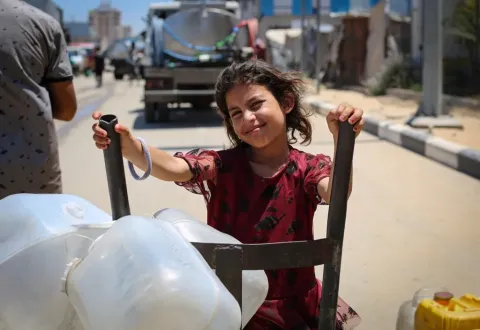
The completion of emergency programme in Libya supported by Sheikh Abdullah Al Nouri Charity Society
Restoring access to reliable and safe water services for 310,000 children and people in flood-affected cities

- English
- العربية
In a country still recovering from conflict, climate shocks, and devastating floods, access to safe water remains a daily struggle for hundreds of thousands of people in Libya.
As of mid-2025, approximately 787,090 individuals – including 314,800 children – require humanitarian assistance. Vulnerable groups such as migrants, refugees, and internally displaced people are exposed to protection risks, limited access to basic services, and worsening socioeconomic stress.
Libya’s health and water, sanitation and hygiene (WASH) systems are critically under-resourced, especially in the south and east. Storm Daniel and the flooding at the end of 2023 further affected the region's water and sanitation infrastructure, posing concerning environmental and health risks.
Against this backdrop, the generous support of the Sheikh Abdullah Al Nouri Charity Society of Kuwait enabled UNICEF to implement and successfully complete an emergency sanitation and hygiene programme across eastern Libya. The project reached 310,000 people, including 93,000 children, restoring access to reliable and safe water services, reducing health risks, and strengthening community resilience in the aftermath of the floods.

A Turning Point for children and families in Um Alruzm, eastern Libya
For the residents of Um Alruzm, a flood-affected city near Derna, the project marked a turning point. For more than 15 years, families lived with constant uncertainty over where their next drink of water would come from. The absence of clean water was not an occasional hardship; it was a defining part of everyday life.
Under this project and with the support from the State of Kuwait through Sheikh Abdullah Al-Nouri Charity Society contribution, UNICEF was able to install the water desalination plant and once it became operational, clean water began to flow, transforming the lives of residents.

“Imagine starting your day at five in the morning, filling water containers from a distant well, waiting your turn at a public water station, or paying big amounts to buy water from private tankers. It cost us time, effort, and money, and left us in constant worry about our children’s health” Ali Omrajah Mohammed, Um Alruzm resident.
“When the plant started operating, we felt a big difference. We no longer had to travel long distances or worry about the quality of the water.” He continued
Building Resilience Through Infrastructure
Beyond Um Alruzm, the project supported critical WASH infrastructure across Derna, Soussa, and other flood-affected areas in eastern Libya. Activities included:
- Rehabilitation of essential municipal power infrastructure
- Installation of climate-resilient solar systems in remote villages
- Optimization of the operational capacity of major desalination plants
Together, these interventions strengthened service delivery, improved water security, and supported communities as they rebuild their lives after the floods.
Through partnerships like this one, humanitarian assistance becomes more than an emergency response; it becomes a foundation for recovery, resilience, and hope.