Joint WHO, Gavi, and UNICEF press release for World Immunization Week
Guinea-Bissau renews commitment to vaccines and sustainable co-financing to protect every child

- English
- Portuguese
Bissau, 24 April 2026 – As Guinea‑Bissau joins the global community to mark World Immunization Week (24–30 April 2026) under the theme “For every generation, vaccines work”, the World Health Organization (WHO), UNICEF, and GAVI, the Vaccine Alliance, are calling for renewed commitment to vaccination and sustainable financing to protect children, families, and communities, particularly the most vulnerable and zero-dose children who have yet to receive a single vaccine.
Vaccines remain one of the most effective and cost‑effective public health interventions, protecting people of all ages against life‑threatening diseases. Immunization has saved millions of lives over the past five decades and continues to protect children from diseases such as measles, polio, tetanus, diphtheria and malaria.
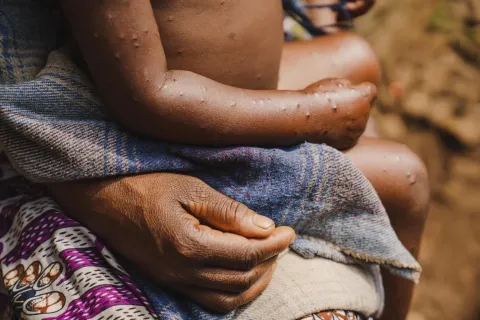
In Guinea‑Bissau, vaccines are a cornerstone of primary health care and child survival, contributing significantly to reductions in under‑five mortality, from 174 in 2000 to 69 deaths per 1,000 live births in 2023. However, declines in immunization routine coverage highlight the need to urgently reach children who are missed by the system. [IK1]
It estimated that around 14,000 children have not received a first dose of the DTP1 vaccine by the age of 6 weeks, when the first dose is scheduled according to the national immunization calendar. These children are referred to as “zero-dose” children, and DTP1 coverage is widely used as a proxy indicator to assess access to immunization services.
While efforts such as the Big Catch-Up initiative have helped identify and reach a significant proportion of these children, drop-out between the first and third doses remains a major challenge. By the time children reach 14 weeks of age, when the third dose (DTP3) should be completed, only 68% of children were fully vaccinated in 2025. This situation is compounded by delays in domestic financing for vaccines, and barriers to access in remote communities, continue to affect vaccination coverage.
“Vaccines are a public good and a shared responsibility,” said Dr. Walter Kazadi Mulombo, WHO’s Special Representative to Guinea Bissau. “Sustained political commitment and financing are essential to ensure that every child, everywhere, is protected from vaccine‑preventable diseases, while strengthening health and protection across generations.”
A key pillar of Guinea‑Bissau’s immunization programme is the GAVI co‑financing policy, which supports countries to gradually increase their own financial contributions to vaccines as part of a transition towards long‑term sustainability. Ensuring timely fulfilment of these co-financing commitments is critical to avoid stockouts and sustain routine immunization services.
This approach has enabled the country to expand protection for children while laying the foundation for sustainable immunization financing.
“Through co‑financing, countries like Guinea‑Bissau are not only receiving support, but also building the foundations for self‑reliant immunization systems,” said Mr. Marius Keller, the Gavi Liaison Officer for Guinea-Bissau.
During World Immunization Week 2026, WHO, UNICEF and GAVI call on:
- Government of Guinea-Bissau to protect and increase domestic investment in immunization,
- Partners and donors to continue supporting vaccine access and system strengthening, and
- Health workers and community actors to actively identify and reach zero-dose children, and
- Communities to seek accurate information and ensure children receive all recommended vaccines on time.
“Every missed vaccine is a missed opportunity to protect a child,” said Dr. Inoussa Kabore, UNICEF’s Representative in Guinea-Bissau. “By investing in vaccines and strengthening co‑financing, Guinea‑Bissau is investing in the health, development and future of its children.”
Together, sustained investment, strong partnerships and community trust can ensure that vaccines continue to work – for every child, in every generation.
# # # # #
Notes to editors
World Immunization Week is celebrated every year in the last week of April and aims to promote the use of vaccines to protect people of all ages against disease.
About WHO
Dedicated to the health and well-being of all people and guided by science, the World Health Organization leads and champions global efforts to give everyone, everywhere, an equal chance at a safe and healthy life. WHO is the UN agency for health. WHO connects nations, partners and people on the front lines in 150+ locations – leading the world’s response to health emergencies, preventing disease, addressing the root causes of health issues and expanding access to medicines and health care. WHO’s mission is to promote health, keep the world safe and serve the vulnerable. www.who.int
About Gavi, the Vaccine Alliance
Gavi helps vaccinate nearly half the world’s children against deadly and debilitating diseases and supports countries through a co‑financing model to ensure long‑term sustainability of immunization programmes.
About UNICEF
UNICEF, the United Nations agency for children, works to protect the rights of every child, everywhere, especially the most disadvantaged children and in the toughest places to reach. Across more than 190 countries and territories, we do whatever it takes to help children survive, thrive, and fulfil their potential.
Media contacts
About UNICEF
UNICEF promotes the rights and well-being of every child, in everything we do. Together with our partners, we work in 190 countries and territories to translate that commitment into practical action, focusing special effort on reaching the most vulnerable and excluded children, to the benefit of all children, everywhere.
For more information about UNICEF and its work for children, visit www.unicef.org.