
Leticia, a mother who donates her breast milk to help babies in critical condition
Donating breast milk: a powerful way to save lives
- Español
- English
In the heart of Totonicapán, Leticia, a 26-year-old mother, has transformed her pain into hope for other children. Her daughter, Diana, just 4 months old, faced a battle against severe acute malnutrition—a condition that put her life at serious risk.
For several days, Diana was hospitalized at the National Hospital of Totonicapán, a facility recognized as a Baby-Friendly Hospital thanks to the support of UNICEF. This recognition is more than just a title; it is a commitment to the health and well-being of children.
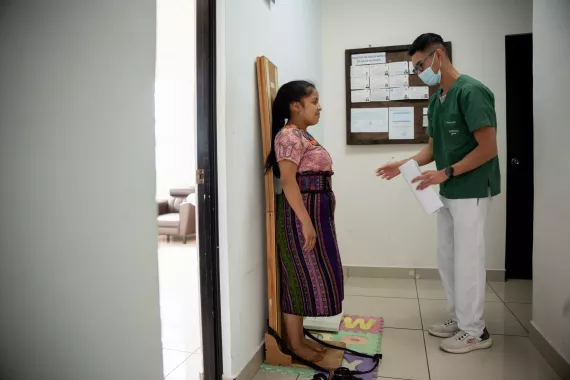
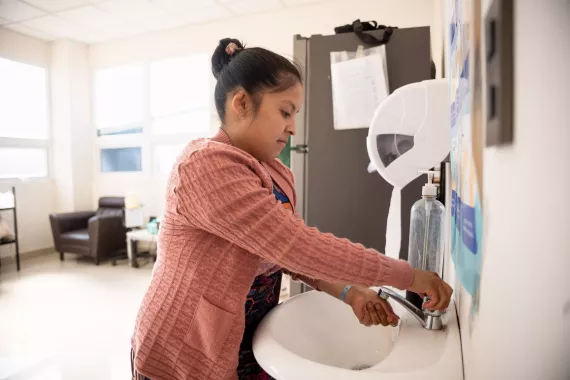
While Diana was fighting to recover, Leticia found a safe space at the hospital’s human milk bank to express her breast milk. With dedication, she nourished her daughter—but she also noticed she had more milk than Diana needed. In a gesture of solidarity, she decided to donate it. “I wanted other babies to have the same opportunity my daughter had,” Leticia shares with a shy but proud smile.

Breast milk, rich in nutrients and antibodies, was key to Diana’s recovery. After days of care, the baby was discharged, stronger and healthier. However, the experience left a deep mark on Leticia. Aware of the importance of breastfeeding, she decided to continue visiting the milk bank to donate regularly. “Breast milk is life. It not only helped my daughter heal, but now it can help other babies grow strong,” she says.
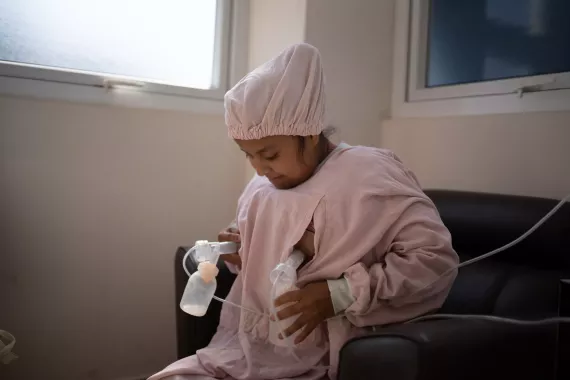
The National Hospital of Totonicapán, with support from UNICEF, has created an environment that promotes breastfeeding and milk donation. Human milk banks collect, pasteurize, and distribute breast milk to premature, sick, or vulnerable babies, ensuring they receive the best start in life. In 2024, more than 1,161 mothers donated their breast milk to the hospital, resulting in 441 liters of human milk collected, which benefited 685 newborns.


“Being a Baby-Friendly Hospital means we place babies and mothers at the heart of our work. Here, we support mothers so they can breastfeed with confidence, and we teach them about the importance of breast milk. Donations, like the ones Leticia makes, are acts of love that save lives. Every drop counts, because breast milk not only nourishes but also protects babies from illnesses and gives them the strength to grow up healthy. We are proud to be part of this life-saving chain.”
Carmen’s story and the work of professionals like Carmen Chanax reflect the power of solidarity, institutional commitment, and the importance of supporting breastfeeding as a fundamental right of every child.

