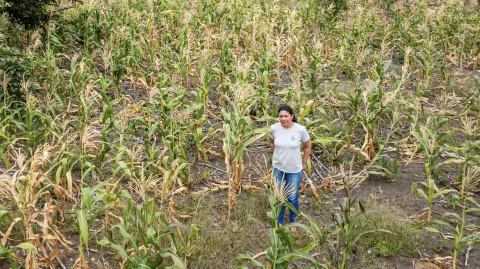
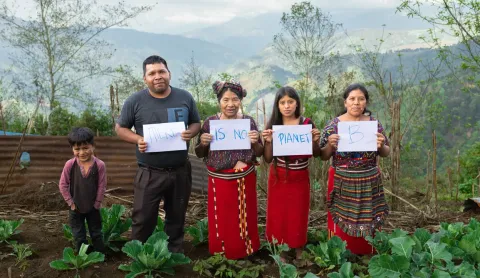
Latin America: Climate change could force at least 5.9 million more children, adolescents and youth into poverty by 2030
This figure could triple if countries do not meet their commitments to reduce greenhouse gas emissions and climate finance does not prioritize social and climate resilience services for children.
- Español
- English
PANAMA CITY, 28 August 2025. At least 5.9 million more children, adolescents and youth will live in poverty by 2030 due to the impact of climate change warn the Economic Commission for Latin America and the Caribbean (ECLAC) and the United Nations Children's Fund (UNICEF) in a new report titled The Impact of Climate Change on Child and Youth Poverty in Latin America.
The report analyses the potential effects of extreme weather events on increasing poverty levels among children, adolescents and youth, along with countries' efforts to reduce greenhouse gas (GHG) emissions, and their strategies to adapt and reduce losses and damages caused by climate change.
In the most optimistic scenario, in which governments implement rapid actions to limit GHG emissions, at least 5.9 million more children, adolescents and youth could be living in poverty by 2030. Meanwhile, if governments insufficiently or belatedly implement the mitigation, adaptation, and loss and damage reduction actions agreed in their Nationally Determined Contributions, this figure could triple to 17.9 million children, adolescents and youth.
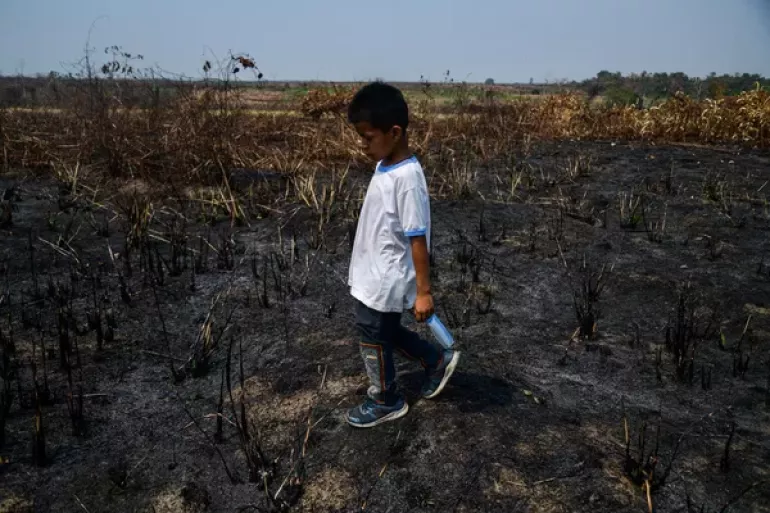
¨Children and adolescents bear the greatest burden of climate change. Not only because their developing bodies are more vulnerable to extreme phenomena such as cyclones or heatwaves, but also because these events disrupt their families' livelihoods and their education," said Roberto Benes, UNICEF Regional Director for Latin America and the Caribbean. "If children and young people don’t have the resources to meet their basic needs and develop their potential, and if adequate social protection systems are not in place, the region’s inequalities will only be perpetuated."
Despite children being particularly vulnerable, climate finance does not prioritize the resilient services for health, nutrition, education, water and sanitation that they need to ensure their optimal cognitive and physical development. In Latin America and the Caribbean, only 3.4 per cent of all multilateral climate finance is dedicated to children. In addition, funding cuts and reduced development aid come at a time of unprecedented need, with millions of children and youth in need of such support to mitigate the disproportionate impact of climate change on their development.
Faced with these challenges, ECLAC and UNICEF recommend that Latin American governments take action to promote climate policies and those that protect children and young people, including by:
- strengthening the climate resilience of social services and critical infrastructure to better protect children, adolescents and youth, with a particular focus on the first 1,000 days of life.
- increasing child-sensitive climate finance, with actions that specifically target the needs of children at different ages.
- promoting greater climate awareness, education and empowerment of children, adolescents and youth and their meaningful participation, as well as the inclusion of environmental and climate education in school curricula and educational programmes.
- promoting adaptive social protection and emergency response policies that account for the specific needs of children and adolescents.
# # # # #
Notes for editors:
Download multimedia content: LINK
Download the report here: LINK
Media contacts
Additional resources
Acerca de UNICEF
En UNICEF promovemos los derechos y el bienestar de todos los niños, niñas y adolescentes en todo lo que hacemos. Junto a nuestros aliados, trabajamos en 190 países y territorios para transformar este compromiso en acciones prácticas que beneficien a todos los niños, centrando especialmente nuestros esfuerzos en llegar a los más vulnerables y excluidos, en todo el mundo. UNICEF responde en las emergencias protegiendo los derechos de los niños. En coordinación con los asociados de las Naciones Unidas y los organismos humanitarios, UNICEF pone a disposición de las entidades que colaboran con él sus servicios singulares de respuesta rápida para aliviar el sufrimiento de los niños y de las personas responsables de su cuidado.
Obtenga más información sobre UNICEF Guatemala y su labor siguiéndonos en: Facebook, Instagram, Twitter, YouTube, Tik Tok, Linkedin y Medium