"We don't like living in shacks..."
On the occasion of this year's International Romani Day, Christina and Polyxeni talk about the difficulties of their daily lives and the racism they experience because of their origin.
- Ελληνικά
- English
Located in Eastern Thessaloniki, in the area of Peraia, the Tsairia settlement houses about 30 Roma families, many of them large, with many children.
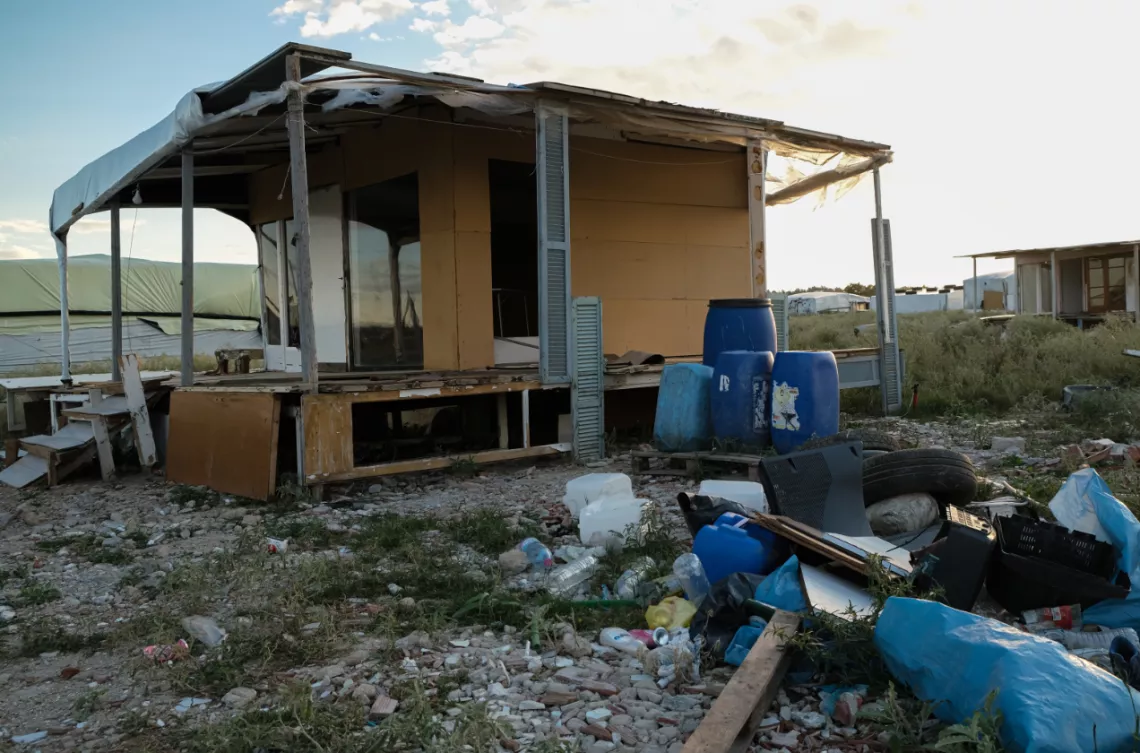
"There are 30 families living in shacks, some of which are a little better than others, and they are made of wood and nylon bags," says Polyxeni, a 14 year-old high school student who lives in the settlement.
She goes on to elaborate that the shacks lack basic amenities: they don't have strong electric power and there is only enough electricity to be able to see in the dark, while there is no water supply either, forcing people to drink bottled water and carry water in cans from afar for their daily tasks.
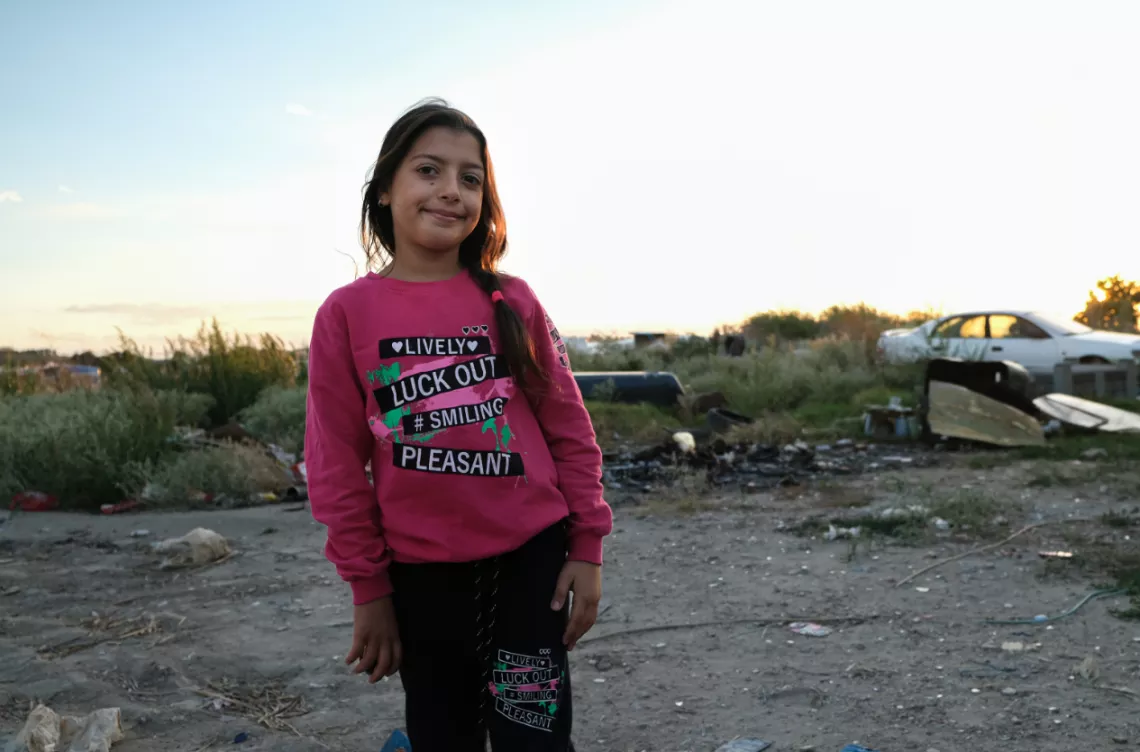
Polyxeni's sister, Christina, who is 9 years old, faces difficulties getting to school every day, as conditions are very dire:
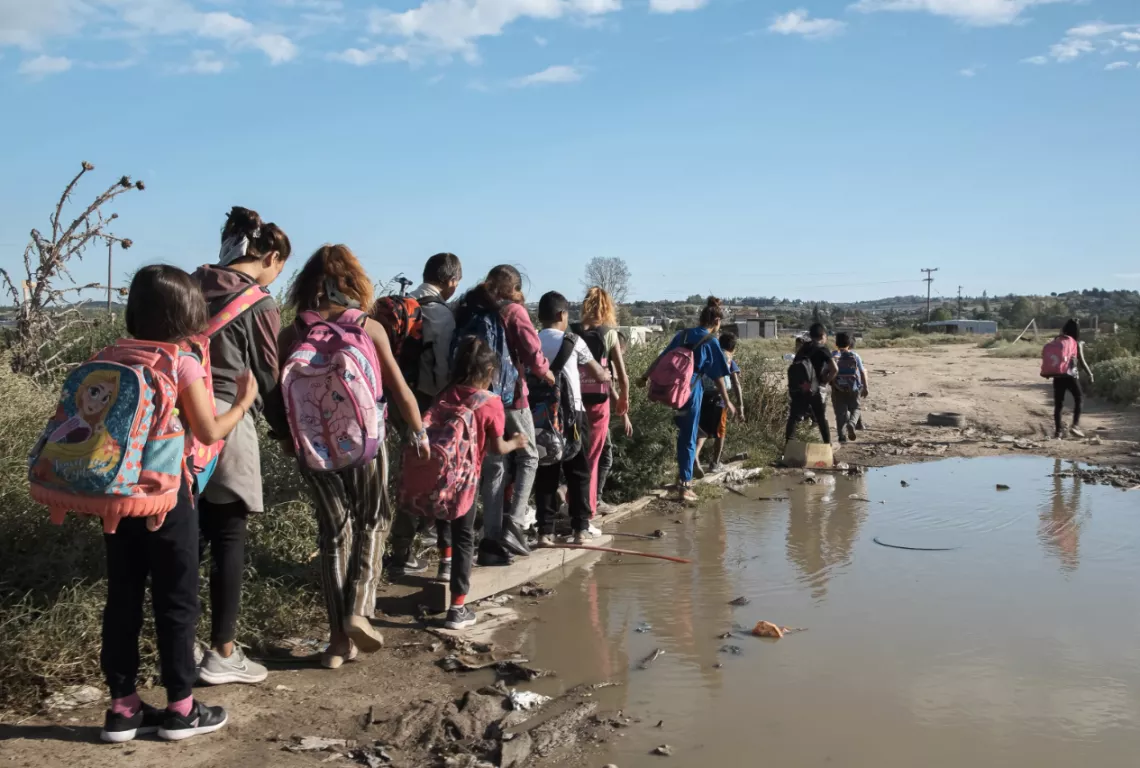
"My dad takes me to school because the road is bad and I can't go alone because it's three kilometers away...”she explains.
According to recent data documented by the General Secretariat of Social Solidarity and Fight Against Poverty of the Ministry of Labour and Social Affairs (2021), 87% of Roma people living in settlements across Greece live in extremely deprived areas or areas with limited infrastructure, while according to Hprolipsis research data from 2015, fewer than one in ten Roma people who reside in settlements in Greece have access to drinking water, electricity, heating and a toilet in their homes. These findings highlight the problem of environmental racism against Roma communities, which, as the European Environmental Bureau (EEB) and the ERGO Network reported in 2020, "is structural and interlinked with other dimensions of racially motivated discrimination and exclusion".
"There is no drainage system and we had to construct our own sewer," says Polyxeni, adding: "There is no garbage man to pick up the garbage and we are forced to throw it in a specific place and then burn it."
The Roma encounter obstacles even as they make efforts to improve their living conditions, as it has been found that 3 out of 5 Roma in Greece experienced discrimination because of their origin when looking for housing in the previous five years, according to a survey by the European Union Agency for Fundamental Rights (FRA) in 2021.
"We don't like living in shacks, we want to have a good place to stay," Polyxeni points out.
"When we wanted to rent a house, they told us over the phone 'yes, come see it', but when we went in person they told us 'No, I don’t give my house away, because you're Roma, I don't trust you...' ".
Despite everyday difficulties, Polyxeni is optimistic and hopes that things will gradually change for the better:
"The changes I would like to see in my community would be to have good houses, to have water, to have strong electricity, to have good roads and to have bins so that we don't throw our garbage all over the place," says Polyxeni.
"For these changes to happen, I believe that the Greek state should help us and we should help them as much as possible”, she concludes.
UNICEF, with funding from the European Commission, is implementing the 3rd phase of the European Child Guarantee pilot program in 7 EU countries to break the cycle of Poverty and Social Exclusion and improve access to essential support services for all children and their families, including Roma children in Greece, who are deprived of basic rights and live in conditions of severe material deprivation.