UNICEF Startup Lab Demo Day Showcases 25 Social Impact Ghanaian Startups
Demo Day Highlights 25 Ghanaian Startups Focused on Social Impact.
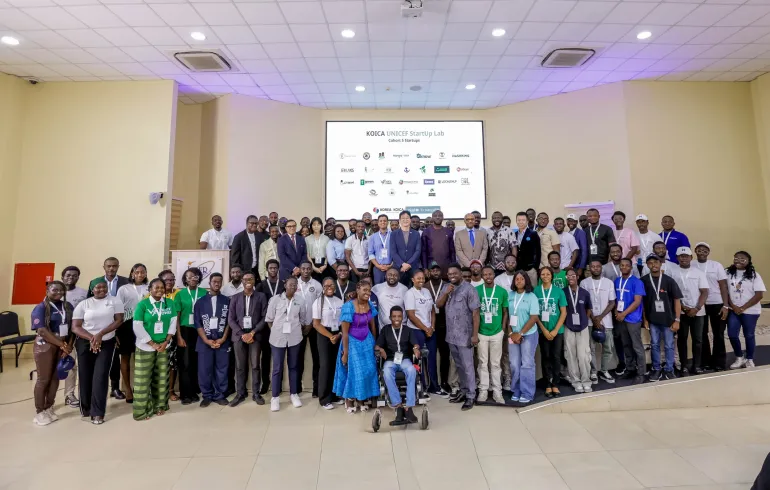
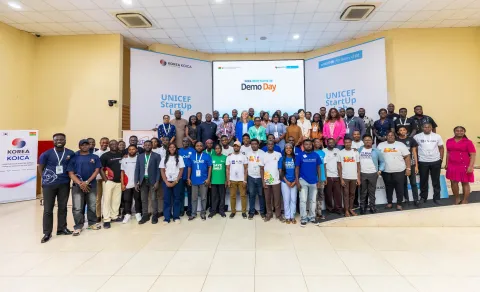
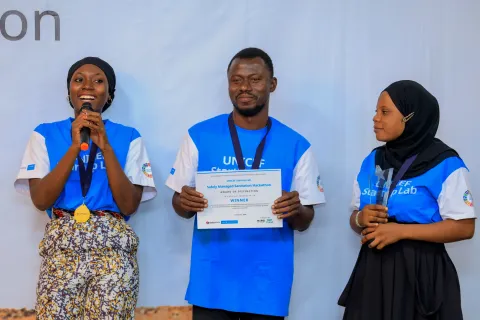
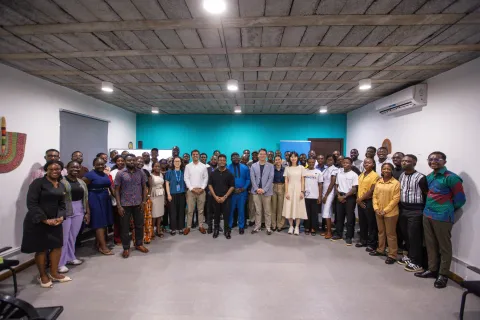
Accra, Ghana – November 26, 2025 — Today, 25 technology-enabled social impact startups have successfully graduated from the fifth cohort of the UNICEF Startup Lab accelerator programme, presenting their innovative solutions at the 2025 Demo Day. These startups are harnessing technology to address urgent challenges in education, health, nutrition, WASH, climate action, agriculture, disability and financial inclusion. As a group, their work is driving transformative change for children, adolescents, and communities across Ghana underscoring the power of technology as a catalyst for social progress. The event highlighted the growing strength of Ghana’s innovation technology driven community and the dedication of young entrepreneurs to advancing the Sustainable Development Goals (SDGs), especially those focused on children and young people.
The UNICEF Startup Lab is a six-month accelerator programme, supported by the Korea International Cooperation Agency (KOICA) under the project "KOICA-UNICEF Accelerating Entrepreneurship and Innovation in Ghana" and implemented by MEST Africa. Over a six months period, these emerging ventures engaged with UNICEF programme specialists, industry experts, and mentors to refine their solutions, strengthen business models, deepen market understanding, and explore pathways to scale.
Since 2019, the UNICEF Startup Lab has supported over 100 technology--enabled social impact businesses, collectively improving the lives of more than 250,000 children in Ghana through innovative products and services. The programme also connects startups to partnerships, networks, investment opportunities, national systems, and global platforms, including Digital Public Goods initiatives.
Speaking at the event, Osama Makkawi Khogali, UNICEF Representative in Ghana, said: “The UNICEF Startup Lab demonstrates that when we invest in young innovators, we unlock solutions that drive real impact for children and young people in Ghana. These 25 startups are not only building viable businesses, but they are also transforming sectors such as health, education, agriculture, and climate resilience with scalable, homegrown innovation for children. The challenges we face in health, education, WASH, or social protection are too complex to solve alone; together, we can shape a more equitable and inclusive future for Ghana’s children and youth. The startups’ achievements show the power of collaboration and the extraordinary potential of Ghana’s youth, inspiring confidence that the future of Ghana, and Africa, is in capable and creative hands.”
Representing KOICA, Mr. Dong Hyun Lee - Country Director, KOICA Ghana Office reaffirmed KOICA’s commitment. The Government of the Republic of Korea, together with KOICA Ghana, is firmly committed to advancing education in Ghana. We believe that a skilled and empowered youth population is essential to unlocking Ghana’s potential and meeting the challenges of the 21st century. Our support continues to expand—from the STEM Phase II Project to the Ghana–Korea (GK) IMPACT Project, and through innovative initiatives like this Startup Lab. We are here for the long term: nurturing talent, strengthening digital capabilities, and helping to build a future-ready workforce.
It is truly inspiring to see young Ghanaians developing practical and scalable solutions, from digital inclusion to climate resilience. Your creativity, passion, and determination are the energy that drive nations forward.
NOTE FOR EDITORS
Below are profiles of the 25 a startups of Cohort 5
Arnson Innovate
Arnson Innovate, through its flagship AITK Robotics program, delivers hands-on Science, Technology, Engineering and Mathematics (STEAM) and robotics education to children aged 6–17. By fostering creativity, critical thinking, and tech literacy, the startup is nurturing the next generation of digital innovators across Ghana.
Booksie
Booksie is reimagining literacy through interactive learning tools that promote reading for pleasure. With a strong foundation in child-centered pedagogy, the platform blends in-person and digital instruction to enhance reading skills and academic outcomes.
Green Ecoworks
Green Ecoworks transforms plastic waste into durable panels used for building furniture in schools and community centers—supporting sustainability, child-friendly infrastructure, and environmental awareness.
NutriScan
NutriScan aims to empower frontline workers with AI-enabled tools to detect malnutrition in young children. By ensuring timely diagnosis and care, it helps save lives and strengthen early childhood health systems.
Washking
Washking builds smart biodigester toilets using a micro-leasing model. Through hygiene education and incentives, it improves sanitation access for families—reducing health risks for children.
ERA AXIS
ERA AXIS introduces electronics, coding, and 3D design to underserved youth, turning them into creators and future entrepreneurs while promoting innovation in education.
MingoBlox
MingoBlox delivers inclusive robotics and Science, Technology, Engineering, and Mathematics (STEM) education to children aged 5–18, including those in underserved communities. Through hands-on learning and teacher engagement, it’s equipping the next generation with essential skills for a digital future.
Greenearth Agro
Greenearth Agro is a tech-enabled farming platform promoting regenerative agriculture and AI-driven crop planning. By improving farm yields and rural incomes, it enhances food security for families and children in Ghana.
Crafted Climate
Crafted Climate leverages AI and IoT to provide air quality data to schools, communities, and policymakers. This data helps protect children from pollution while building environmental consciousness among youth.
Farmitecture
Farmitecture introduces vertical farming systems tailored for homes, schools, and youth centers. It teaches children aged 10–24 about nutrition, sustainability, and urban agriculture through practical, space-saving food production.
Mckingtorch Africa
Mckingtorch Africa drives environmental innovation by turning plastic waste into educational infrastructure while training youth in sustainable practices—creating green jobs and enhancing school environments.
Edu3Dcation
Edu3Dcation Ghana pioneers the use of immersive 3D technologies in classrooms. By offering creative, hands-on learning, it nurtures innovation and digital literacy in students aged 7–15.
AutoEase Wheelchairs
AutoEase designs affordable, motorized wheelchairs that improve mobility for children and youth with physical disabilities. The startup enhances access to education, care, and independence for low-income families.
Agricom Assurance
Agricom Assurance uses predictive AI to offer agricultural insurance that shields smallholder farmers from climate risks—safeguarding income, food availability, and child nutrition.
Sol Research Centre
Sol Research Centre uses drones and AI to map and restore degraded soils, enhancing crop production and climate resilience—benefiting children’s nutrition in affected regions.
iKolilu
iKolilu is an AI-based school management platform that improves administrative efficiency and student learning outcomes by streamlining communication between schools, parents, and teachers.
Verte Tower
Verte Tower develops AI-powered vertical farms that optimize yields in small urban spaces. The innovation addresses food insecurity and supports better nutrition for families and schools.
QKnow EdTech
QKnow EdTech is transforming learning with its AI-driven exam prep tools that simulate test environments. It supports inclusive education and boosts academic performance for students of all backgrounds.
Enabled Talent
Enabled Talent is building an AI-powered platform connecting youth with disabilities to inclusive employment. Its smart matching and assistive features promote digital inclusion and economic empowerment.
LocaleNLP
LocaleNLP develops AI tools like speech-to-text and machine translation for African languages. Its technology improves learning and access to information for people in low-resource, multilingual regions. The startup is focusing on languages like Wolof, Swahili, Bambara, and Darija. The startup aims to empower sectors like education, healthcare, and agriculture by providing accessible and inclusive digital solutions, especially in regions with limited internet connectivity.
DrDoGood
DrDoGood connects rural families to healthcare specialists through a digital platform with AI-enhanced records and predictive analytics, closing the access gap for children’s health services.
Organized Khaos Studios
Organized Khaos Studios develops culturally relevant educational games that promote storytelling, digital skills, and creative learning for African children aged 9–18.
Speso Technologies
Speso Technologies builds inclusive fintech tools that empower young people with financial literacy and payment access—bridging the gap in youth-focused digital infrastructure.
TTYM Global (Talk To Your Midwife)
TTYM Global improves access to maternal and adolescent health services through a mobile app and localized care points, ensuring girls and young women receive consistent, informed, and respectful healthcare.
Tellmonifa
Tellmonifa is a mental health platform that connects young people to licensed therapists, self-help tools, and peer support—offering a safe, digital space for healing and mental resilience.
Media contacts
About UNICEF
UNICEF works in some of the world’s toughest places, to reach the world’s most disadvantaged children. Across more than 190 countries and territories, we work for every child, everywhere, to build a better world for everyone. For more information about UNICEF and its work, visit: www.unicef.org