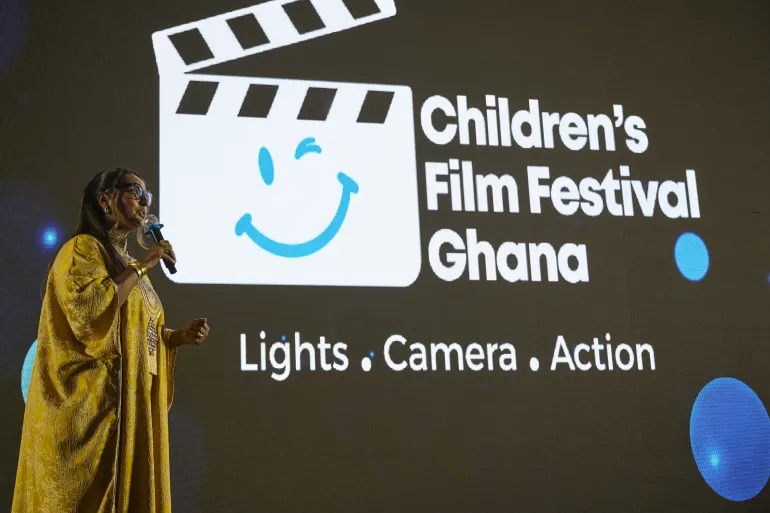
Walking down the blue carpet on the opening night of Ghana’s first Children’s Film Festival, I felt more emotional than I had expected.
Then the filmmakers began walking onto the stage proudly facing an audience that had just watched their stories unfold on the big screen.
Nine Ghanaian films, created in less than two months.
I felt proud of them. Proud of our team and of everyone who had helped make that moment possible.
But as I watched the filmmakers and children standing on the stage in Accra, I found myself thinking about another city, another festival and another time.
An Idea Born in Khartoum
I was back in Khartoum.
When I first joined UNICEF in Sudan, my friend and colleague Iman Mustafa told me about an initiative she was convinced I would love.
She introduced me to Mosab Hassouna, founder of the Filmmaking initiative for Children in Sudan.
Anyone who knows me knows how much I believe in the power of storytelling, especially visual storytelling. Cinema can take an issue that might feel distant and make it immediate. It can allow us to experience the world through another person’s eyes.
UNICEF Sudan went on to partner with the Filmmaking for Children Initiative for children’s film festivals in 2018 and 2019.
Then COVID came, and like so much else, everything stopped.
But the idea stayed with me.
Years later, I arrived in Ghana.
I was new to the country. I needed to listen, learn and understand the landscape. I wanted to meet the people working in Ghana’s creative industries and understand what might work here.
I remember thinking: One day, I would love to do this here. I remember sharing the dream with my current communication team in Ghana.
Not to recreate what we had done in Sudan. Ghana has its own stories, its own filmmakers and its own creative identity.
I kept looking for an opening.
Making the “Impossible” Possible
When it came, everything moved very quickly. Within two months, we had started turning the idea into something real.
I remember telling a friend what we were trying to do and how little time we had.
“It’s impossible,” they said.
Perhaps I am an optimist. Perhaps I am also a little stubborn. But I have never been comfortable with the word impossible.
I began calling friends in the film industry and asking for advice. Reem Saleh, a filmmaker and member of the Berlinale Panorama Selection Committee, generously shared her experience and guidance. Niam Itani, a filmmaker and film commissioner, Rami Rabih, a filmmaker and screenwriter, and my filmmaker friends Filson Ali and Daniel Belzares in Sweden also shared their knowledge.
In Ghana, through our implementing partner, we connected with the National Film Authority and began working with the Ministry of Gender, Children and Social Protection and the Ministry of Tourism, Culture and Creative Arts.
When the call for filmmakers went out, we received more than 300 applications.
I remember seeing that number and thinking: of course.
What was needed was a platform.
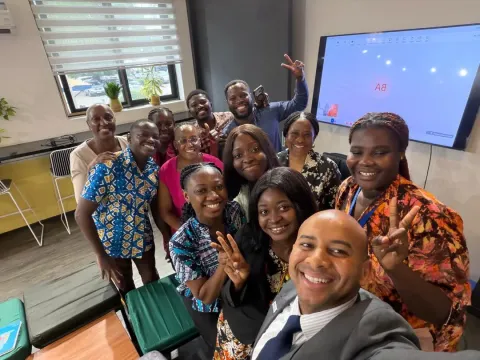
Nine filmmakers were eventually selected. They received seed funding and took part in a Film Lab we developed, where they developed their ideas, strengthened their scripts and prepared to take those stories from the page to the screen.
What they achieved in less than two months was remarkable.
Putting Children’s Rights First
But as their stories took shape, we also needed to think about something beyond what would eventually appear on screen.
If we were encouraging filmmakers to tackle issues affecting children, we had to talk about how those stories should be told and how children should be treated throughout the process.
Consent matters.
Child safeguarding matters.
A child’s dignity matters.
A film can address violence, disability, education or any other issue affecting children. But if a child is exposed, harmed or made uncomfortable during its production, then we have missed the point.
For UNICEF, this is fundamental. Children have a right to express themselves and participate. They also have rights to protection, privacy and dignity, and to understand how their stories and images will be used.
The process matters as much as the final film.
What began as a conversation with nine filmmakers now has the potential to become something much bigger. We hope to build on what we have learned and work alongside the National Film Authority towards developing Ghana’s first child safeguarding guidelines for the film industry.
Something that began with nine films could help shape how an entire industry works with children.
For me, this is what mainstreaming child rights looks like.
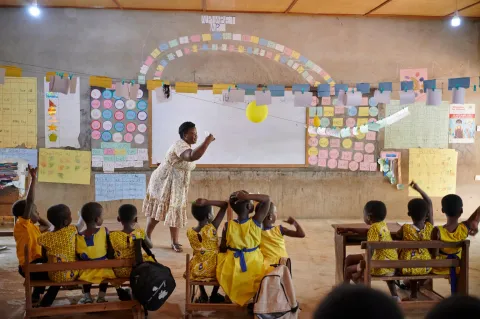
Children’s rights do not belong only in UNICEF reports or at conferences about children. They should be part of our schools, communities, policies, culture and creative industries.
Children’s rights should travel.
Just like stories do.
And that thought brings me back to the film festival in Accra.
When the Lights Went Down
The lights went down.
I found myself watching the children in the audience almost as much as I was watching the screen.
They laughed and clapped . They reacted. At certain moments, they became completely quiet.
The films explored issues including violence against children, disability and inclusion, education, the experiences of adolescent girls and access to water.
But the children were not receiving a presentation on “child rights.”
They were watching stories.
They could recognise something. Feel something. Question something. They could connect with a character and understand an issue in a way that a report or statistic might never make possible.
Our Children’s Jury showed this beautifully.
We did not want nine children trying to work out what the adults expected them to say. We wanted to know what they thought.
We often talk about “giving children a voice.” I have always struggled a little with that expression.
Children already have voices.
Perhaps our responsibility is to create spaces where they can use them and where we genuinely listen.
For me, that is where cinema, freedom of expression and children’s participation come together. It is also part of how children grow into engaged citizens who understand that their views, ideas and creativity matter.
This is why I do not want the journey of these nine films to end with one screening.
The next stage is to help the films enter festival and awards circuits, reach new audiences and gain the recognition they deserve. I also want them to be used in advocacy screenings and conversations with children, families, communities, government and partners.
And these stories deserve a life beyond one evening.
As I watched the children looking up at the filmmakers on stage, another image began to form in my mind.
What if, next time, some of those children are behind the camera?
I would love to create a space where children interested in filmmaking can learn directly from the filmmakers whose work they watched this year.
They could show them how an idea becomes a script, how a scene is constructed, how a camera can change the way we see something and how to tell a story responsibly.
Most importantly, the children could decide what stories they want to tell.
Films made by children, for children.
Filmmakers tell stories about children’s rights.
The film industry strengthens the way it safeguards children.
And eventually, children become the storytellers themselves.
And, inevitably, back to Sudan.
My connection to this story began in Khartoum, when Iman Mustafa walked into my office and told me about something she somehow knew I would love.
But what I watched on the screen years later belonged to Ghana.
It belonged to the filmmakers who created the films. To the children who brought the stories to life. And to the many people and institutions that helped build a platform around them.
Someone had told me it was impossible.
Standing there that night, I thought about that too.
Not because I had proved anyone wrong.
But because all around me was a reminder of why I have never liked that word.
Sometimes something appears impossible simply because we have not yet created the space for it to happen.
Together, we created that space.
The filmmakers filled it with stories.
Perhaps next year, when the lights go down again, some of the stories on the screen will belong entirely to them.
That is the next scene I would love to see