How EU and UNICEF are helping to bring children’s rights to life through art
Creative Voices for Child Rights initiative in Georgia

- English
- ქართული
As the sun sets over the village of Tsitelmta in Georgia’s Guria region, it paints the landscape in shades of crimson. Residents gather in a traditional wooden oda house for a screening of the film In Bloom and a discussion with the director, Nana Ekvtimishvili. This is no ordinary film screening. After the movie, participants discuss which children's rights were violated in the story and how these violations shaped the lives and opportunities of the film’s young protagonists.
Implemented by UNICEF with the support of the European Union and in partnership with the Tbilisi International Festival of Literature, the Creative Voices for Child Rights initiative brings children’s rights to life through culture, dialogue, and the arts. The initiative connects artists and community members to raise awareness and stimulate engagement around child rights across Georgia.
The discussion in Tsitelmta proves deeply meaningful. Many participants note that the issues portrayed in the film, including child marriage, domestic violence, and girls’ rights, reflect their own experiences. As they share personal stories, they begin to view those experiences through a rights-based lens. This is precisely the initiative’s goal: to explore human experiences and understand what rights mean when they are expressed through songs, seen on stage or screen, or encountered in the pages of a book.
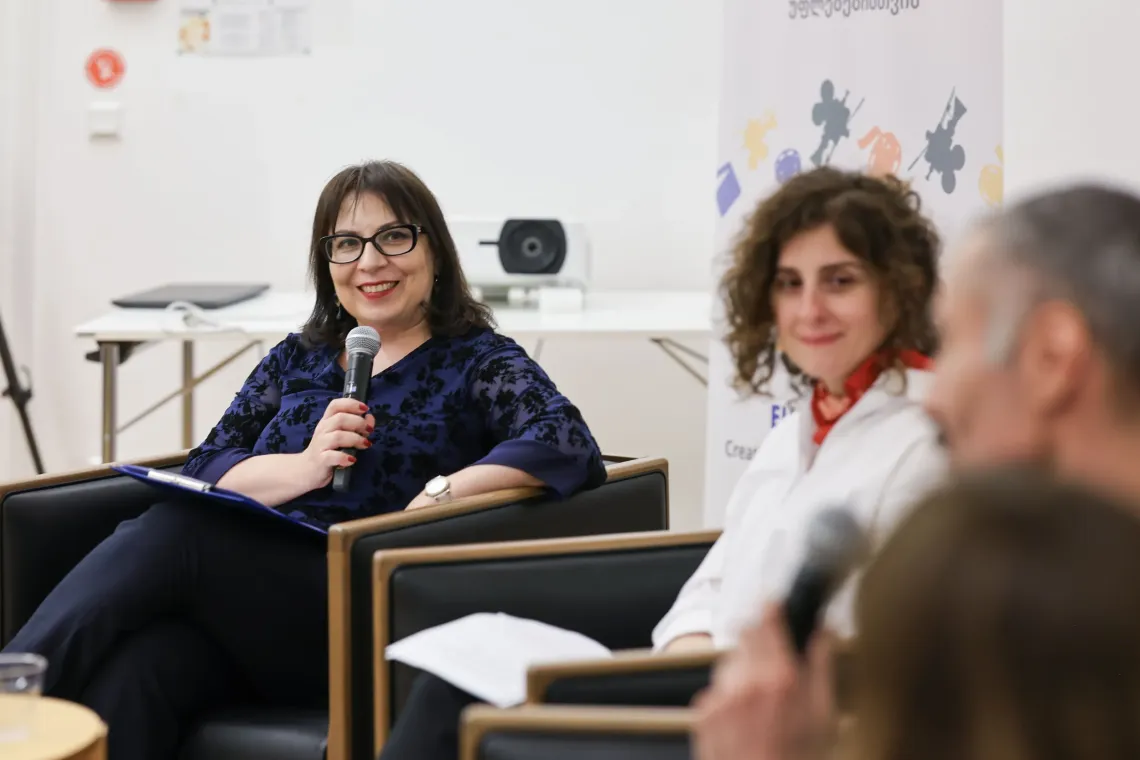
Maya Kurtsikidze, UNICEF Communication Specialist, attended the screening and discussion in Tsitelmta. “I firmly believe in the power of art, and using that power to increase public awareness of children’s rights is critically important. Stories communicate in ways that laws and strategies often cannot.
“People identify with the characters in films and books because they often recognize their own experiences in them.”
I have attended several of these discussions and am excited by how actively people engage and reflect on their own role in protecting children. That is exactly our objective: to engage people in dialogue and build a shared understanding of what violence, equality, and children’s rights mean, and of the values that underpin those rights.”
“Art is one of the most effective ways to raise public awareness,” says Giorgi Girkelidze, a journalist with Guria News and participant in the discussion.
“These meetings not only provide information about children's rights but also create an important platform for exchanging views on pressing social issues.”
In today’s polarized world, where children's rights and the international standards that protect them face organized attacks, open dialogue with communities is more important than ever. Governments and political actors increasingly invoke arguments related to national sovereignty, family values, and cultural traditions to undermine commitments made to protect children’s rights.
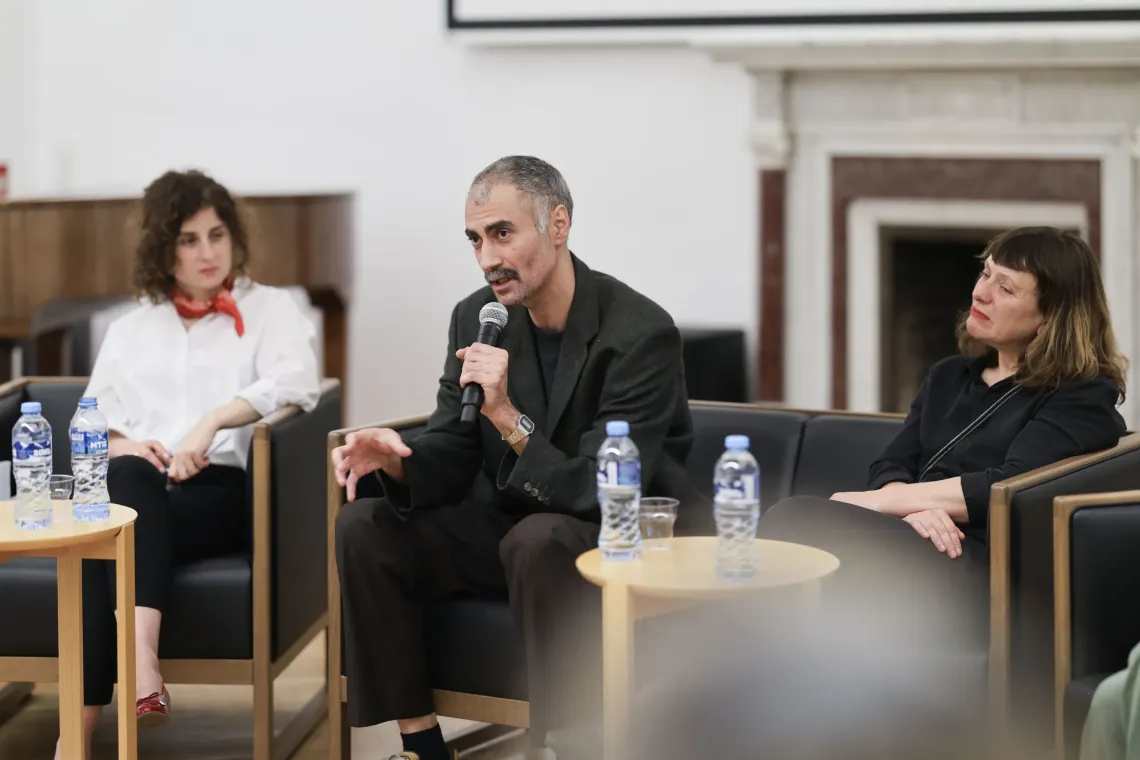
In this context, arts and culture play a vital role in embedding human rights and child rights into public life. They make complex issues easier to understand, connect them to personal experiences, and engage people emotionally. Through stories, films, and creative expression, communities are better able to relate to children’s experiences, challenge harmful social norms, and build empathy. Importantly, they also create safe spaces for dialogue, helping people bridge differences and find common ground. For example, the use of violent disciplinary practices in child-rearing remains a social norm in Georgia. Changing such norms is impossible without a shared societal understanding of what constitutes violence and why it is harmful.
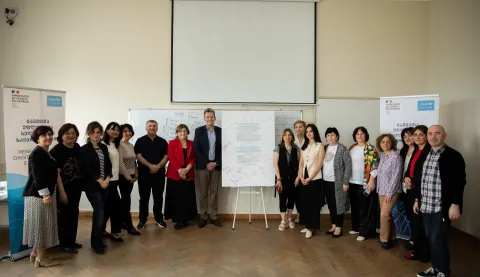
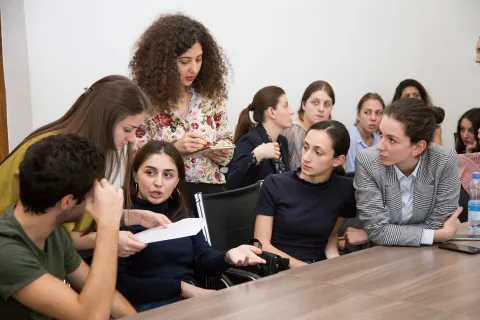
As part of the initiative, around twenty events are being organized across Georgia’s regions, bringing together community members, writers, and filmmakers. Activities include film screenings, book discussions, and interactive conversations involving authors, directors, and child rights experts. Themes explored in artistic works are examined through a child rights perspective with active audience participation.
“As an author, I find it particularly valuable to hear the perspectives of child psychologists and child rights advocates, and to see how they interpret the issues raised in my film.
Beyond presenting facts, art explores causes and motivations, which makes these discussions valuable for professionals from many different fields”
...says David Pirtskhalava, film director and screenwriter, following the screening and discussion of his film Father in Tbilisi.
“Nothing carries children’s voices and the message of children’s rights into society more effectively than art,” says children’s author Vaso Guleuri, who participated in a discussion in the town of Gori, east Georgia. Participants reflected on The Diary of Anne Frank and discussed what life looks like when children’s rights are not protected.
“There are many topics we hesitate to discuss, topics that are stigmatized or make us feel unsafe. Cinema, above all, is a mirror - a reflection of society. At times it may appear blurred or shaped by interpretation, but it always represents reality as seen from a particular perspective,” says filmmaker Irina Jordania, who leads film direction of the initiative.
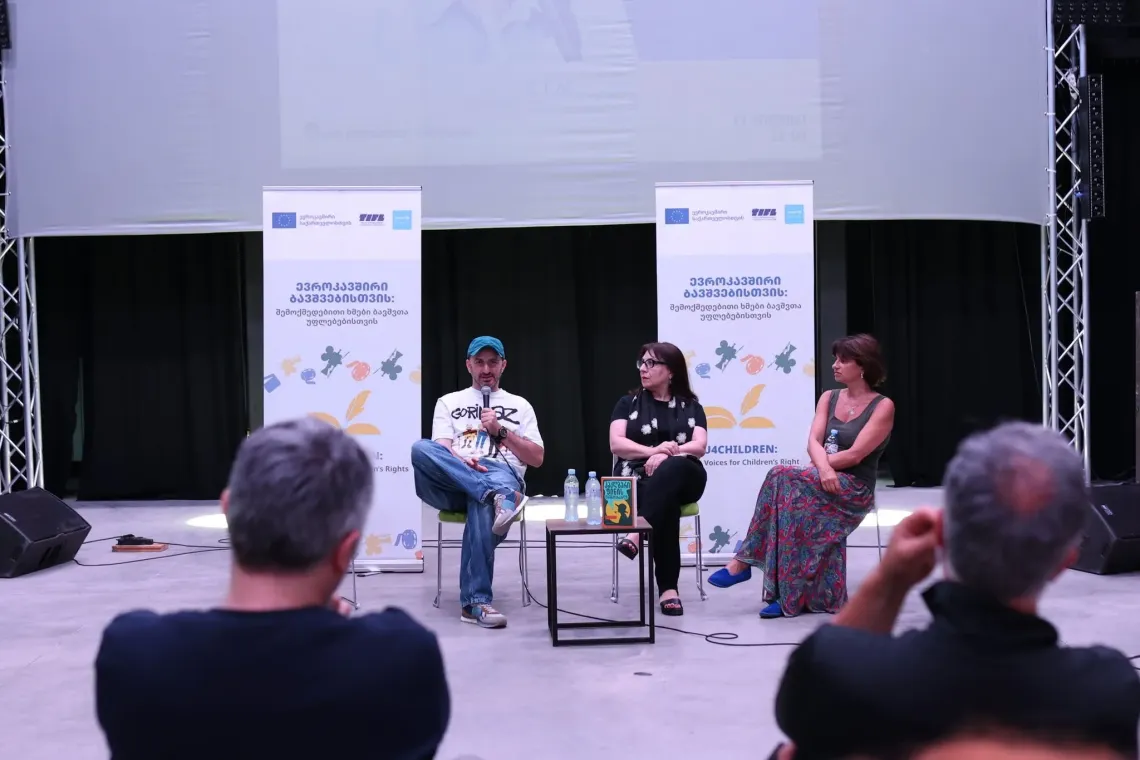
In west Georgian town of Tsalenjikha, writer Giorgi Kekelidze met with local community members to discuss Mark Twain’s The Adventures of Huckleberry Finn. The conversation focused on violence against children, exploitation, and discrimination. Participants discussed existing challenges related to protecting children from violence in Georgia and drew parallels between the events described in the novel and contemporary realities. The themes explored in the book, violence, discrimination, freedom, equality, and respect for children's dignity, remain highly relevant today and continue to impact the lives of many children in Georgia.
“Literature and art have the power to talk about issues affecting children in ways that everyone can understand. These meetings are vital because they remind society that young people should never be left alone with their problems,” says Davit Logua, a civil society representative from Zugdidi.
Reflecting on the initiative, Maya Kurtsikidze notes, “The Creative Voices for Child Rights programme supported by the European Union, once again confirms that there is no alternative to dialogue with communities, and that the language of art is one of the most powerful ways to facilitate it. I will never forget how, after one of the screenings, a participant, who was deeply affected by the film, stood up and said: ‘This is my story. At the time, I didn’t know I had rights. Now I understand, and I will use this knowledge in raising my own children.’ I myself have also come to see many films and literary works in a new light after reflecting on them through a child rights perspective. When I speak about rights in the future, examples like these will help bring those rights to life. Indeed, art can do so much more. Through stories and creative expression, it can help people better understand what children’s rights mean, encourage positive social norms, reshape public discourse on child rights, and unite diverse communities around shared values”.
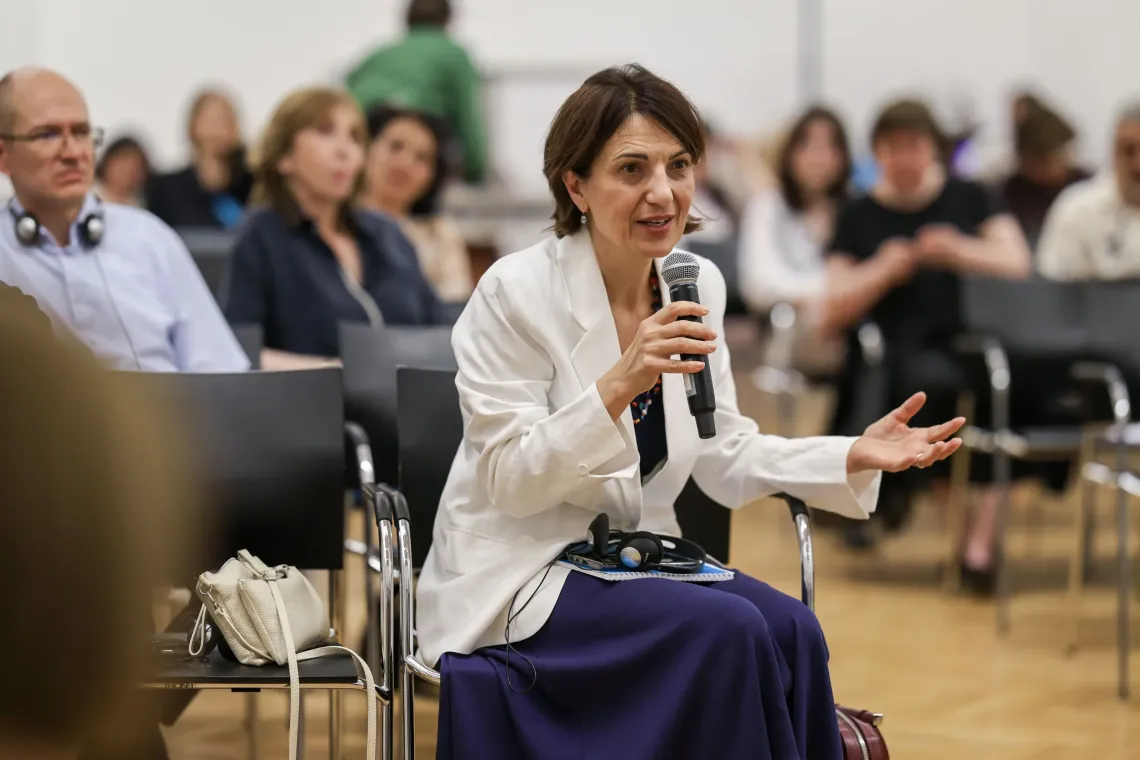
Several more events are planned before the end of the year. On World Children’s Day, participants will gather again for a concluding event to reflect on how creative voices can be heard strongly and more powerfully in advancing and defending children’s rights.
“The Georgian experience offers a simple lesson: when children’s rights are woven into stories, films, books, and creative expression, they become harder to ignore and easier to champion. As we search for new ways to engage communities.
"Perhaps the next breakthrough will not come from another report or campaign, but from a story that helps someone say, “This is my story too.” That is the power of art. And that is a power worth investing in”, says Isabella Castrogiovanni, UNICEF Representative in Georgia.
About the project/ programme
EU and UNICEF joint project “Human Rights for All – Realization of Child Rights to Family, Justice, and Adequate Standard of Living” – 2024-2027 helps protect children and support families. It works to prevent children from being separated from their families and helps them return home when possible. It also improves services for children and families in the community to strengthen family functioning for child’s harmonious development with specific focus on children from poor and the most vulnerable families, those who have experienced violence and makes sure they get the care and justice they need. The project trains professionals to better support children and families, helps children take part in decisions that affect them, and raises awareness about children's rights across the country.
This story has been produced with the assistance of the European Union.
Its contents are the sole responsibility of UNICEF and do not necessarily reflect the views of the European Union.