Where play meets purpose
Rekik’s journey of growth, health, and confidence

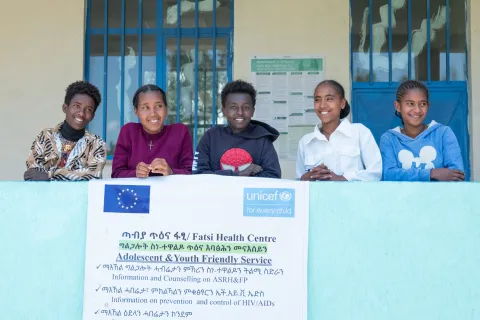
Rekik Bisrat, 12, has become a bright presence at one of the vibrant centres supported by UNICEF’s Urban Sports for Adolescent Development Programme, despite joining only two months ago. She’s not only one of the most regular attendees, but she has also taken on the role of an enthusiastic leader, bringing five other girls into the fold.
Initially drawn to the centre by its karate training, Rekik soon discovered that it also brought her confidence. She says, “As girls, we face many ups and downs, and having this skill gives us strength and teaches us how to protect ourselves in the face of violence.” It has also instilled in her a newfound sense of structure and discipline, transforming her free time into play and purposeful activities.

Beyond sports, Rekik describes how her overall health is improving. Her previous eating habits were limited to whatever her home provided, which were sometimes insufficient or unbalanced meals. But this initiative is transforming her diet as Rekik and other adolescents are learning to grow vegetables and fruits, eat what they harvest, and share the surplus with their families.
“I learn here, and then I tell my mom what I’ve learned. She buys cabbage or lettuce seedlings and encourages me to grow them in our garden. We also grow tomatoes, peppers, potatoes, sweet potatoes, and swiss chard,” she says.

Her coach, Fasika, values every aspect of the centre’s work but believes the food and urban farm programme are particularly important. Many of the children come from low-income households where maintaining a healthy and balanced diet is challenging. For them, the centre provides their only nutritious meal of the day. “We’re seeing changes in the children already—they’re eating healthier, so they look fitter, have more energy, and are more engaged in activities,” she says.

She has also witnessed a shift at the centre where she works. Since the launch of the new initiative six months ago, the number of girls attending the centre has surged. “It’s now even greater than the boys,” says Fasika.
The numbers back this up. At the start of the year, only 113 girls attended the centre; today, that number has quickly risen to 302. Much of the credit goes to the menstrual health and hygiene programme, which empowers adolescents with the knowledge to break taboos and provides girls with essential supplies to meet their needs.
Rekik says she now feels confident sharing this knowledge with her friends. “It feels like a tragic incident the first time you get your period. Most girls cry, like me. But now that I’m learning about it, I tell the other girls they don’t have to be afraid and explain what’s happening.”

Rekik’s story is set against the broader backdrop of Ethiopia, with its youthful population standing at a crossroads of immense potential and tough challenges.
Urban areas face a dual food crisis: some children suffer from obesity and poor eating habits, while others experience food poverty and micronutrient deficiencies. Limited access to essential health services further undermines their well-being and development. This is compounded by severe unemployment, increasing their risk of teenage pregnancy and substance abuse.
UNICEF’s Urban Sports for Adolescent Development Programme aims to transform young people's lives by using sports to tackle important issues like malnutrition and lack of social services while simultaneously creating economic opportunities.
At the heart of this initiative are vibrant centres where play meets purpose. Young people engage in inclusive sports, develop life skills, and learn about sexual and reproductive health, including menstrual health and hygiene. These centres also host climate-smart urban farms where they grow their own food and learn about good nutrition and health. These spaces benefit the entire community, as young people and vulnerable individuals are hired to tend to the farms, poultry units, and beehives, and surplus produce is sent home with adolescents for their families and sold at affordable prices to the local community.


Thanks to support from Global Affairs Canada, this initiative is currently being piloted in three Addis Ababa centres and reaches 250,000 young people. With ongoing support, UNICEF aims to utilize 110 sports centres and 122 youth enrichment centres to reach over 5 million youths annually. Scaling up will empower young people to reach their potential, lead fulfilling lives, and contribute positively to the economy, offering a holistic approach to nurturing Ethiopia's youth and communities.