Small babies, big potential!
Giving premature babies a healthy start in life

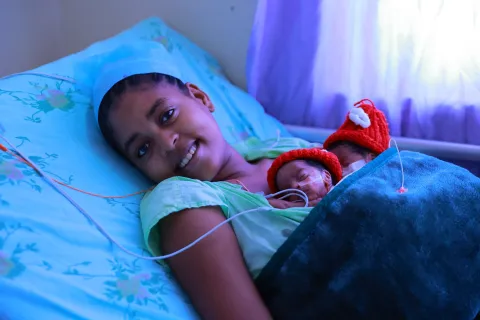
Shibire Nado, 26, was only 34 weeks pregnant with her second baby when her amniotic membrane ruptured. Her little girl was coming too soon. Shibire had never faced anything like this, and she was scared. She lives far from the city, but her health centre referred her to Hawassa Comprehensive Hospital, where she was told that a machine could help her baby. She didn’t hesitate to make the long journey to save her baby.
"I was so confused at first. My baby weighed so little. But since we came here, she is getting stronger and gaining weight. I am also getting treatment here. My heart is full. I am so happy."
Her baby girl has no name yet. For now, she is simply “my baby.” She is small, but every day she grows a little bigger and stronger. Shibire cannot wait to take her home.
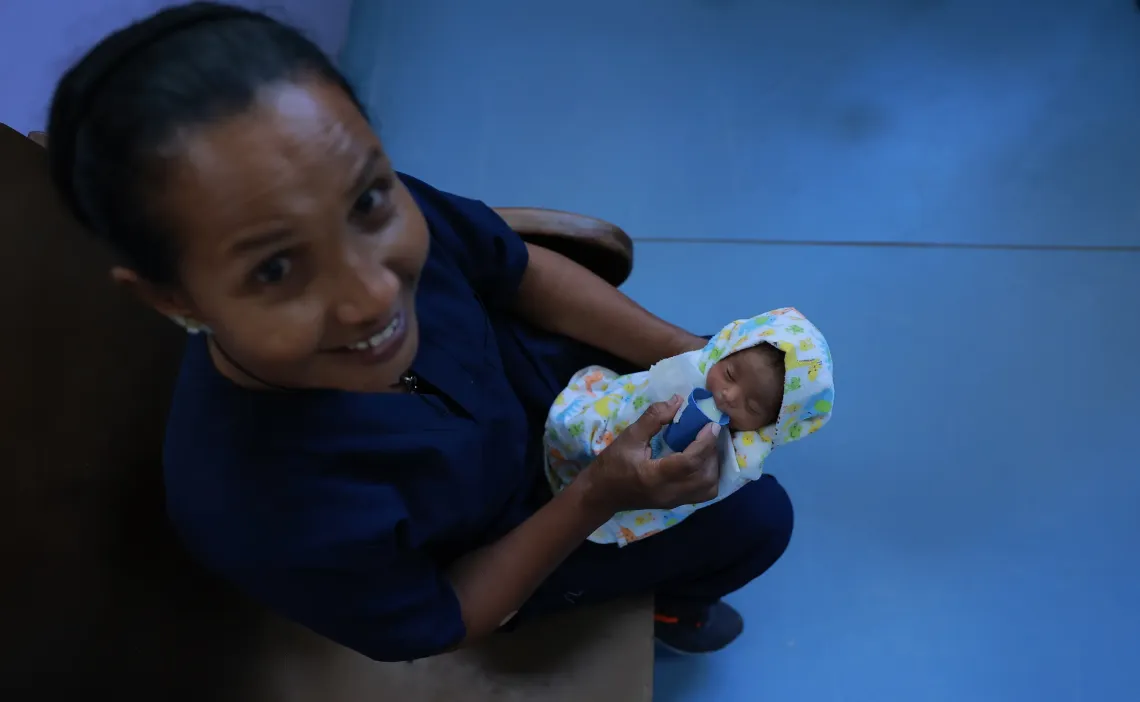
Genet Assefa is a head nurse who has spent seven years caring for the smallest babies in the neonatal unit at Hawassa Comprehensive Hospital.
“Shibire’s baby came to our hospital 72 hours ago. She was born at 34 weeks and weighed just 1.6 kg,” Genet said.
Every day, Genet and her team use machines to give babies a fighting chance. Tiny babies rest in incubators, like warm cocoons, while sensors track their heart rate, breathing and oxygen levels. Because preterm babies’ lungs are not fully developed, they are susceptible to respiratory distress syndrome (RDS). A continuous positive airway pressure (CPAP) machine helps keep their lungs open, while a ventilator breathes for babies who are too weak to breathe on their own. A special blue light, called phototherapy, treats jaundice. Genet also watches closely for Rh incompatibility, which occurs when the mother’s and baby’s blood types do not match and can make the baby very sick. Early treatment helps protect newborns.
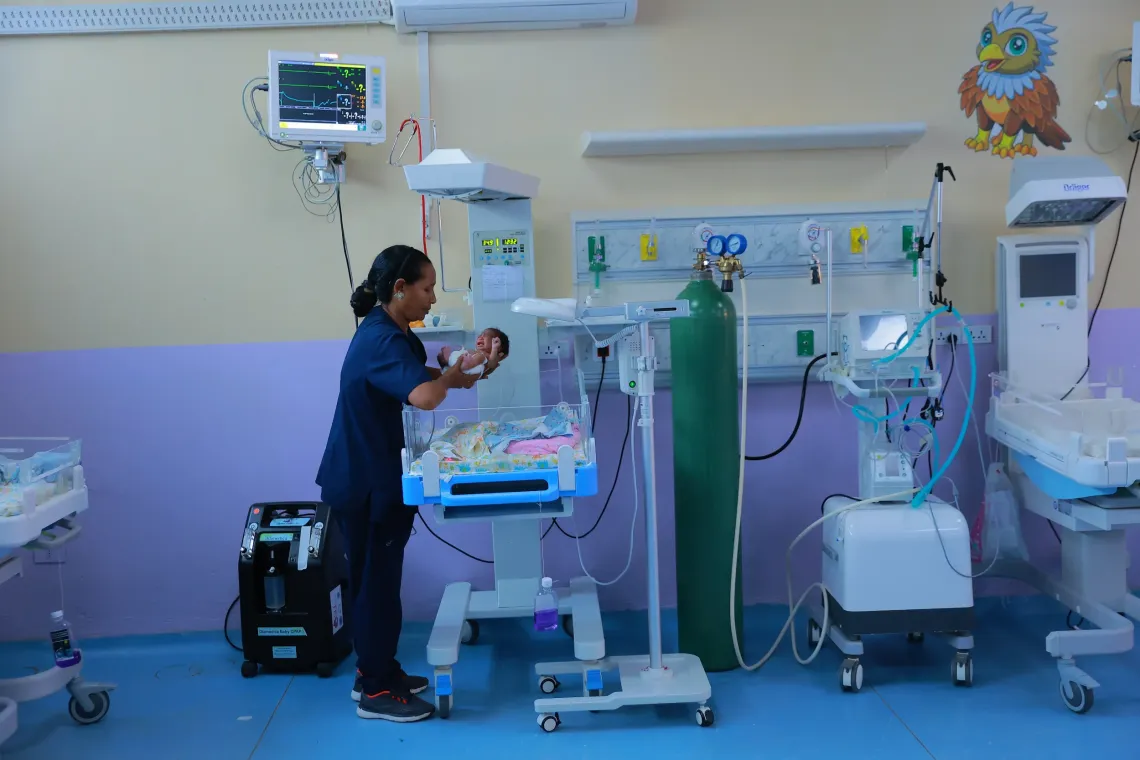
"With the help of the machines, we do everything possible to save newborns and they recover, and we see them leave from here; we are so happy, even more than their parents," she says. "It means our efforts have borne fruit. It is so sad when they come here with a preterm baby and might leave empty-handed."
In Ethiopia, about 1 in 40 newborns die within the first four weeks of life. Complications from being born too early are among the leading causes. Many of these deaths can be prevented when danger signs are spotted early and families reach care quickly.
In hospitals across Ethiopia, small teams of nurses and doctors care for babies born too soon or too small, serving large communities with limited resources. Referral hospitals serve millions of people, and their neonatal intensive care units (NICUs) care for the smallest and sickest newborns. But demand exceeds capacity, and late or unannounced referrals can delay treatment.
Kangaroo Mother Care (KMC) is an intervention in which mothers hold their premature babies skin-to-skin against their chests and keep them securely wrapped. Skin-to-skin contact helps to stabilize the baby’s body temperature, steadies the heart rate and helps with breathing. For premature and low-birthweight babies, it can reduce deaths by as much as 40 per cent.
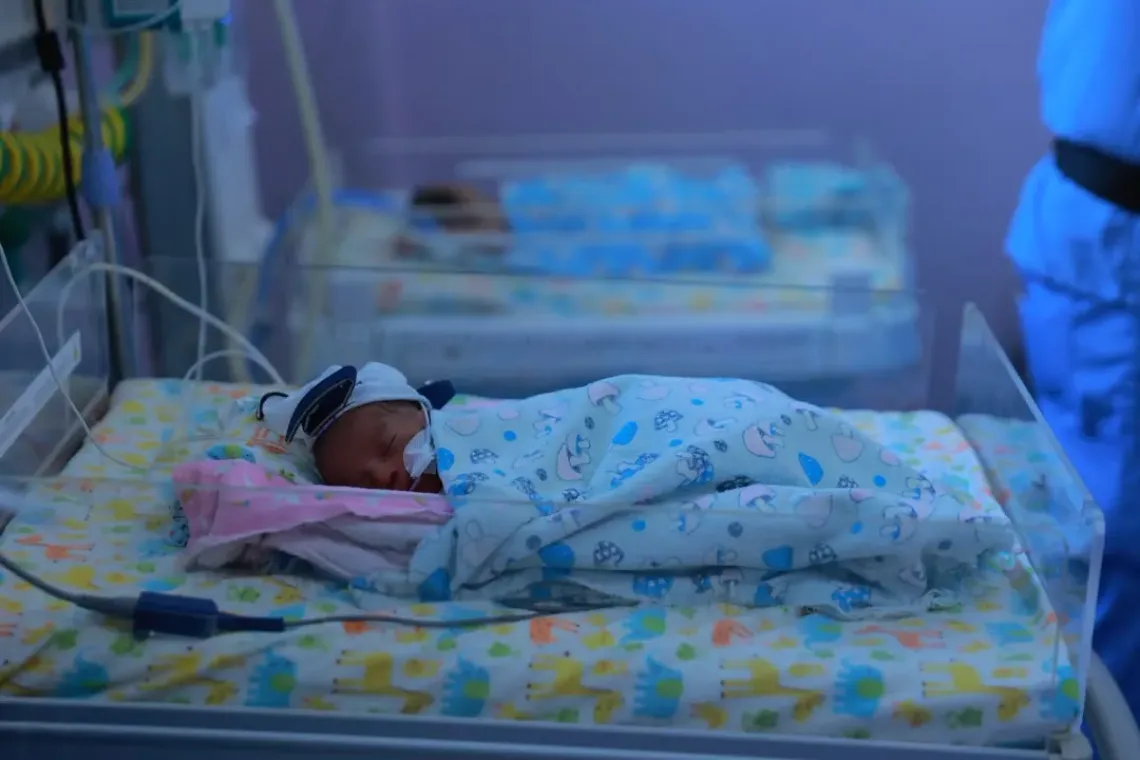
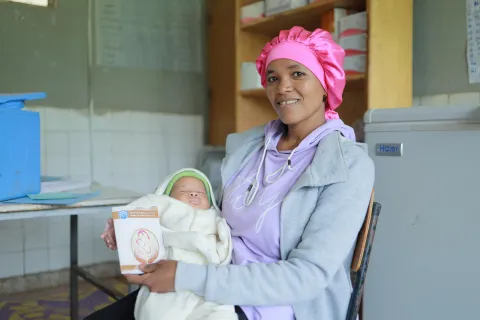
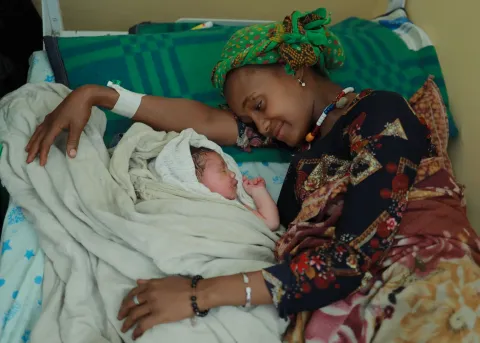
On World Prematurity Day, babies born too soon remind us that small babies have big potential and that care must continue after they leave the hospital.
UNICEF is supporting the Government to accelerate and scale up quality newborn care at all three levels of the health system: in communities, through the community-based newborn care programme; at health centres, by establishing Newborn Corners to provide essential care immediately after delivery, including the management of birth asphyxia; and in hospitals, by strengthening the knowledge, skills and practices of NICU staff so they can provide advanced care for sick newborns. The Government is also establishing learning hospitals in each region to provide intensive care for critically ill newborns through NICUs.
Through UNICEF thematic funding, this work can be sustained and expanded to improve newborn and maternal health, helping newborns not only survive but thrive.
Surviving the first days is only the beginning. Yet only 31 per cent of newborns in Ethiopia receive a postnatal check-up within two days of delivery. Care after discharge, including regular check-ups, vaccination, and support with feeding and growth, helps small babies thrive.
For Genet, the happiest moment is still the day a recovered baby leaves the unit. But continued care helps keep that baby healthy long after leaving the hospital. Small babies, big potential: investing in follow-up care helps protect their future.