No mother, no baby left behind
In Sidama Region, different levels of the health system are working together to keep mothers and newborns safe.

Ethiopia's health workers, health facilities, and referral links work together so mothers and newborns get quality care at every stage, from pregnancy to early childhood, ensuring that no one falls through the gaps.
In Sidama, 23 of every 1,000 babies die in their first month of life. A study of newborn deaths in the intensive care unit at Hawassa University Comprehensive Specialized Hospital found that the main causes were being born too early (44 per cent), serious infection (28 per cent), breathing difficulties at birth (19 per cent) and birth defects (9 per cent). Many of these deaths can be prevented when danger signs are spotted early and families reach care quickly. Delays in recognizing problems and seeking care were linked to 69 per cent of reported deaths around the time of birth in the region.
At the Health Post: a health worker's door-to-door visit saves lives.
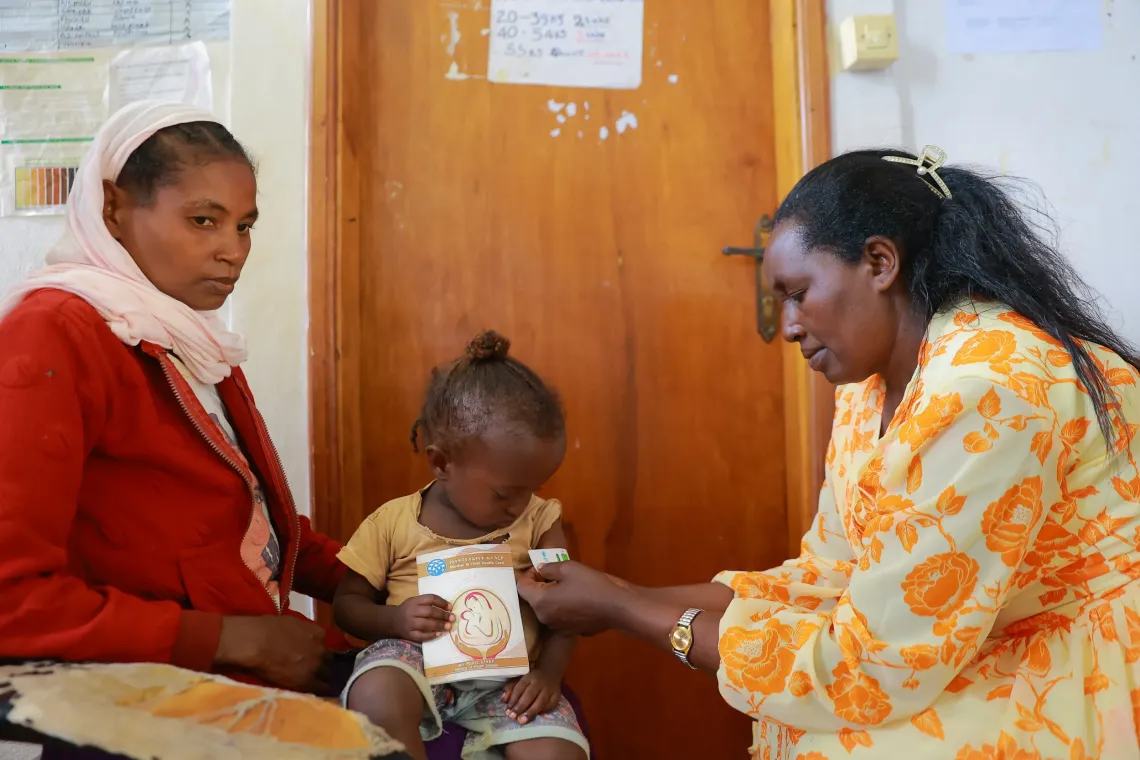
During her pregnancy, Zinash (25), a mother of two, developed swelling and high blood pressure. She did not know how serious these signs were, but Yeshi Tefera did.
Yeshi, a health extension worker at Tesso Health Post, walks from house to house checking on families who might never reach a health facility. During a visit to Zinash, she recognized the warning signs and immediately referred her to Aleta Chuko Primary Hospital.
Zinash's daughter, Mirikat, was born at 34 weeks, weighing just 1.5 kilograms. She was too tiny to go home, so the hospital admitted her to specialist newborn care.
"I was really worried when my daughter was born," Zinash remembers. "She was very small, and they put her into a machine. With the support of the hospital, she started gaining weight and survived. I thought she was going to die."
Zinash was also treated and recovered fully. Today, mother and daughter are healthy and at home.
"I am so happy," says Zinash. "With God and the health workers' support, my baby has survived. My happiness has no limits."
At the Health Centre: learning the danger signs before labour begins.

Azalech Yonas (25) is nine months pregnant and due to give birth in two days. Rather than wait at home, far from the nearest health facility, she is staying at the maternity waiting home at Gambella Health Centre, so skilled care is close when labour begins.
This is Azalech's second pregnancy, and she has delivered at the health centre before. "So far I've received vaccinations, an ultrasound and medicine," she says. "The staff is really nice and caring, so I keep coming back."
"Staying away from my family is difficult because my home is very far from here, and staying overnight is hard," she says. "But it also gives me some rest."
She also enjoys the Pregnant Mothers' Conference held at the health centre. "We get to mingle with the other moms going through the same situation, and we also learn about the danger signs, including severe headache, swelling of the face, hands or feet, high fever, severe abdominal pain, difficulty breathing, or if the baby moves less or stops moving," she says.
At Aleta Chuko Primary Hospital: small babies, big chances.
The primary hospital, alongside seven health centres and 21 health posts, receives referrals from eight health facilities. Its newborn care unit offers basic care, with one pediatrician, one general doctor, and seven nurses: a small team serving a big community.
Kangaroo Mother Care has been provided to close to 900 low-birthweight and premature newborns. It is a simple but powerful practice: a mother holds her baby skin-to-skin against her chest, keeping the baby warm.
Here, small and premature babies get basic care. Mothers learn to hold their babies close to keep them warm and help them feed. UNICEF has supported 16 of the 21 primary hospitals in Sidama with training and equipment for this care. But there is still not enough space for mothers to stay near their babies.
At Hawassa Comprehensive Hospital: specialised care for the smallest babies.

Hawassa Comprehensive Hospital is a referral hospital serving 3.5–5 million people. Its Neonatal Intensive Care Unit (NICU) cares for more than 1,000 newborns each year, with a team of newborn specialists, pediatricians, nurses and midwives.
Inside the unit, machines help the smallest babies stay warm, breathe and grow. Incubators and radiant warmers keep them warm. Gentle breathing-support machines and ventilators help them breathe. Phototherapy lights treat jaundice, and infusion and syringe pumps give medicine and fluids safely.

Genet Assefa, a head nurse who cares for the hospital's smallest babies, has worked there for seven years.
"When children recover, and we see them leave, we are so happy, even more than their parents," she says. "It means our efforts have borne fruit. I also have children, and I know how they feel. It is so sad when they come here with a preterm baby and might leave empty-handed."
Demand for the NICU exceeds its capacity, which means heavy workloads for nurses, and late or unannounced referrals delay treatment. Training on Kangaroo Mother Care is limited, and there is not enough space for mothers or supplies to prevent infection. Aleta Chuko faces similar shortages of space, equipment, supplies, and health workers.
UNICEF is strengthening care for mothers and newborns across Sidama Region. It has upgraded the newborn care unit at Hawassa University Comprehensive Specialized Hospital, equipped 16 of the region's 21 primary hospitals to care for small and sick newborns, and supported more than 400 Volunteer Health Leaders who connect families to the care they need.
Through UNICEF thematic funding, this work can be sustained and expanded to support maternal and newborn health, so that newborns not only survive but thrive.