Keeping Polio at Bay
Health workers are paving the path towards a polio-free future for every child in Ethiopia

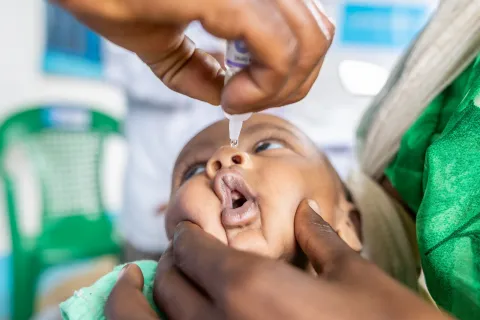
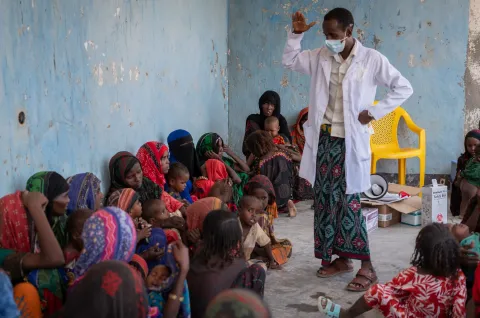
In early December, Ethiopia launched a nationwide integrated polio immunization campaign targeting 25 million children. This large‑scale effort relied on the coordinated work of thousands of volunteers, community mobilizers, and frontline health workers who went door to door and village to village to ensure no child was missed. Among them are Lemlem and Radia.

Lemlem Beyene starts her day with a smile and a clear mission ahead. Early morning at Adare Health Centre, she collects the required doses of polio vaccine after completing the necessary paperwork, while her colleague, Melesech Yohannes, coordinates dispatch to ensure every supply is ready for the day.

From there, Lemlem rides her bike to the outskirts of Hawassa town, cutting through the morning traffic. “What motivates me to continue this work, even when conditions are difficult, is helping my community,” she says. “Seeing children protected gives me great satisfaction.”

Before the campaign began, vaccines were carefully inspected and transported from regional pharmaceutical supply service hubs to health centres, including Adare Health Centre, where Lemlem works. This preparation strengthens the cold chain and quality assurance systems that ensure every child receives safe and effective protection.

House by house and child by child, Lemlem works to ensure no one is left behind. “Families welcome us into their homes, offer us water or coffee, and encourage us to continue,” she says. “Their support motivates us to reach every child.”

“Walking long distances is the hardest part of my work. But when I see the children’s faces, I forget all the difficulties.”
In the village of Tula, another health worker, Radia Aman, walks across farmlands with her colleague, carrying a vaccine carrier box. She travels deep into remote areas to find every eligible child. “Walking long distances is the hardest part of my work,” Radia says. “But when I see the children’s faces, I forget all the difficulties.”

While Radia administers the vaccine, her colleague, Yenenesh Ermias, ensures that records are accurately maintained.
UNICEF, with funding from the Global Polio Eradication Initiative (GPEI), supports Lemlem, Radia, and thousands of other health workers involved in the national polio campaign. This support includes technical expertise, vaccine management, logistics, and coordination that enable teams to safely reach children in both urban centres and remote communities.
Through their dedication, health workers like Lemlem and Radia are helping bring Ethiopia closer to a polio‑free future. With sustained support, their work delivers life‑saving protection today while moving the country closer to ending polio for good.