

“I don’t want to get married!”
Rescuing Zemzem and restoring her future

October 24, Derrera, Sidama region Ethiopia
The day was setting in when Zemzem’s outing to run errands took a terrible turn. Before she reached her home, three men abducted her and took her away. All her desperate attempts to free herself went in vain. The three men were strong.
The men hid her in an unfamiliar house. Zemzem was terrified but held on to her faith and prayed for a miracle. Her ordeal was cut short when the local authorities arrived at the house to rescue her. In fact, the community in Derrera made a strong commitment to end child marriage and abduction. So, as soon as Zemzem’s abduction happened, the local police, volunteers, and social workers rallied to identify where she was kept in hiding and went for a rescue. It didn’t take them long, and they found her the next day.
“I am young, and I don’t want to get married but, most importantly, I don't know anything about marriage. All I know now is that I want to learn, study, and make my dad proud,” said Zemzem as she wrote her statement on the blackboard.

Jemal Kedir, Zemzem’s father recalls the horrific night. “I kept thinking of the worst, but I had to remain positive and hopeful to get my daughter back,” said Jemal with gratitude and relief.
Jemal was returning home from the mosque when he heard the distressing news of his daughter’s abduction. Overwhelmed by shock and fear, he wasted no time. He immediately informed the kebele, Abraham the social worker, and volunteers to help with her case.
Jemal knew the consequence that awaited his 13-year-old daughter if she had not been found. “If she hadn’t been found, she would have suffered from the physical and emotional pressure of early marriage,” says Jemal.

The community in Derrera made a huge stride in preventing child marriage, which was a common practice.
“We used to have 15-20 child marriage cases within a span of 7 months, but now the number has significantly reduced. Previously, the fate of young girls was determined through negotiations between families, often resulting in early marriages. But that has changed,” says Abraham, the social worker.
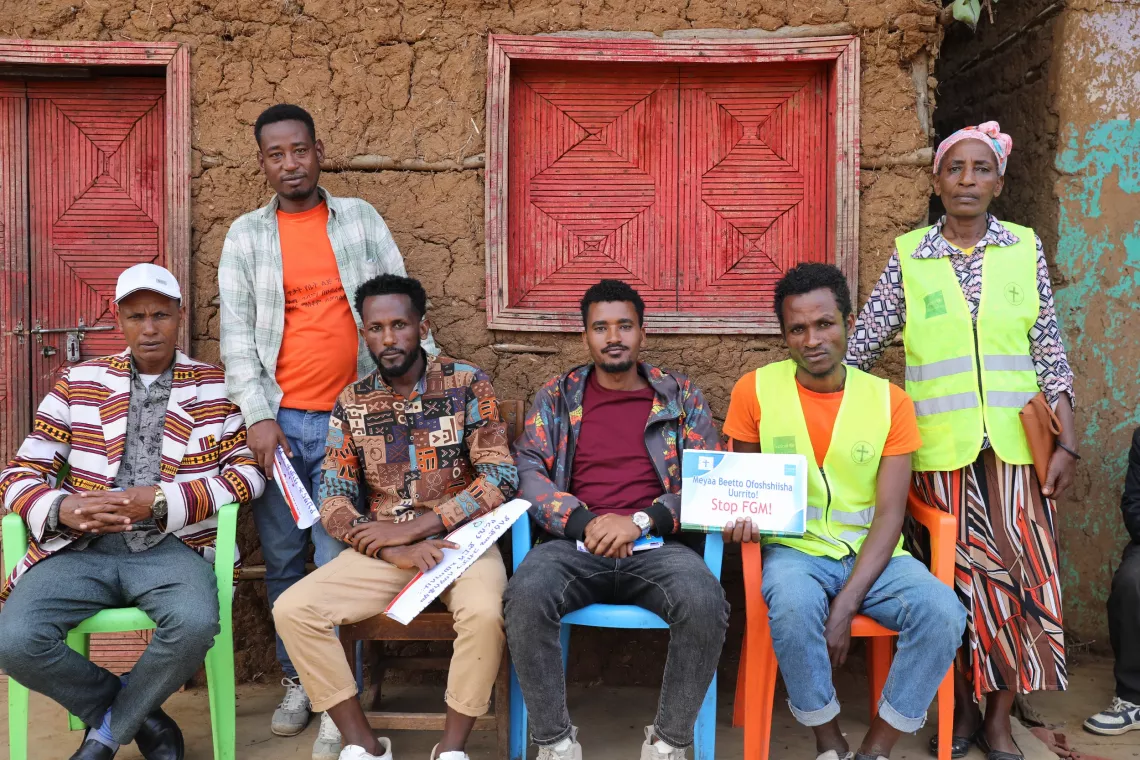
The social worker and volunteers teach the community about the effects of early child marriage and take measures against those who force the practice. This helped reduce the number significantly.
“The community now understands and refuses to wed their daughter. They also know that abduction is not something you move on with a simple apology or negotiation.’ Says Abraham.
Through the Spotlight Initiative Africa Regional Programme, UNICEF is shedding light on the consequences of child marriage. This programme empowers communities and implements preventive measures to protect vulnerable girls against harmful practices in the woreda (district).
Jemal now more than ever wants his daughter to stay in school, learn, and become a force of change for her community, just as they had been for her.
“I don’t have much to give to my daughter, but I will carry all the burden to make sure that she gets an education.”

Hajitu Mohammed, Zemzem’s mother, shared her husband's concern and opposes the practice of child marriage. She believes that child marriage steals young girls’ futures. Hajitu wants her daughter to finish school before considering marriage. Though she is grateful for her life, she wants a much better life for her daughter.
“In the future, when she chooses to marry, I hope she finds a strong partner who will share the burdens that come with being a wife and a mother,” Hajitu adds.

Zemzem concluded, smiling with hope: “I want to become a teacher because I love learning, especially math. I would teach children about math and child marriage. I would also share my experience, so they know they have a choice for their future.”


