A chance to start, a future to build
With ambition and opportunity, young people in Ethiopia’s Afar Region are turning business opportunities into pathways to a brighter future, in partnership with the Mastercard Foundation

“This is just the beginning. We are a strong team, and we know we can do even better.”
Dawe, Afar Region, Ethiopia: A flock of chickens gathers around Kuhuli’s feet as she fills their feeder at a poultry farm run by a group of young people in Dawe Woreda. She then checks the nesting areas, carefully filling trays with freshly laid eggs before asking her colleague, Shemsia, to record the day’s production.
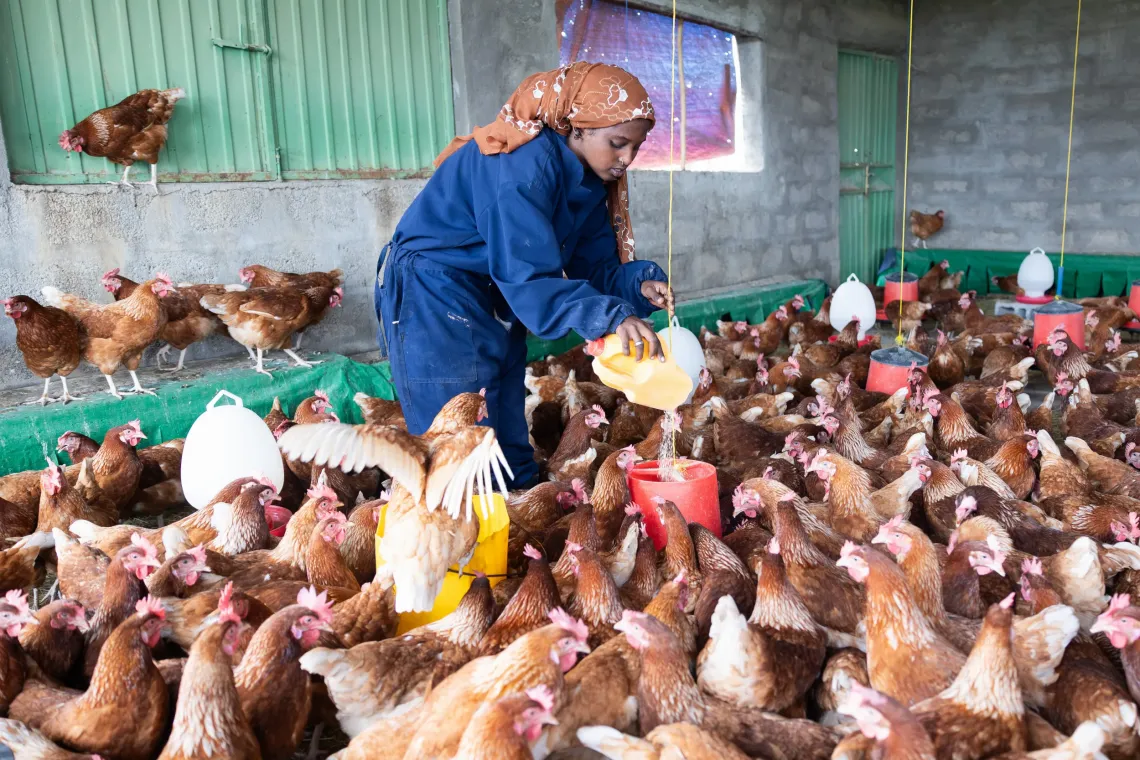
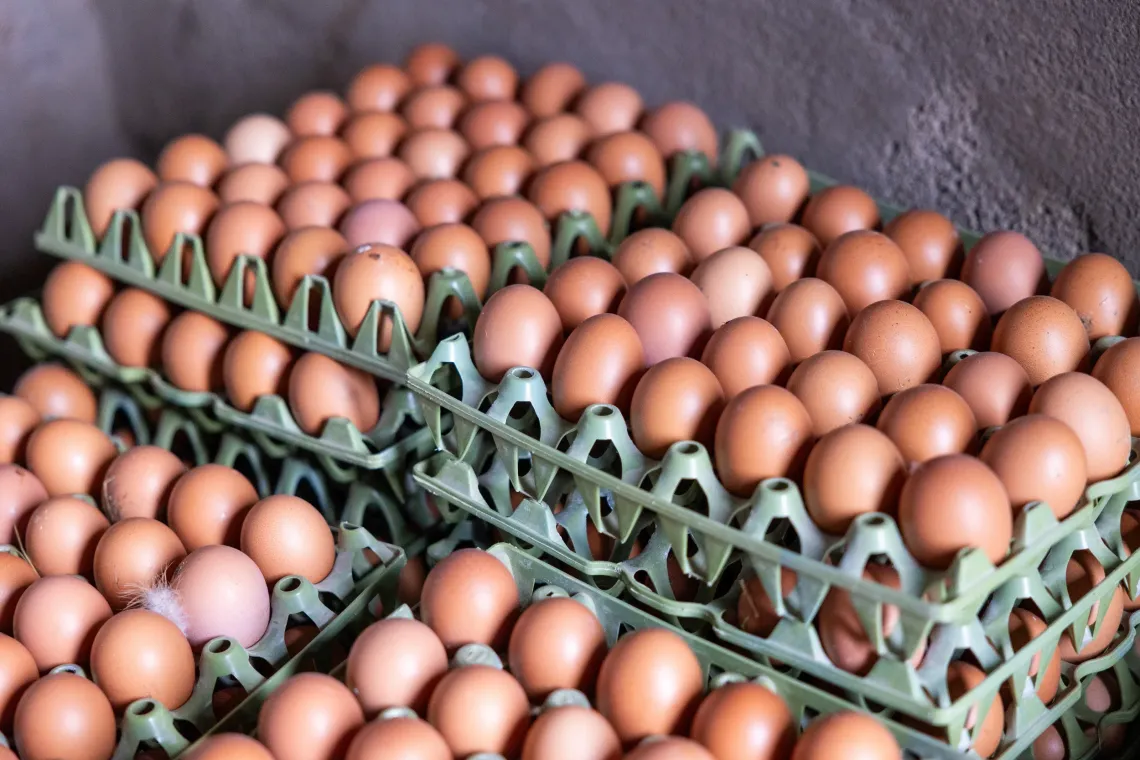
“We collect up to 300 eggs a day, and the number is growing,” she says. “As long as we feed them properly, they lay a good number of eggs.”
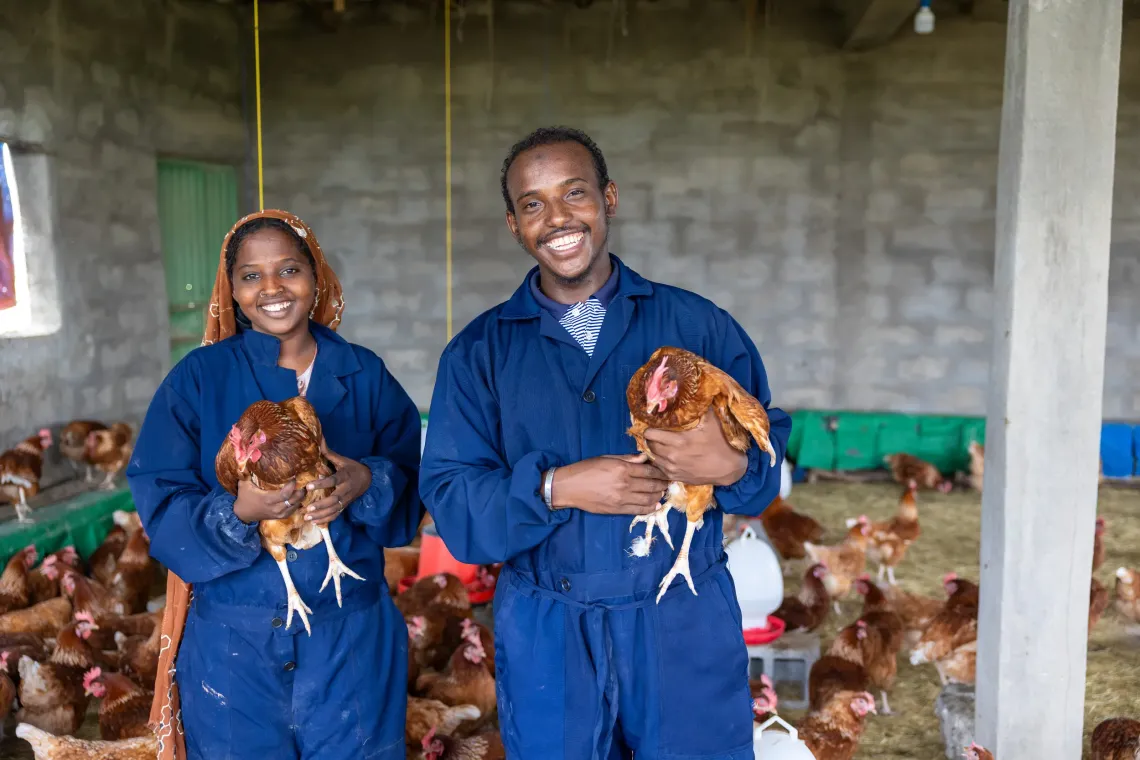
Before Kuhuli and 19 other young people started their poultry farm, they were unemployed. Faced with shrinking job opportunities, limited access to start-up capital and a lack of skills training, they had few opportunities to fulfil their potential.
Then, things began to change for the better. Through the UNICEF and Mastercard Foundation partnership Biqu Wetat (Capable Youth) Programme, Kuhuli and the group received 400 chicks to start their poultry business. The programme supports young people like Kuhuli to build sustainable livelihoods through business opportunities.
The journey begins by connecting unemployed young people with nearby one-stop service centres. There, local Labour and Skills offices provide guidance on employment opportunities and support with business development and planning.
Based on their interests, young people are then grouped into business sectors, including poultry farming, agriculture, shoat fattening and garment production. They receive tailored business development training, initial seed capital and workspace to help their businesses get off the ground and grow.
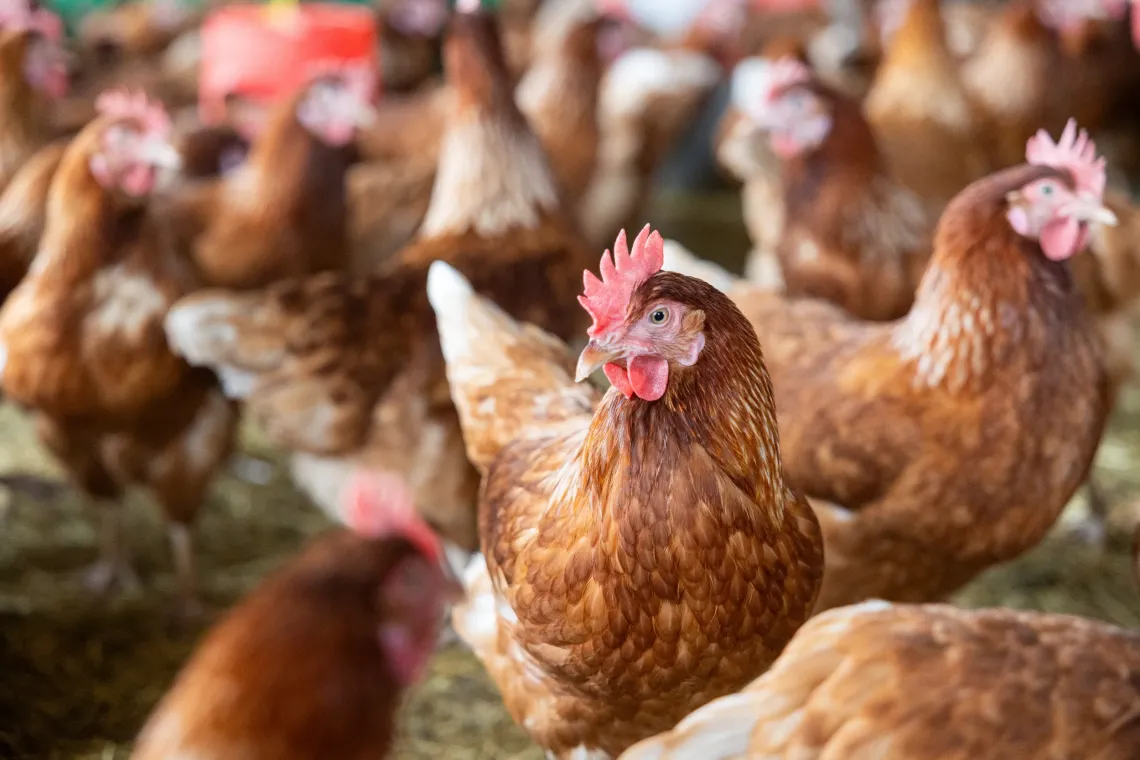
Kuhuli and her group chose poultry farming and received two weeks of training in poultry farm management, business development and marketing. After completing the training, they received workspace, 90-day-old chicks, medical supplies, chicken feed and production materials to start their business.
Slowly but surely, Dewe Poultry Farm began to thrive. The soft, fluffy chicks grew into pullets and eventually into fully grown hens. Under the care of the young entrepreneurs, the chickens began laying eggs.
“It was such a happy moment for all of us,” says Hassan, the group’s leader. “We were thrilled to see our hard work paying off.”
But the excitement was short-lived. Shortly after the chickens began laying eggs, 15 of them showed signs of illness.
“We were happy to collect our first eggs, but then we noticed that some of the chickens were sick,” says Hassan. “We immediately informed the local agriculture office, and they sent someone to help us.”
The sick chickens were isolated and treated. Fortunately, they all recovered. Day by day, the number of egg-laying chickens continued to increase.
“With 400 chickens, the highest number of eggs we have collected in a single day is 350,” says Hassan. “This is encouraging, and now we know how to keep them healthy.”
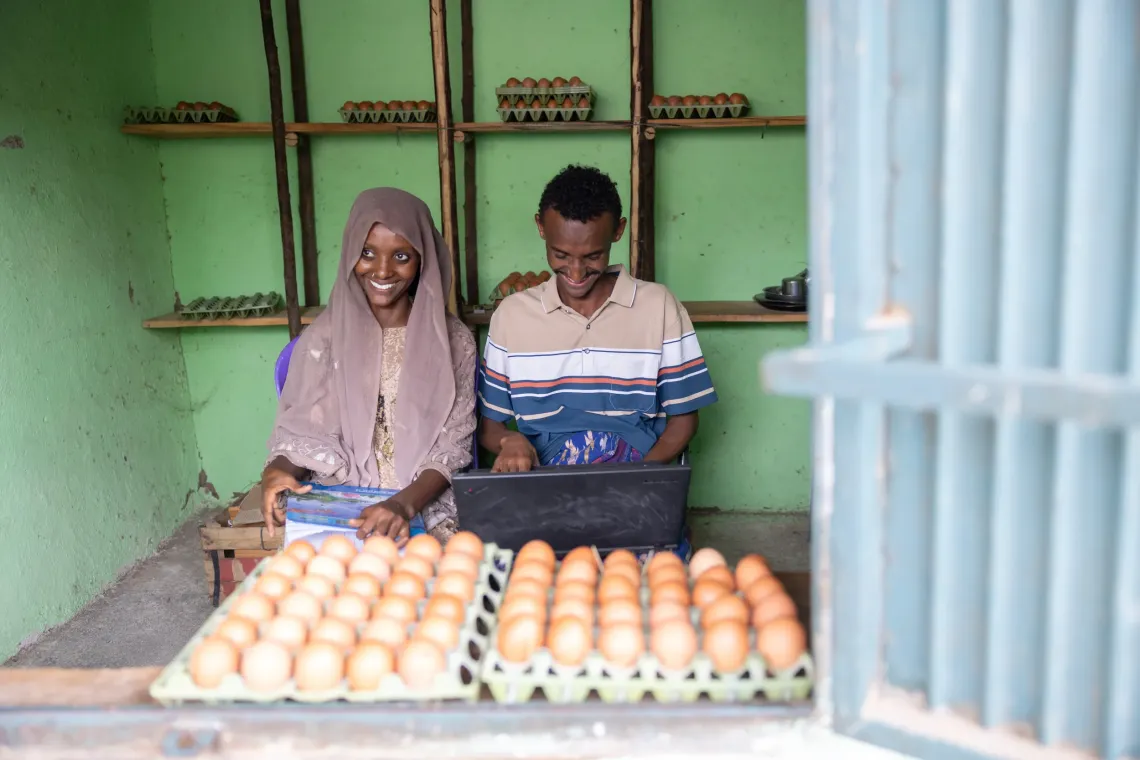
Dewe Poultry Farm has since opened a small egg shop in the centre of town. Shemsia and Ali are responsible for the farm’s accounting and marketing.
“We sell eggs here at the shop and in town during market days,” says Shemsia. “We also promote our products through social media.”
“Eggs used to be brought here from larger nearby towns such as Dessie and Kombolcha,” adds Ali. “Now, we supply eggs to our town and nearby communities, including Telalak and Dalifage.”
Business is picking up for the young entrepreneurs. Ali believes that diversifying their products is also important for sustaining their income. Alongside fresh eggs, the group has therefore started selling snacks made from boiled eggs and potatoes at their shop.
The young entrepreneurs have even bigger plans for the future. In addition to producing eggs, they aim to expand into broiler farming. This will enable them to increase production, diversify their income and create employment opportunities for more young people as their poultry business grows.
“We have high hopes for the future,” says Hassan. “We are always learning and exploring new ways to make our business more successful. We also plan to expand into crop farming because we have access to a good plot of land.”
With the right opportunity and guidance, young people in Dewe are showing that they can build better futures for themselves and their communities.
“This is just the beginning,” Hassan concludes. “We are a strong team, and we know we can do even better.”