Building skills, confidence and a pathway to opportunity
Through the UNICEF–Mastercard Foundation partnership, young women in Ethiopia are gaining practical skills to build better futures and support their communities
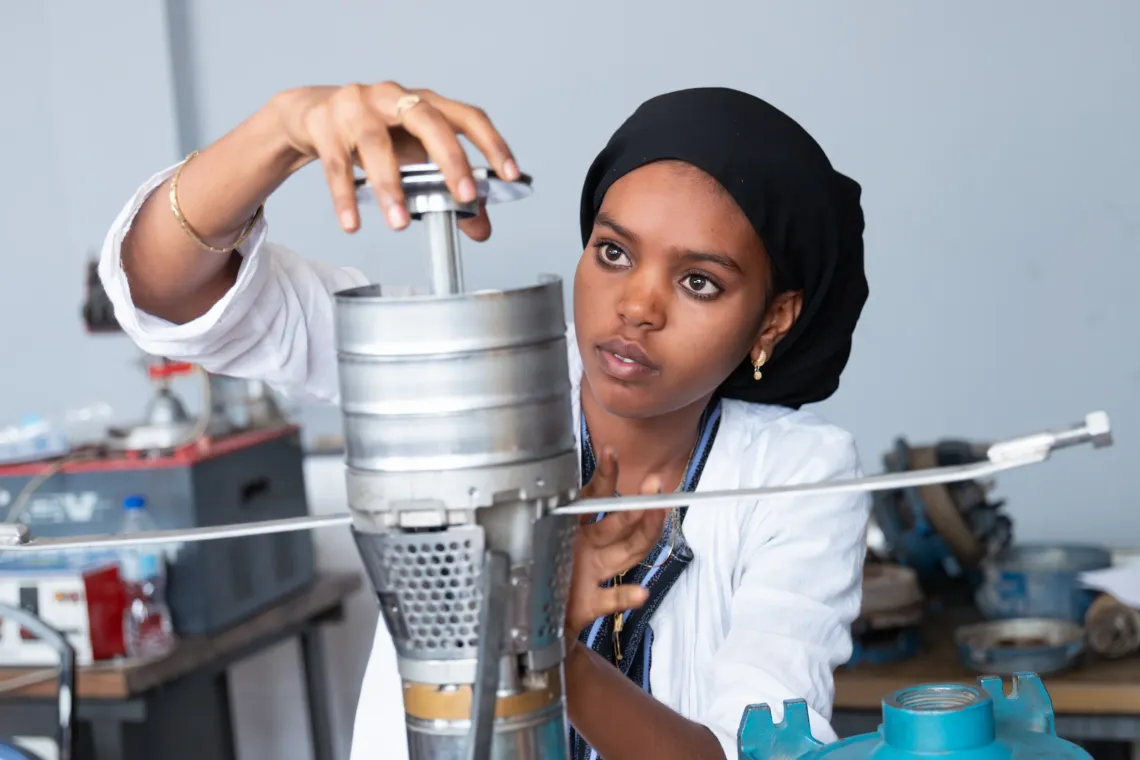
Amibara, Afar Region, Ethiopia: Fatuma Adem, 19, carefully fits together the components of a submersible water pump during a practical training session. She and 35 other young people from the Afar Region are taking part in an intensive 45-day course at the Ethiopian Water Technology Institute, learning to assemble and disassemble water pumps and solar panels as part of their training in water scheme maintenance and solarization.
“We learned about submersible and surface water pumps, solar panels and generators,” says Fatuma. “We first studied the different parts using diagrams before moving on to practical sessions, where we learned each step of the process.”
When Fatuma did not pass her university entrance exam, she was disappointed. But what initially felt like a setback soon marked the beginning of a new journey. She and other young people in her community heard about the One Stop Service Centre, which offered support to access skills training and employment opportunities.
Fatuma did not hesitate. She registered at the centre and was later selected for training in water scheme maintenance and solarization. The opportunity gave her more than new skills. It opened the door to a new career path and renewed her sense of possibility for the future.
She quickly bonded with other young people from across the Afar Region. As the technical training progressed, so did her interest in understanding how different water pump systems work.
“Some of the heavier pump components were difficult to assemble and disassemble, but we worked together as a team,” she says. “I was most fascinated by the solar-powered pump systems because they are very practical for our area.”
Growing up near the plantations of Amibara Woreda, where the Awash River flows through vast stretches of farmland, Fatuma became familiar with irrigation from an early age.
“My uncle has a farm, and I enjoy watching him work in the fields,” she says. “Many farmers use irrigation canals to grow cotton, vegetables and other crops.”
“It makes me happy to see the water flowing.”
Back in her village, Fatuma is putting her new skills into practice. Together with eight other young people, she has formed a small enterprise providing pump maintenance and troubleshooting, pipeline installation and solar panel installation services to farmers in Amibara.
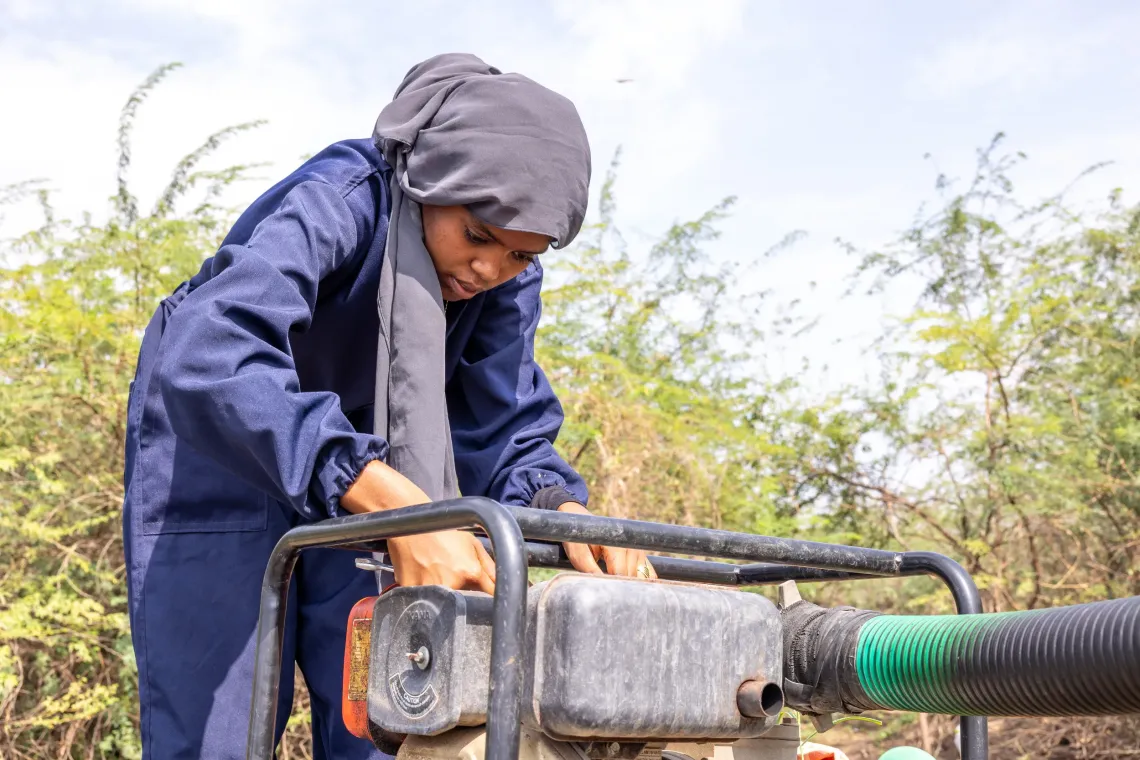
“Farmers sometimes struggle with minor generator problems, such as a clogged fuel filter that prevents the generator from starting,” she explains. “We move from farm to farm, helping them identify and solve these issues.”
Through its partnership with the Mastercard Foundation, UNICEF has trained 36 young people in Ethiopia’s Afar Region in water scheme maintenance and solarization. The training equips participants with technical skills and supports them to establish small enterprises through the Biqu Wetat (Capable Youth) programme.
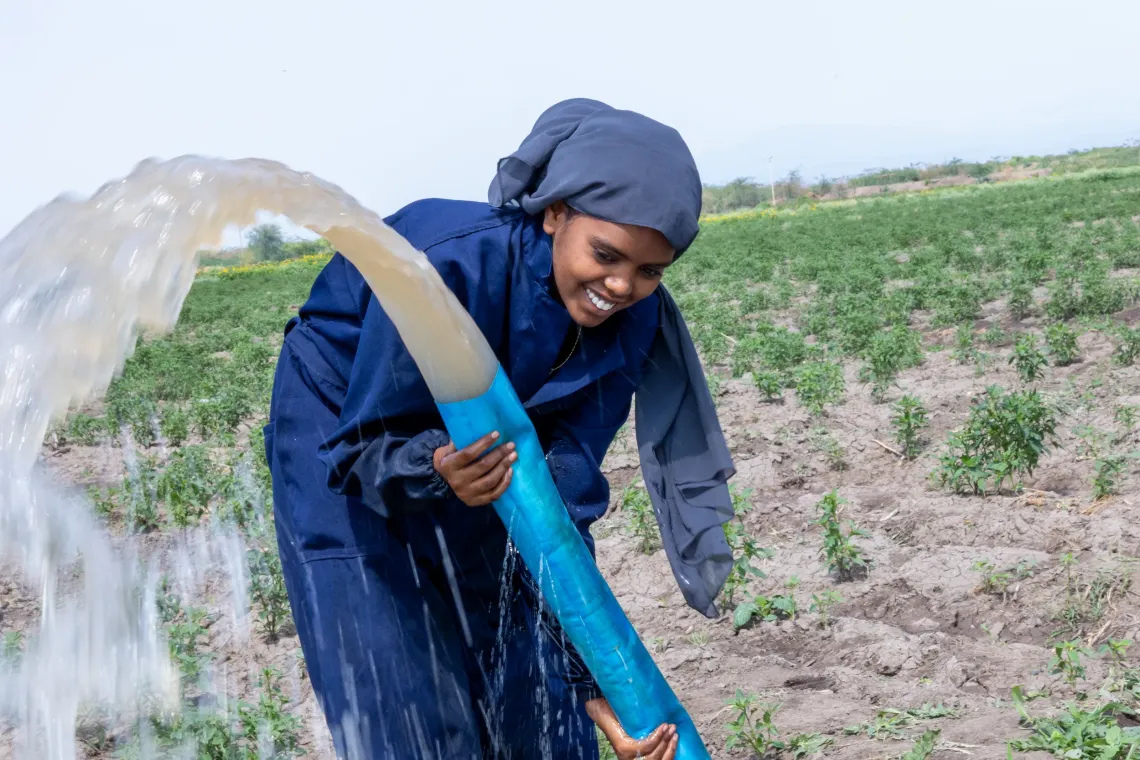
“It makes me happy to see the water flowing,” says Fatuma after helping repair an irrigation pump on a green pepper farm.
While many farmers in Amibara still rely on diesel-powered water pumps, Fatuma hopes to see a shift towards renewable energy.
“We have sunshine throughout the year, so solar-powered pumps make perfect sense here,” she says.
Fatuma and her colleagues plan to expand their work beyond pump maintenance. They hope their small enterprise can secure subcontracts for water pipeline installation projects in town and work closely with the regional water bureau.
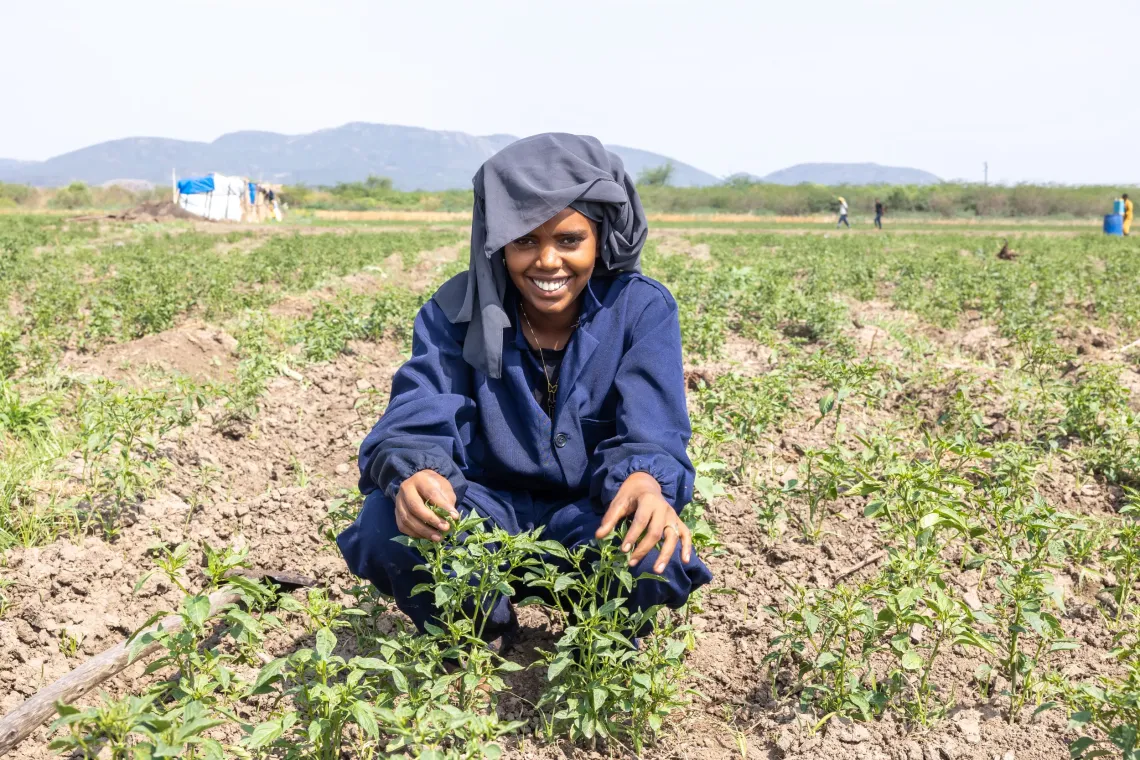
Fatuma chose a path that allowed her to develop technical expertise in water systems and solarization. She is proud of that decision and believes her skills can help local farmers increase productivity, improve livelihoods and strengthen their communities.
Equipped with confidence and practical skills, young women like Fatuma are building better futures for themselves and contributing to stronger communities.
The UNICEF and Mastercard Foundation partnership, Biqu Wetat (Capable Youth) Programme, is helping young people build sustainable livelihoods. In Afar Region, the programme is implemented in partnership with the Action for Integrated Sustainable Development Association (AISDA).