Cholera surge in Comoros
UNICEF responds swiftly to the needs of children and communities
A cholera outbreak was declared by the Union of Comoros on 2 February 2024, threatening the lives of children.
As of February 18, 2024, a total of 83 cholera cases, with a significant number of cases involving children between the ages of 10–19. Six fatalities have been reported, including 4 children.
In the face of this crisis, UNICEF has mobilized a robust response plan as part of the Government's national strategy.
UNICEF Comoros has taken proactive measures to assist the Government of Comoros in implementing a comprehensive, multi-sectoral plan to address the outbreak. Working closely with government authorities, UNICEF supports the overall National Coordination, advocating for a holistic approach to combatting cholera. This approach focuses on strengthening coordination and advocacy efforts, prioritizing water, sanitation, and hygiene (WASH), infection prevention and control (IPC), and social and behavior change communication (SBC)/risk communication as well as community engagement (RCCE).
UNICEF’s response
Efforts have been concentrated on enhancing case management capabilities for severe cholera cases. This includes refining the Case Management Protocol based on joint assessments conducted at healthcare facilities including El Maarouf Hospital and the Cholera Treatment Center in Samba. Additionally, UNICEF has undertaken critical infrastructure improvements to safeguard the water cistern serving the Cholera Treatment Center in Samba, which was previously vulnerable to cholera contamination.
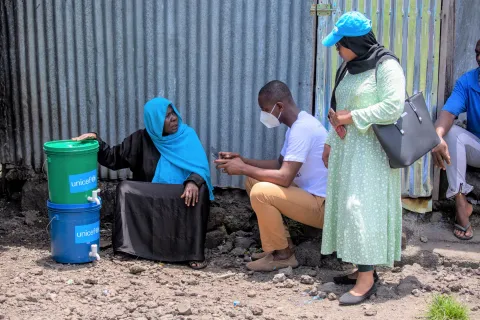
At the community level, UNICEF is actively engaged in initiatives to reduce the spread of cholera. Through the government-led case-area targeted interventions (CATI) strategy, UNICEF is deploying proactive measures targeting affected households and their surroundings. To date, UNICEF has supported the distribution of 200 ‘Stop Cholera’ kits, reaching over 1000 individuals with essential items like water purification tablets, soaps, buckets equipped with taps, and educational materials. The approach also fosters community engagement by promoting proper hygiene practices, encouraging widespread participation in maintaining health and hygiene standards within the community and advocating for timely seeking of medical attention.
UNICEF has also extended support to all 14 schools (approximately 2,800 students) affected by cholera through decontamination, provision of handwashing stations, and guidance session to students and staff on how best to keep themselves safe.
UNICEF continues to engage with the public through multiple channels, including mobile and digital platforms. UNICEF produces and shares testimonial videos featuring healthcare professionals and parents of affected children to raise public awareness, counter misinformation, encourage the prompt seeking of healthcare, and advocate for proper hygiene practices.
To further strengthen the national cholera response, UNICEF has procured vital medical supplies to treat over 600 cholera patients, with an additional 7000 ‘Stop Cholera’ kits being made available, potentially reaching over 35,000 people.
UNICEF remains steadfast in its commitment to supporting the Government and people of Comoros during this challenging time, employing a multifaceted approach to curb the spread of cholera and protect the health and well-being of children and communities.