New analysis shows progress towards more reliable and affordable water services for displacement-affected communities in East Africa
UNICEF and UNHCR programme supported by Germany reaches over 243,000 people while reducing water costs and strengthening climate-resilient systems in Ethiopia, Somalia and Sudan
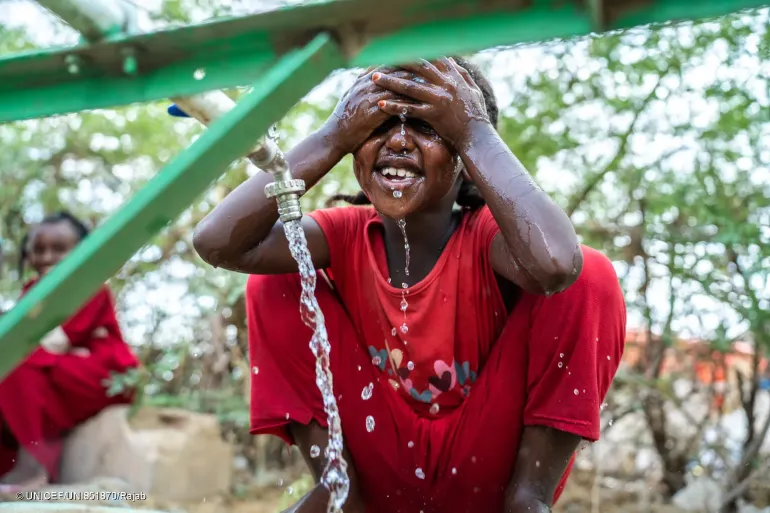
NAIROBI, 29 June 2026 – A new evaluation of the Regional Programme on Water and Sanitation for Refugees, Internally Displaced Persons and Host Communities in East Africa (R-WASH) shows progress in improving water services for displacement-affected communities across Ethiopia, Somalia and Sudan.
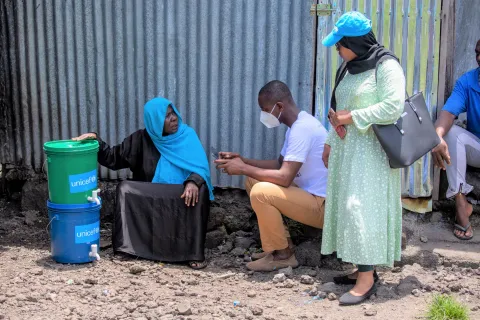
Implemented jointly by UNICEF and UNHCR with support from the German Federal Ministry for Economic Cooperation and Development (BMZ) through the German Development Bank (KfW), the R-WASH programme has reached more than 243,000 people with water services, exceeding its target by more than 20 per cent, and strengthening climate-resilient and utility-led approaches to service delivery.
The evaluation found improvements in water service reliability and affordability across programme locations. In Somalia, the proportion of households experiencing 24-hour water interruptions fell from 83 per cent to 38 per cent, while water production costs declined by 22 per cent in Sudan and 16 per cent in Somalia following investments in network rehabilitation, solar-powered systems and other infrastructure improvements.
“Access to safe and reliable water is not only essential for children’s survival and health, it is also fundamental to dignity, resilience and stability,” said Etleva Kadilli, UNICEF Regional Director for Eastern and Southern Africa. “Through R-WASH, we are helping communities facing displacement and climate pressures build stronger, more prosperous futures whilst laying the foundations for sustainable services that can last well beyond humanitarian crises. The programme also promotes social cohesion and supports peace-building efforts.”
As the African Union marks 2026 as the Year of Water and Sanitation, R-WASH offers practical evidence that investments in climate-resilient infrastructure and stronger local systems can help communities move towards more reliable, affordable and sustainable services. In Ethiopia, the transition from emergency water trucking to a utility-managed piped water system reduced water production costs by more than 90 per cent.
“These findings demonstrate the value of investing in sustainable systems from the start of crises including displacement situations,” said Mamadou Dian Balde, UNHCR’s Regional Director for Eastern and Southern Africa. “By strengthening local services providers and supporting solutions that benefit both displaced and host communities, we can improve access to essential services while helping communities adapt better and become more resilient to future shocks and enhance their self-reliance.”
BMZ through KfW has been a key partner in supporting efforts to strengthen sustainable and climate-resilient water and sanitation services in displacement-affected communities across East Africa. The programme is also supported by the African Development Bank and Xylem, reflecting a shared commitment to expanding sustainable water services for refugees, internally displaced people and host communities.
“The joint efforts of UNICEF, UNHCR, KfW, the African Development Bank, and private-sector partners such as Xylem are of immense value to the R-WASH programme,” said Henrike Klau-Panhans, Director of KfW Regional Office for Horn of Africa. “By combining investments in WASH infrastructure with capacity-building support for water service providers through UNICEF and UNHCR, alongside Xylem’s technical expertise and equipment and the sustained commitment of development partners, the programme adopts a holistic approach to strengthening sustainable water supply services across R-WASH programme sites.”
By combining immediate support with long-term investments in climate-resilient infrastructure, local utilities and government capacity, the R-WASH programme is helping build more reliable, affordable and sustainable water services while advancing progress towards Sustainable Development Goal 6 and the Global Compact on Refugees
Media contacts
About UNICEF
UNICEF works in some of the world’s toughest places, to reach the world’s most disadvantaged children. Across more than 190 countries and territories, we work for every child, everywhere, to build a better world for everyone.
Follow UNICEF in Africa on X, Facebook and YouTube
About UNHCR
UNHCR, the UN Refugee Agency, is dedicated to saving lives, protecting rights and building a better future for people forced to flee home because of conflict and persecution. For 75 years, UNHCR has worked to ensure that refugees, forcibly displaced communities and stateless people worldwide can rebuild their lives in safety and dignity.
For more information about UNHCR and its work, visit: https://www.unhcr.org