Exploring the Impact of Climate Shocks on Child Protection
Emerging evidence from Eastern and Southern Africa

Highlights
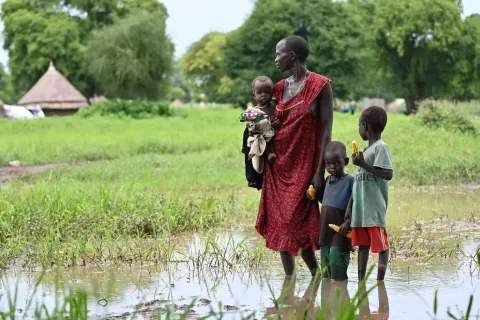
The East and Southern Africa Region is among the most affected in the world by climate change. According to UNICEF Children’s Climate Risk Index (CCRI), 16 out of 21 countries in the region are classified as being at “high risk” or “extremely high risk” from the impacts of the climate crisis on children.
Climate change has a profound impact on child protection. The climate crisis is increasingly recognized as a “threat multiplier,” exacerbating pre-existing challenges such as armed conflict, ongoing financial and socio-economic tensions, and increasing both the frequency and severity of shocks affecting vulnerable populations. It aggravates risk factors for violence, abuse, and exploitation—including poverty and social inequalities—while undermining protective systems provided by families, communities, and states. In many cases, it also triggers new crises, such as conflict and community tensions over scarce resources. Despite growing evidence of the links between climate change and child protection risk there is limited understanding of girls’ and boys’ experiences and perspectives on their lives and futures.
UNICEF’s Eastern and Southern Africa Regional Office launched a research initiative in 2022 to explore the intersection of climate change and child protection. Kenya was selected as the first of three countries for the study (data collection is ongoing in Madagascar and Ethiopia) due to the urgent need and opportunities to strengthen protection services in a context where teenage pregnancy, child marriage, and FGM remain significant concerns.
Using a qualitative, participatory approach, this initial research gathered insights from more than 500 children, families, and key stakeholders to understand how environmental stressors influence protection risks and coping strategies. This report explores the threats and opportunities that girls, boys, and families face in specific settings and how these evolve throughout childhood—particularly during adolescence—as well as during a climate event and its aftermath. It examines the strategies these groups employ to mitigate threats and the strengths and resources they draw upon. Additionally, the study considers the interventions and services available to them and analyzes the factors that determine their effectiveness.