Message from UNICEF ESA Regional Director Mohamed M. Malick Fall on Day of the African Child
NAIROBI, 16 June 2021 – On The Day of the African Child we commemorate the young activists in Soweto in 1976 who paid the ultimate price for standing up to injustice and demanding basic rights. We commend their courage and reflect on the immense challenges that young people continue to face today.
Across Eastern and Southern Africa, our youngest citizens are facing multiple threats, including the impacts of COVID-19, conflict, and climate-impacted emergencies.
Children and youth are continuing brave efforts to help make the world a better place, from addressing injustice to taking climate action. I appeal to governments, leaders, teachers, parents and communities to join them and push harder in fulfilling the promises we have made to them in the UN Convention of the Rights of the Child.
The Convention compels us to act in the best interest of the world’s youngest citizens, and this must be a primary consideration – at all times. The world needs to approach it with that healthy dose of impatience that youth brings, especially as we’re seeing hard earned development gains slip away.
Last week, UNICEF and ILO released a report on child labour noting that for the first time in two decades the number of children in child labour has increased – with many more at risk due to the impact of COVID-19. Sub-Saharan Africa has the highest number of children labouring. In the past four years recurrent crises, extreme poverty, and inadequate social protection measures have led to an additional 16.6 million children affected.
While governments battle to find their footing amid one of the most disruptive and uncertain periods in modern history, we are slipping when it comes to child rights.
Millions of children across sub-Saharan Africa continue to be in desperate need of access to education, basic healthcare, nutrition, clean water, protection, a birth certificate - and hope. Tens of thousands more are in need of mental health and psycho-social support as conflict and horrific violence has become daily life for far too many.
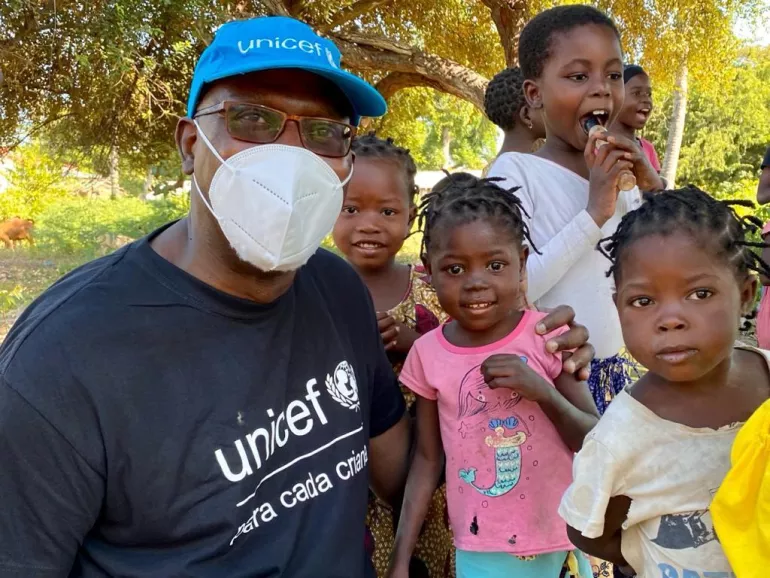
Last week, I was in Cabo Delgado in Mozambique, where 700,000 people have been displaced by the insurgency, nearly half of them children. On Ibo Island, I met two boys. During the brutal attacks in Palma in March, they were separated from their parents when they were rushed by boat to safety on Ibo Island. When I looked into their eyes I saw fear and anxiety, with the worry of not knowing the whereabouts of their parents and if they will ever see them again. They are now among some 2,000 registered children in Mozambique, all in the same heartbreaking predicament.
In Tigray in Ethiopia, around 6,000 children have been registered as separated from their families. And there is real concern of famine if food and other aid aren’t scaled-up quickly. We also hear horrific stories of rape and sexual exploitation, especially from women and girls. Meanwhile, over a million children remain out of school across Tigray from the dual impact of the nearly eight-month conflict and the impact of COVID-19. Across the region millions more children are out of school and at added risk of harmful practices and falling behind.
While the challenges are immense, UNICEF and partners are collectively achieving significant regional results in combating the multiple threats facing children:
- On COVID-19, via the COVAX Facility, UNICEF has delivered nearly 8 million doses of COVID-19 vaccines to countries in Eastern and Southern Africa, with over 29 million doses allocated so far. Over 34 million syringes have been delivered in the region.
- In Mozambique, UNICEF is providing urgent relief to communities facing sanitation challenges that harm children and their families. In April 2021, nearly 40,000 people had access to improved household sanitation in the Cabo Delgado province.
- In Tigray alone, UNICEF is scaling up its nutrition response across all seven zones, focused on screening and treating children suffering from severe wasting. Since February, 300,000 children under the age of five have been screened for wasting and nearly 8,000 treated for malnutrition. UNICEF has also provided safe water to 1.3 million people since January. In May, 28 mobile health and nutrition teams, supported by UNICEF, provided medical consultations to 40,000 people, among them 6,700 children. UNICEF has reached 82,000 people with various interventions to mitigate gender-based violence and support survivors. Mental health and psychosocial support for children and caregivers is being provided.
A lot remains to be done. As we work together to find solutions, our appeal as UNICEF is that leaders remember the obligations we have to children.
Nelson Mandela said it well: “Our children are our greatest treasure. They are our future. Those who abuse them tear at the fabric of our society and weaken our nation.”
Those are words to live by.
Mohamed M. Malick Fall
UNICEF Regional Director, Eastern and Southern Africa
###
This year’s theme for Day of the African Child is “30 years after the adoption of the Charter: accelerate implementation of Agenda 2040 for an Africa fit for children”.
Multimedia assets available:
B-roll and photos showing nutrition situation in Tigray, Ethiopia
Photos of Mohamed M. Malick Fall in Mozambique
Media contacts
About UNICEF
UNICEF promotes the rights and wellbeing of every child, in everything we do. Together with our partners, we work in 190 countries and territories to translate that commitment into practical action, focusing special effort on reaching the most vulnerable and excluded children, to the benefit of all children, everywhere.
For more information about UNICEF and its work for children, visit www.unicef.org.