Vulnerable families in Saint Kitts and Nevis find hope through social protection programme
Parents moving towards a brighter future for their children

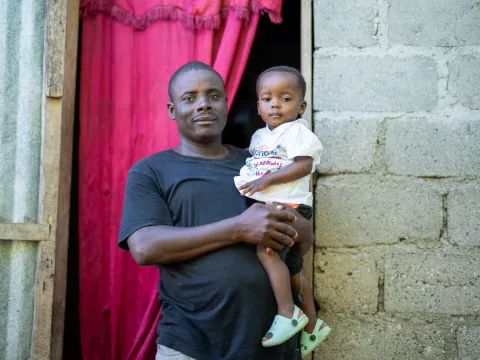
BASSETERRE, 15 March 2025 - “I love my kids, and I love being around them,” says Cherry Murray, her eyes lighting up as she holds her six-year-old daughter, Tatinique, close. The hardworking mother of three from the Old Road community in Saint Kitts and Nevis is doing everything she can to give her children a better start in life. Juggling a full-time Government job and a part-time hairdressing business, she works tirelessly to make ends meet. However, mounting expenses mean it’s a constant struggle to provide for her family.
“Raising three kids alone is tough,” she admits. “Everything requires money, and it’s me doing it all on my own.”
Like many single parents, Ms Murray bears the heavy responsibility of managing her household and ensuring her children’s well-being, a burden made even heavier by the financial strain many such households face. According to the nation’s last Country Poverty Assessment children account for 40 per cent of the population living below the poverty line, and households led by a single parent with three or more children are among the most vulnerable.
But for Ms Murray and many others like her, there is hope. UNICEF, in collaboration with the Ministry of Social Protection and Gender Affairs, is supporting families through the Livelihood Improvement for Family Transformation (LIFT) programme which provides monthly cash transfers to help those in need. “I heard about LIFT from a friend, and I decided to sign up. I got an email saying I was accepted into the programme, and I felt so good, so happy, and so thankful,” the mum recalls.
Empowering Families to Take Control of Their Finances
According to Azilla Clarke, Permanent Secretary in the Ministry of Social Protection and Gender Affairs, LIFT focuses on providing direct cash assistance to the most vulnerable members of society. The new programme, which has already reached more than 4,390 households, also requires a greater level of case management including close monitoring, which provides evidence of its effectiveness.
“There is a stigma that when you give people money, they make unwise decisions, but we are here to show them that ... most families are making positive strides with their investment,” Ms Clarke contended.
She explained: “By putting cash in people’s hands, you are able to empower them to better manage their own household reality. For many of them, it is home ownership, land acquisition, financial stability in paying off debts and other expenses.”
Crisis Support in Times of Need
In addition to regular monthly payments, the LIFT programme includes ‘shock-responsive’ elements that ensure families are assisted during difficult times, such as natural disasters or other emergencies.
Jemmimah Wilson, UNICEF’s Social Protection Officer, emphasized the importance of the programme in addressing poverty.
“LIFT helps families avoid having to make impossible choices, like deciding between paying a bill and sending their child to school,” Ms Wilson said. “Now they have the support they need to do both, which is crucial in disrupting the cycle of poverty.”
Through LIFT, families are not only surviving - they are starting to thrive. For Ms Murray and many other families, LIFT is more than just financial assistance, it’s a lifeline towards a better tomorrow.
“I’m doing the best that I can to see my children become successful and it would make me feel proud to see them get through in life.”