Trinidad and Tobago advances National Child Well-being and Poverty Reduction Strategy
New evidence and stakeholder consultations are helping shape coordinated action to address child poverty and improve outcomes for children and families
PORT OF SPAIN, Trinidad and Tobago, 11 June 2026 – The Government of Trinidad and Tobago is advancing the development of a National Child Well-being and Poverty Reduction Strategy following the completion of a new Situation Analysis examining the challenges as affecting children and families across the country.
The effort builds on the National Multidimensional Child Poverty Analysis, released in 2025, which found that more than one in three children experiences poverty that affects multiple areas of their lives, including housing, education, health, protection and access to opportunities.
Developed by the Ministry of the People, Social Development and Family Services in collaboration with UNICEF, the strategy aims to strengthen coordinated action across sectors to improve outcomes for children and families and help break cycles of poverty and exclusion.
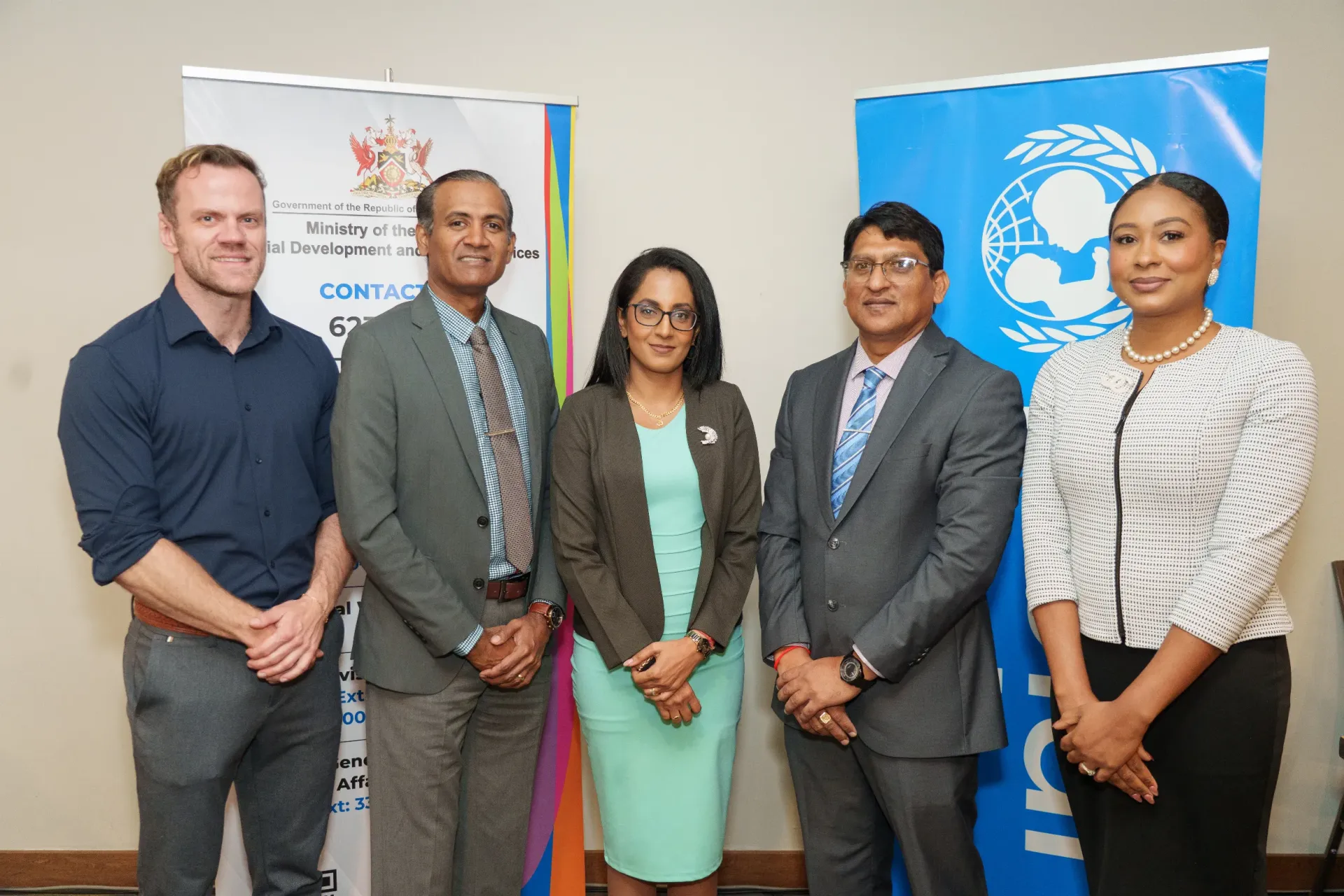
A key milestone in the process was the Situation Analysis Presentation and Strategy Co-Creation Workshop on Child Poverty and Programmes Supporting Child Well-being and Poverty Reduction, which brought together representatives from government ministries and agencies, civil society organisations, development partners and other stakeholders in Trinidad and Tobago.
The Situation Analysis, conducted by the Economic Policy Research Institute (EPRI), drew on findings from the Multidimensional Child Poverty Analysis, a mapping of 154 social sector programmes, 23 key informant interviews with government ministries and agencies, and consultations with children, caregivers and frontline service providers.
Offering a comprehensive picture of child well-being across Trinidad and Tobago, the analysis identifies both areas of progress and persistent challenges affecting children and families. Among the issues highlighted are nutrition, immunisation coverage, housing conditions, access to safe and reliable water and sanitation, early childhood development, educational engagement and digital inclusion.
Speaking at the workshop, Senator Dr Natalie Chaitan-Maharaj, Parliamentary Secretary in the Ministry of the People, Social Development and Family Services, underscored the importance of evidence-informed policymaking in addressing child poverty.
“Child poverty is not simply an economic issue. It is a development issue, a health issue, an education issue and a social issue. Ultimately, it is a national development issue,” said Senator Dr Chaitan-Maharaj.
“When children are denied opportunities during their formative years, the consequences extend beyond individual households. Conversely, when we invest in children, we create stronger families, more resilient communities and a more prosperous nation.”
Jemmimah Wilson, UNICEF Social Policy Officer, said the findings reinforce the need for coordinated, child-centred action.
“The multidimensional child poverty analysis reminded us that child poverty extends far beyond income alone. Children experience deprivation across multiple and interconnected dimensions including education, health, housing, protection, nutrition and access to opportunities. Understanding these overlapping vulnerabilities is critical if we are to design responses that are holistic, effective and truly child-centred.”
Wilson welcomed the Government’s commitment to addressing child poverty and noted that the strategy marks the beginning of an important new phase of collaboration.
“Reducing child poverty requires a truly multisectoral response. No single institution or sector can do this alone,” she said.
“I am especially heartened that children and young people have been, and will continue to be, engaged throughout this process. Their voices and experiences must remain central to the solutions we develop.”
Participants also took part in strategy co-creation sessions designed to identify practical, measurable and sustainable actions to improve child well-being and reduce poverty. The recommendations emerging from the consultations will help inform the development of the National Child Well-being and Poverty Reduction Strategy.
The strategy is expected to provide a framework for strengthening programmes and services that support children and families, while improving coordination across sectors and ensuring that resources reach those most in need.
UNICEF remains committed to supporting the Government of Trinidad and Tobago through technical assistance, evidence generation, policy support and capacity strengthening aimed at improving outcomes for children and helping ensure that every child has the opportunity to survive, thrive and reach their full potential.