OECS and UNICEF launch regional child policy to advance the rights and wellbeing of children across
The OECS Regional Child Policy and Strategic Plan 2026–2032 provides a shared framework for stronger action on child protection, education, health, participation and social support across the Eastern Caribbean.

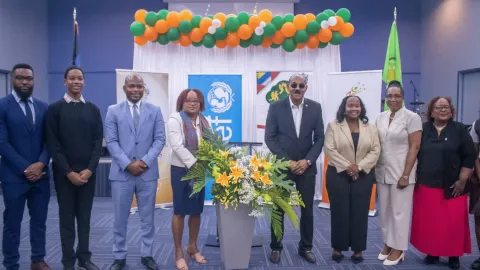
CASTRIES, Saint Lucia, July 2026 – Nine countries and territories of the Organisation of Eastern Caribbean States (OECS) have come together around a shared commitment to advancing the rights and wellbeing of every child with the launch of the OECS Regional Child Policy and Strategic Plan 2026–2032.
Supported by UNICEF, the policy brings together Antigua and Barbuda, Dominica, Grenada, Saint Lucia, Saint Vincent and the Grenadines, Saint Kitts and Nevis, Montserrat, Anguilla and the British Virgin Islands under a common regional framework for action on children.
Its vision is that, by 2032, every child in the OECS will feel valued, safe, supported, loved and empowered, and enjoy their full range of rights regardless of gender, disability, migration status or background.
From policy to action
At the launch, OECS Director General Dr Didacus Jules emphasised that the significance of the policy goes beyond the document itself.
“A child does not live inside a document. A child lives in a home, on a street, in a village.”
He said the policy must be reflected in children's everyday experiences, from access to education and healthcare to protection, justice, social support and safe communities.
“What we are launching today is not a document. It is a promise, and more than a promise, it is a plan of action,” Dr Jules said, highlighting the need for coordinated action across sectors and communities to create systems that support the whole child.
The policy is aligned with OECS Strategic Priority 5: Advance Equity and Inclusion to Reduce Disparities in Health, Education and Social Outcomes, providing Member States with a practical framework to strengthen child protection and empowerment across national systems.
A commitment that can be measured
Mrs Sisera Simon, Head of the Human and Social Division at the OECS Commission, underscored the principles underpinning the policy, including the best interests of the child, non-discrimination, children's participation, mental wellbeing and accountability.
“We will not allow this blueprint to gather dust on a shelf. We will live it, track it, and enforce it.”
She said implementation must ensure that no child across the region is left unseen or unprotected, with accountability at every level of governance.
The policy is supported by a prioritisation and economic costing plan to help Member States translate its commitments into measurable and sustained action.
Every child counts
For UNICEF Representative for the Eastern Caribbean Area, Ms Maryam Abdu, the regional framework is ultimately about what it means for individual children.
Speaking about a little girl named Aaliyah, she highlighted the importance of ensuring that children across all nine OECS countries and territories have the opportunity to survive, thrive, learn, participate and reach their full potential.
“The launch of the OECS Regional Child Policy 2026–2032 is more than a milestone. It is a regional commitment to move from shared concern to coordinated action for every child across the Eastern Caribbean.”
Children helped shape the story
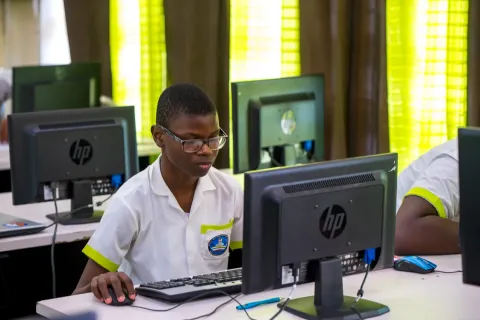
Children and young people were also part of the policy development process.
UNICEF worked with children across all nine OECS Member States and Territories to gather their perspectives and connect their experiences to the policy's outcomes and goals.
Their contributions also informed a child-friendly companion version of the policy, presented as a storytelling comic book.
“Children helped contribute to the policy's development, sharing their own personal experiences and linking them to the outcomes and goals,” said Bertrand Moses, Child Protection Officer, UNICEF Office for the Eastern Caribbean Area.
“They then produced the child-friendly version, a comic book, so other children could pick it up, understand it, and use it to advocate for the policy in their own countries.”
The approach is intended to make the policy accessible to children themselves, while supporting their participation in advocating for stronger systems and services.
Turning a regional commitment into results
The launch marks the beginning of the next phase of work to translate the policy into action.
The OECS Commission, UNICEF and Member States are continuing to identify priority areas for implementation, supported by prioritisation and economic costing work to help turn the policy's commitments into sustainable investments and measurable results.
With a shared framework now in place, the focus is on ensuring that the policy is reflected in the systems, services and decisions that shape children's lives across the Eastern Caribbean.