

Eastern Caribbean girls demand period product access
Young girls from across the Eastern Caribbean are calling for tax-free, accessible menstrual products, improved education for all genders, and better period-friendly infrastructure in schools.
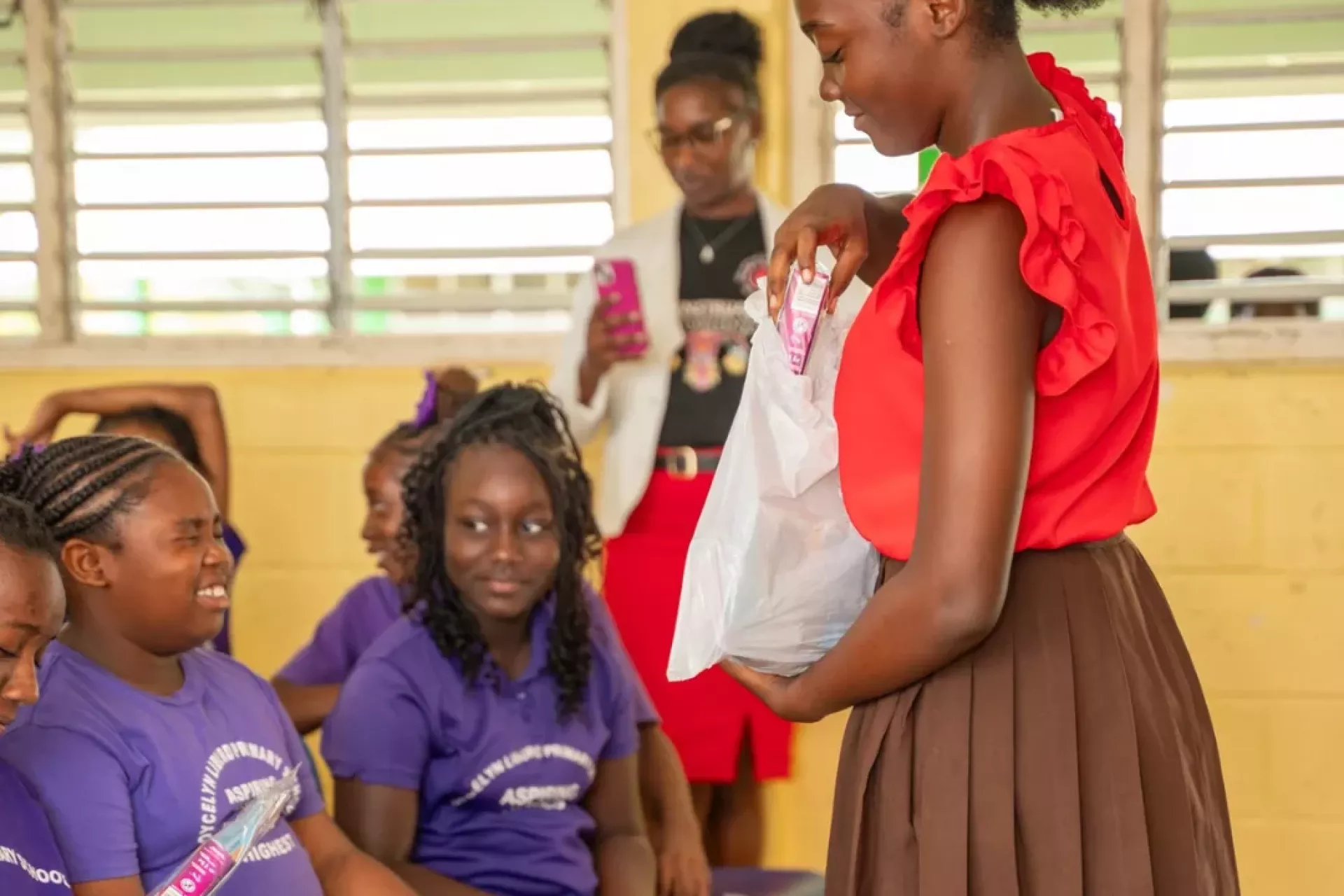
BRIDGETOWN, 28 May 2025 - Young girls from across the Eastern Caribbean are calling for menstrual products to be as accessible as condoms and other forms of contraception, urging leaders to remove taxes on sanitary items, invest in menstrual education for all genders, and ensure schools and public spaces are properly equipped to support menstrual health and hygiene.
The calls came during a special virtual panel discussion in honour of Menstrual Hygiene Day 2025, held on 28 May under the global theme Together for a period-friendly world. The event brought together youth advocates from across the subregion to discuss the challenges girls face and the reforms they believe are urgently needed.
Representing six countries—Saint Vincent and the Grenadines, Saint Lucia, Anguilla, Trinidad and Tobago, Saint Kitts and Nevis, and Barbados—the panellists delivered a powerful and united message: period poverty must end.
“At the post office and other public health institutions, you can actually go and get condoms, you can go and get contraceptive pills,” said Adia Daniel, 18, from Saint Vincent and the Grenadines.
“I think if we have the same mindset towards period products—normalising access and recognising that they’re not optional—then we can start to make real progress.”
In Saint Lucia, panelist Sumirah Charles applauded her government’s moves to implement price controls and allocate funds from the national budget to provide hygiene products in schools. But, she cautioned, more needs to be done.
“Even with the price controls, it’s still very expensive for many,” she said.
“I’m actually hoping that one day, period products will become free. I know changes would have to be made for that to happen, but it’s necessary—and I’m glad we’re starting the conversation.
I’m hoping that in the future I’d be able to go to a health centre and access a menstrual pad or a menstrual cup—whatever it is I need.”
Young advocate Ajernee Hodge, still in secondary school in Saint Kitts and Nevis, called for the establishment of a “period bank” to ensure that no girl is left without menstrual supplies at school.
She also championed more inclusive education around menstruation, especially for boys.
“Don’t segregate the boys—we’re trying to shape young men who will be husbands and, in some unfortunate cases, single dads,” she said.
“They shouldn’t be embarrassed about talking to their daughters or helping their wives. So if we could have pad demonstrations or tampons so we don’t think we’ve lost our virginity, that would be quite amazing.”
From Anguilla, Uniqua Romney spoke on the need for safe and clean facilities in schools and public spaces, while Moriah Wong Change of Trinidad and Tobago emphasised that menstrual equity is a fundamental human right, not a privilege. Relissa Mitcham of Barbados echoed the importance of ensuring that bathrooms are adequately outfitted with disposal bins, changing areas, and emergency supplies.
The panellists’ appeals align with the broader mission of Menstrual Hygiene Day: to build a world where every girl, woman, and person who menstruates can do so with dignity, safety, and full access to the products and services they need.
As part of its commitment to advancing menstrual health and hygiene across the Eastern Caribbean, UNICEF continues to work with partners and governments to prioritise the needs and voices of young people—because access to menstrual products should never be a barrier to education, wellbeing, or opportunity.


