Barbudan children return to school
Evacuated Barbudan children return to the classroom
Over 200 Barbudan primary school students went back to the classroom Thursday, two weeks after Hurricane Irma destroyed their island, forcing them to flee to neighbouring Antigua.
Their school in Barbuda, the Holy Trinity Primary School, was one of the many structures affected when the hurricane bore down on 6 September, destroying or damaging over 95 per cent of the buildings. The 62 square-mile island was subsequently declared a disaster area by the Government of Antigua and Barbuda and its 1,600 residents instructed to evacuate to Antigua.
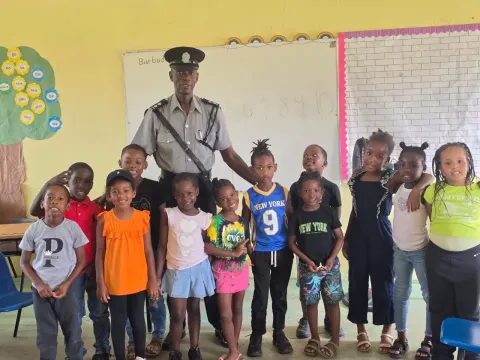
Thirty-one of the students joined classes at Green Bay Primary on the outskirts of the capital, St. John’s. Other Barbudan primary school-aged children were integrated into a number of schools across the country.
UNICEF Eastern Caribbean’s Deputy Representative Muriel Mafico, who was on hand to present school-in-a-box kits and other educational materials for the children’s use, said it was pleasing to see them being able to resume their education after the two-week hiatus.
“Getting children from Barbuda back to school is a significant step towards the journey to recovery. The right to basic education is one children in the Eastern Caribbean have enjoyed for some time now and we are happy that after the trauma of the hurricane this aspect of their lives has been restored,” Mafico said.
Over 19,000 children in Anguilla, Barbuda, British Virgin Islands, and Turks and Caicos Islands have had their education disrupted following the passage of the powerful Category 5 Hurricane Irma which left a trail of destruction. They have been joined by almost 20,000 children in Dominica who are now out of school indefinitely, following Hurricane Maria’s devastation of their country on 18 September.
The return to the classroom for the Barbudan children came after they benefitted from the UN children’s agency’s “Return to Happiness” programme, a psychosocial initiative which helps in emotional recovery from trauma. Principally aimed at children aged 5-12, the programme uses a mix of play, drawing, music and physical activities to help children come to terms with their disturbing experiences.