How can I protect my child from air pollution?
Expert tips for parents to protect children from breathing toxic air
No parent should have to worry that the simple act of breathing could harm their child. But in East Asia and the Pacific, where children in every country are exposed to unhealthy levels of air pollution, it’s a daily reality for millions of families.
As a parent it’s easy to feel powerless. But there are simple, effective steps you can take to reduce your children’s exposure and protect them from the worst effects.
To help, UNICEF experts from East Asia and the Pacific have answered parents’ most urgent questions about protecting children from air pollution.
A smog-clogged skyline in Ulaanbaatar, Mongolia — one of the most polluted capitals in the world.
Sources of air pollution
Air pollution comes from many places. UNICEF and partners have identified 7 deadly sources of air pollution. These 7 sources are:
- Household air pollution
- Traffic-related air pollution
- Waste-related air pollution
- Industrial air pollution
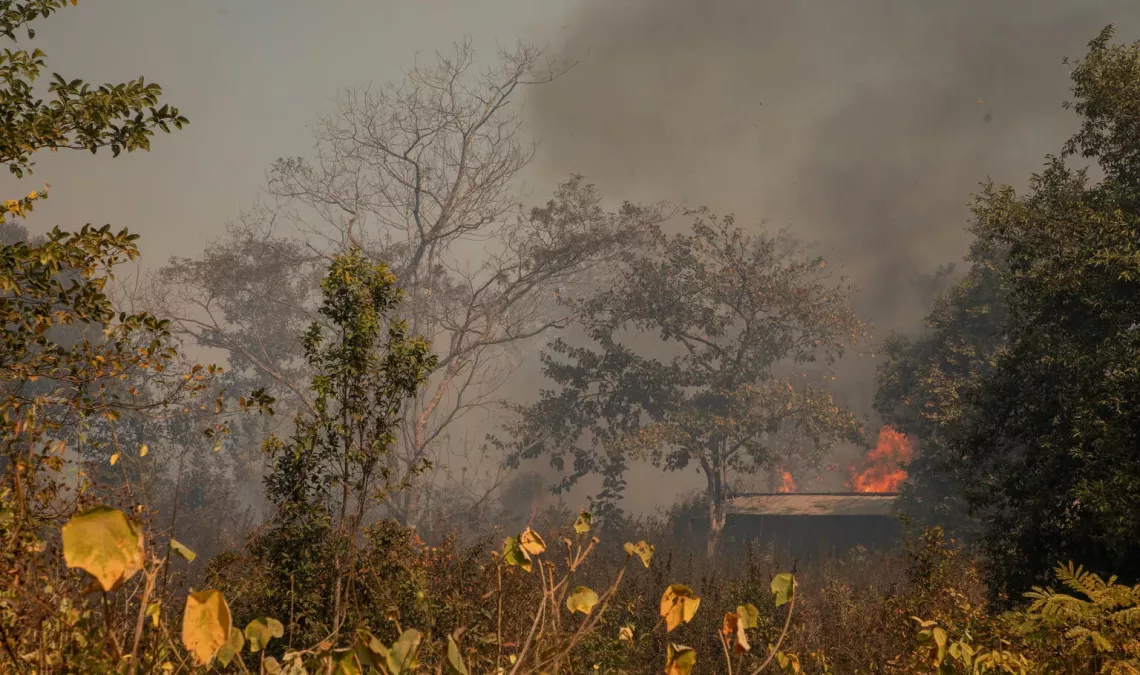
- Wildfire and landscape fire smoke
- Sand and dust storms
- Second-hand smoke
All these sources of air pollution release high levels of PM2.5 — a type of tiny pollution particle that harms health the most.
In East Asia and the Pacific, the most harmful air pollution comes from the burning of fossil fuels and biomass fuels in vehicles, power plants, factories, and industrial facilities along with coal, wood, and charcoal-burning stoves in homes and the burning of farming waste.
These activities release toxic particles that build up in the air, especially in cities. Dust swept up by the wind, sandstorms and wildfires worsen the situation, spreading pollutants over vast distances.
Even behind closed doors, children aren’t fully protected. Indoor air pollution can be an even greater, often overlooked threat. It’s one of the leading ways children in the region are exposed to harmful pollutants.
Nearly 36 million children in East Asia and the Pacific live in countries that mostly use coal, charcoal and wood-burning stoves that give off dangerous toxic smoke.
While these solid fuels are affordable and widely available, they produce smoke and toxic pollutants that are often trapped inside homes and build up continuously.
In some homes, second-hand smoke from cigarettes adds more pollution to the air.
Indoor air pollution isn’t just a problem in homes, it’s in schools, health facilities and other spaces where children spend time too.

Air pollution is dangerous for children for many reasons:
- Children are smaller and breathe faster than adults. They inhale more air per kilogram of their body weight than adults — and more pollutants.
- Children’s nasal passages are less effective at filtering pollutants, so they absorb more from the air.
- Children breathe air that is closer to the ground, including dust and vehicle exhaust fumes.
- Children are still growing. Air pollution can damage their growing lungs, bodies and brains — leading to lifelong health issues.
- Children’s immune systems are weaker than adults, so they’re more vulnerable to viruses, bacteria and other infections.
Immediate and long-term health problems
The tiny toxic particles in polluted air, including PM2.5, can enter children's growing lungs and damage them. This can cause breathing issues, illnesses and long-term health problems, including:
- Pneumonia,
- Bronchitis,
- Chronic coughs,
- Ear infections,
- Asthma,
- Allergies,
- Eczema,
- Heart disease,
- Cancer.
Air pollution can also weaken children’s immune systems and make existing health conditions worse.
Unlike a scraped knee or a fever, the damage air pollution causes isn’t always immediately visible. It builds up over time. Adults who were exposed to air pollution in the womb and as babies and toddlers are sadly likelier to develop respiratory problems later in life.
Death
It’s scary, but also important to know that in some cases, the health problems caused by air pollution can lead to children dying.
Developmental delays
Air pollution can affect children’s learning, thinking and brain development.
A future with fewer opportunities
Breathing polluted air saps children’s energy, making them tired with less energy to learn and play. When they get sick, they often miss school, further limiting their learning and development and leading to lower academic performance.
It's important to know that your child may be at higher risk if they are young, live near factories, busy roads, or industrial zones, or have pre-existing health conditions, like asthma and heart disease.
Children exposed to air pollution over a long time are also more at risk than children exposed occasionally. This includes children who live in homes that use coal, charcoal or wood-burning stoves, especially indoors.
If you’re pregnant it’s important to know that air pollution is harmful for you and your unborn baby and can make pregnancy more dangerous.
Breathing polluted air during pregnancy has been linked to high blood sugar, high blood pressure, pre-eclampsia, respiratory illnesses, depression after childbirth and increased rates of miscarriage and stillbirth. Tiny pollution particles (like PM2.5) can also reach your growing baby, putting them at more risk of respiratory illness, developmental difficulties and a weakened immune system.
It’s scary. But the good news is that by taking a few precautions, you can greatly reduce your exposure to air pollution and support a healthy pregnancy. Stay inside when air pollution levels are high, wear a well-fitting mask, and stay away from smoke (including from coal, charcoal and wood-burning stoves and cigarettes).
Remember your body is doing an incredible job of growing and protecting your baby. These precautions can help it keep doing just that.
More detailed advice on how to protect yourself from air pollution can be found below.
How can I protect my children from outdoor air pollution?
You can take these steps to better protect you and your children from breathing polluted air outdoors:
- Check the air quality in the area where you live every day. This information can often be found in the local news, on government websites or on apps like Plume or IQAir — that you can download onto your phone for free.
- Use air quality information to help you make wise decisions for your family. When outdoor air pollution levels, especially PM2.5, are high:
- Try to stay indoors.
- If you need to go outside, try to go at times of the day when air pollution levels are lower (this can be different times in different places, so always check).
- Help children avoid strenuous activity, including play and exercise. This is especially important if children have medical conditions like asthma or other respiratory infections.
- Close windows and doors during high pollution, to help keep pollutants out.
- Avoid roads with lots of traffic. If you have to walk down a busy road, carry your child if you can, so they’re higher above vehicle exhaust fumes.
- Avoid industrial areas, including close to factories and power plants, and areas where waste is being burned.
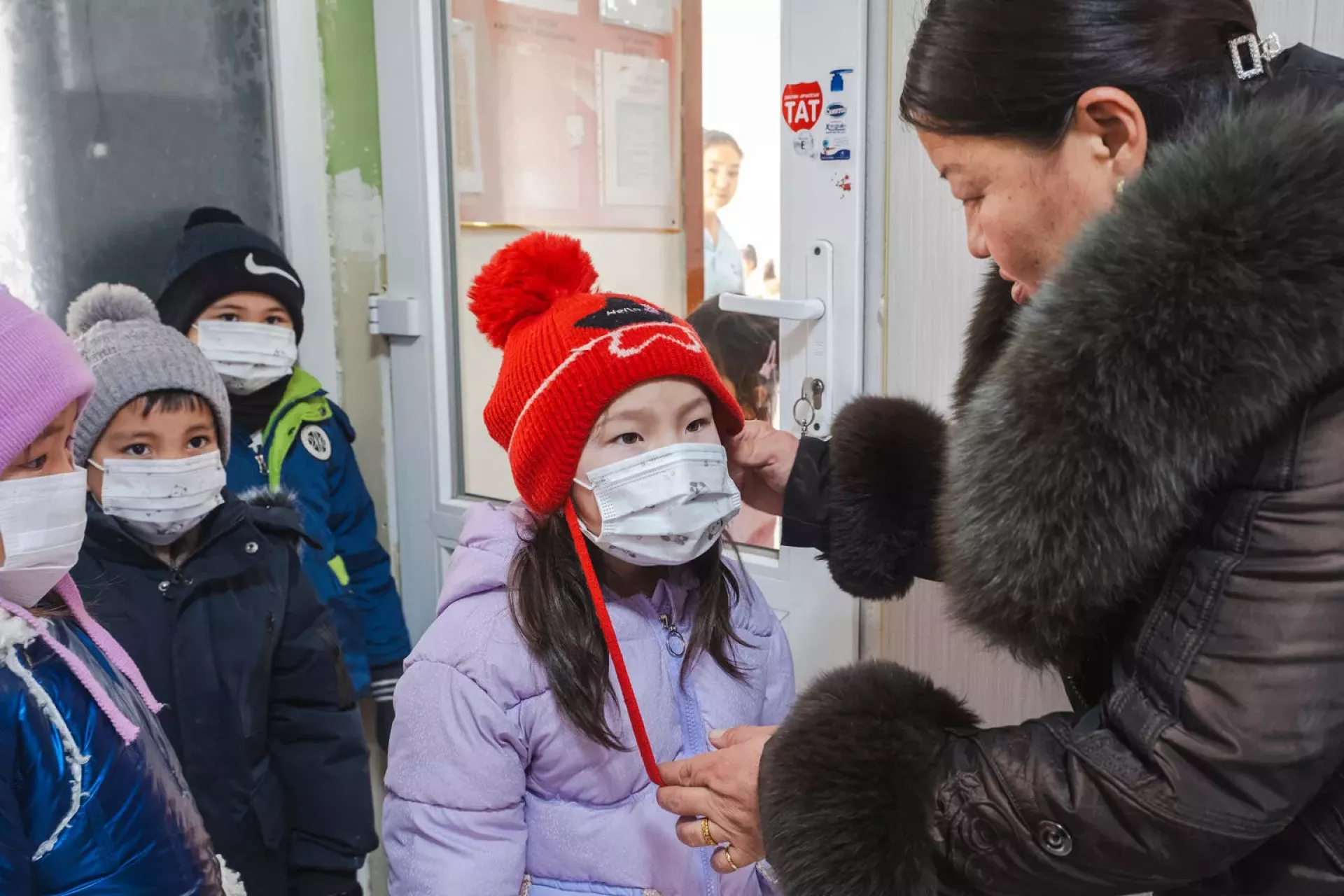
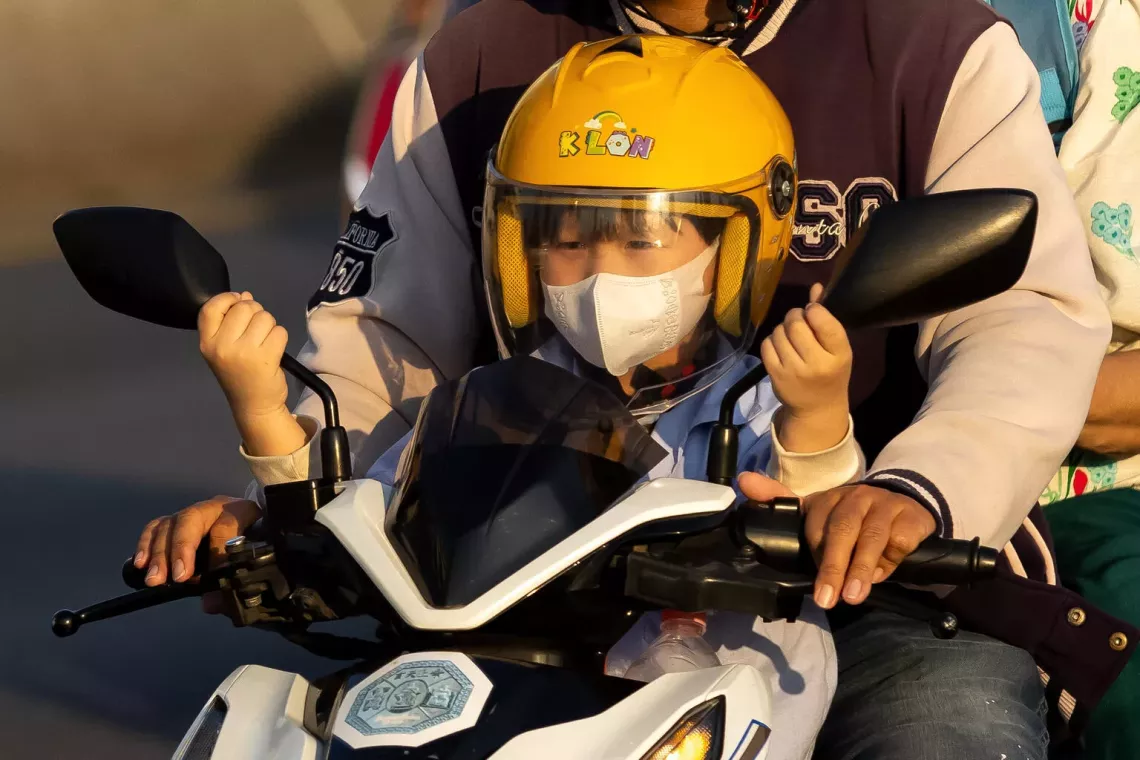
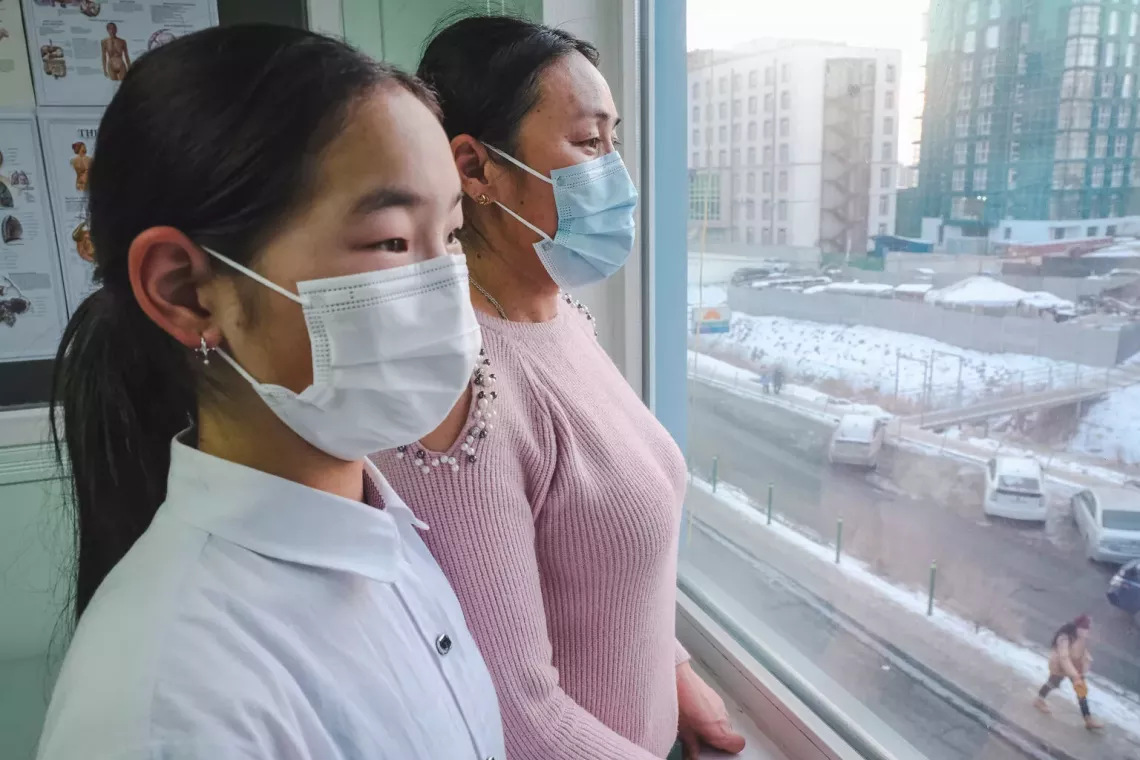
- Help your child wear a well-fitting mask:
- Masks should cover the nose, mouth and chin, with no gaps.
- KF94, KN95, or FFP2 masks are a good choice because they’re comfortable and block out harmful pollutants like PM2.5.
- You should get a mask size that is a suitable for your child’s age.
- In some circumstances masks may not be appropriate for your child. During the COVID-19 pandemic, the World Health Organization (WHO) recommended that children under the age of 5 years old should generally not wear a mask, because they may have difficulty wearing one.
- WHO don’t have specific recommendations on mask use for children in polluted environments, so It’s best to check with your health provider to see what they recommend based on your child’s age, health and the local air quality.
- Healthy children are less likely to face problems from breathing polluted air. Look after your child’s overall health by:
- Keeping up with their vaccinations.
- Feeding them a healthy diet with enough essential micronutrients. These foods, high in vitamin C, E, and omega-3 fatty acids, can be especially beneficial:
- Vitamin C: Guava, papaya, pineapple, citrus fruits (e.g. oranges, limes), bell peppers.
- Vitamin E: Nuts and seeds, green leafy vegetables (e.g. spinach, broccoli).
- Omega 3 antioxidants: Seafood and fish (e.g. tuna, mackerel), seaweed, walnuts, flaxseeds.
- Keeping them active.
- Breastfeeding babies for at least six months.
- Stand with parents across the region to call for change. Join a local or national movement to call for policies that reduce air pollution and protect children.
Remember, the air inside your home can sometimes be more harmful than the air outside.
How can I protect my children from indoor air pollution?
You can take these steps to better protect your children from breathing polluted air indoors:
- Cook in well-ventilated spaces: Open windows when cooking and use an exhaust fan to allow heat and fumes to escape.
- Use cleaner fuels and technologies to cook, heat and light your home: If possible, choose electricity, natural gas, liquefied petroleum gas, biogas or solar stoves or ovens.
- Maintain stoves, chimneys and other appliances so that they burn fuel efficiently.
- If ventilation is challenging, or you can’t use clean fuel, cook outdoors.
- Keep pregnant women and children away from smoke.
- Make sure everyone in the household avoids smoking indoors and near children and pregnant women, to protect them from second-hand smoke.
- Avoid burning candles and incense and using air fresheners, as they can add toxic chemicals to the air.
- Be aware of other common sources of indoor contaminants, including building and paint products, cleaning supplies and household chemicals — keep children away from them and use natural alternatives where possible.
- Use an air purifier with HEPA filters for your home, if your budget allows, which can greatly absorb indoor pollutants.
- Healthy children are less likely to face problems from breathing polluted air. Look after your child’s overall health by:
- Keeping up with their vaccinations.
- Feeding them a healthy diet with enough essential micronutrients. These foods, high in vitamin C, E, and omega-3 fatty acids, can be especially beneficial:
- Vitamin C: Guava, papaya, pineapple, citrus fruits (e.g. oranges, limes), bell peppers.
- Vitamin E: Nuts and seeds, green leafy vegetables (e.g. spinach, broccoli).
- Omega 3 antioxidants: Seafood and fish (e.g. tuna, mackerel), seaweed, walnuts, flaxseeds.
- Keeping them active.
- Breastfeeding babies for at least six months.
How do I know if my child is sick from air pollution?
If your child becomes sick from air pollution, they may show symptoms similar to allergies, colds, or respiratory infections. Look for the following health warning signs and get medical help immediately:
Sickness from air pollution in babies
For babies, look out for any signs of difficulty breathing. This is an emergency.
Sickness from air pollution in children
For children, watch for
- Dry or irritated eyes,
- Headaches,
- Tiredness,
- Allergies,
- Shortness of breath.
Sickness from air pollution in children with asthma
If your child has asthma, get medical help if they:
- Have chest pain.
- Have shortness of breath or are struggling to breathe.
- Are coughing, wheezing or having more severe asthma attacks than normal.
Which air pollution is the most dangerous?
The most worrying and harmful pollutants in East Asia and the Pacific are:
PM2.5 (Particulate Matter 2.5)
PM2.5 are tiny airborne pollution particles that measure 2.5 micrometers or less in diameter — about 30 times smaller than a human hair.
These microscopic particles remain suspended in the air for long periods and can penetrate deep into the lungs and even enter the bloodstream and travel to the brain.
Long-term exposure to PM2.5 is the most reliable predictor of poor health outcomes at every age. It leads to heart disease, respiratory illnesses, and neurological disorders.
PM2.5 particles come from vehicle emissions, the burning of fossil and biomass fuels (wood, charcoal, coal, liquid fuel and natural gas) in homes, coal-burning power plants, agricultural and industrial activities, waste burning, wildfires and windblown dust.
In 2020, nearly 500 million children in East Asia and the Pacific were living in countries where PM2.5 levels were higher than guidance levels set by The World Health Organization — some as many as 7 times.
NO2 (Nitrogen dioxide)
NO2 is an air pollutant in gas form. It is mainly generated through vehicles, power plants, and industrial facilities. People in cities are exposed to it more during warmer months and heatwaves. NO2 is also the air pollutant most consistently related to asthma in children.
NO2 air pollution caused asthma-related health issues that robbed children in East Asia and the Pacific of 33,396 years of healthy life in 2021.
In 2020, eight countries in the region (Viet Nam, Mongolia, Malaysia, Democratic People's Republic of Korea, the Philippines, Niue, China, and Samoa), home to over 373 million children, had NO2 pollution levels that exceeded World Health Organization air quality guideline levels. Recent evidence also shows that NO2 has increased in 18 countries since the year 2000. The biggest increase has been in Viet Nam.
Ozone
Ozone is produced by burning of fossil fuels in vehicles, power plants, factories, homes and through industrial activities. It harms humans, damages plants and contributes to climate change.
In 2020, 453 million children in East Asia and the Pacific lived in countries where ozone levels peaked higher than World Health Organization air quality guidelines. Worryingly, in 17 out of 27 countries in the region, ozone levels have been rising. Climate change is also expected to make air quality worse by creating more ground-level ozone and causing wildfires.
How can governments and businesses reduce air pollution?
Hazardous air pollution levels in East Asia and the Pacific are an alarming and tragic reality — and a public health emergency.
But it doesn’t have to be this way. Another future is possible. There are concrete steps governments and businesses can take to reduce and eliminate air pollution and protect children.
UNICEF’s East Asia Pacific Regional Office and our partner UNEP Regional Office for Asia Pacific have developed 20 child-centred clean air solutions to reduce PM2.5 to safer levels for 1 billion people in Asia by 2030 — and ensure clean air in the spaces where children live, learn, play and travel. These solutions include:
- Taking urgent and innovative steps to help replace fossil and biomass fuels with cleaner fuels and greener technologies.
- Preventing and controlling agricultural waste burning.
- Creating pollution free zones near schools, kindergartens, and health facilities.
- Providing clean cooking and heating options for homes, to help reduce children’s exposure to household air pollution.
- Creating more green business opportunities and jobs.
- Offering incentives to partners and customers to adopt clean products and technologies.
Most sources of air pollution are also contributing to, or are worsened by, climate change — another deadly threat for children. So, if governments move to reduce greenhouse gas emissions faster, it will help create cleaner air for children.
Governments and businesses need to act boldly and decisively to eliminate deadly air pollution sources, without delay. Until they do, children will continue to suffer the most.
What can I do to stop air pollution?
While air pollution is a global crisis that demands action from communities and governments, you do have the power to make a difference.
Here are some steps you and your family can take to help create a healthier, cleaner future for children:
Raise awareness of air pollution and the solutions with other parents:
- Talk to people about the dangers of air pollution to create public demand for better policies and regulations for cleaner air.
- Join a national or international movement for clean air.
Lead by example to reduce your own carbon footprint and contribution to air pollution:
- Use public transport, cycle, or walk.
- Swap to cleaner and green energies for cooking and heating.
- Find local green projects you can support.
Advocate for policy change to protect children against air pollution:
- Call on your local authorities to create:
- Pollution-free zones near schools, kindergartens, and health facilities.
- Better public transport.
- Talk to your child’s school about:
- Pollution-free zones and safe playing areas.
- Traffic and smoking bans around the school.
- Using clean fuels for cooking and heating.
Talk to your children about air pollution and support them to take action:
- Discuss the risks that air pollution can have to their health and the environment — and what can be done to reduce it and protect themselves. This resource on air pollution is designed for children and can help.
- Encourage your children to learn about and take part in environmental activities.
- Encourage and support your children to come up with solutions to monitor and reduce to air pollution in your local area.