
Improved drinking water saving lives in Beyadeh
..safe water,saving lives
- Français
- English
06 March 2019, Beyadeh,Djibouti. Beyadeh is a remote rural semi-nomadic community hosting almost 80 permanent households and 50 nomadic families living in the surrounding areas. The climate change effects have the worst impact on the lives of this population including a significant reduction of natural resources such as water and grazing space for their livestock. Hence, these communities have lost a large part of their livelihoods.
Access to safe drinking water in Beyadeh has been a problem for the past 20 years,there are two rainy seasons. Beyadeh has a desert climate, during the year, there is virtually no rainfall, and the annual average temperatures reaches 32.2 °C. The extreme weather conditions remind us that children and women remain the most vulnerable population in this very harsh environment.
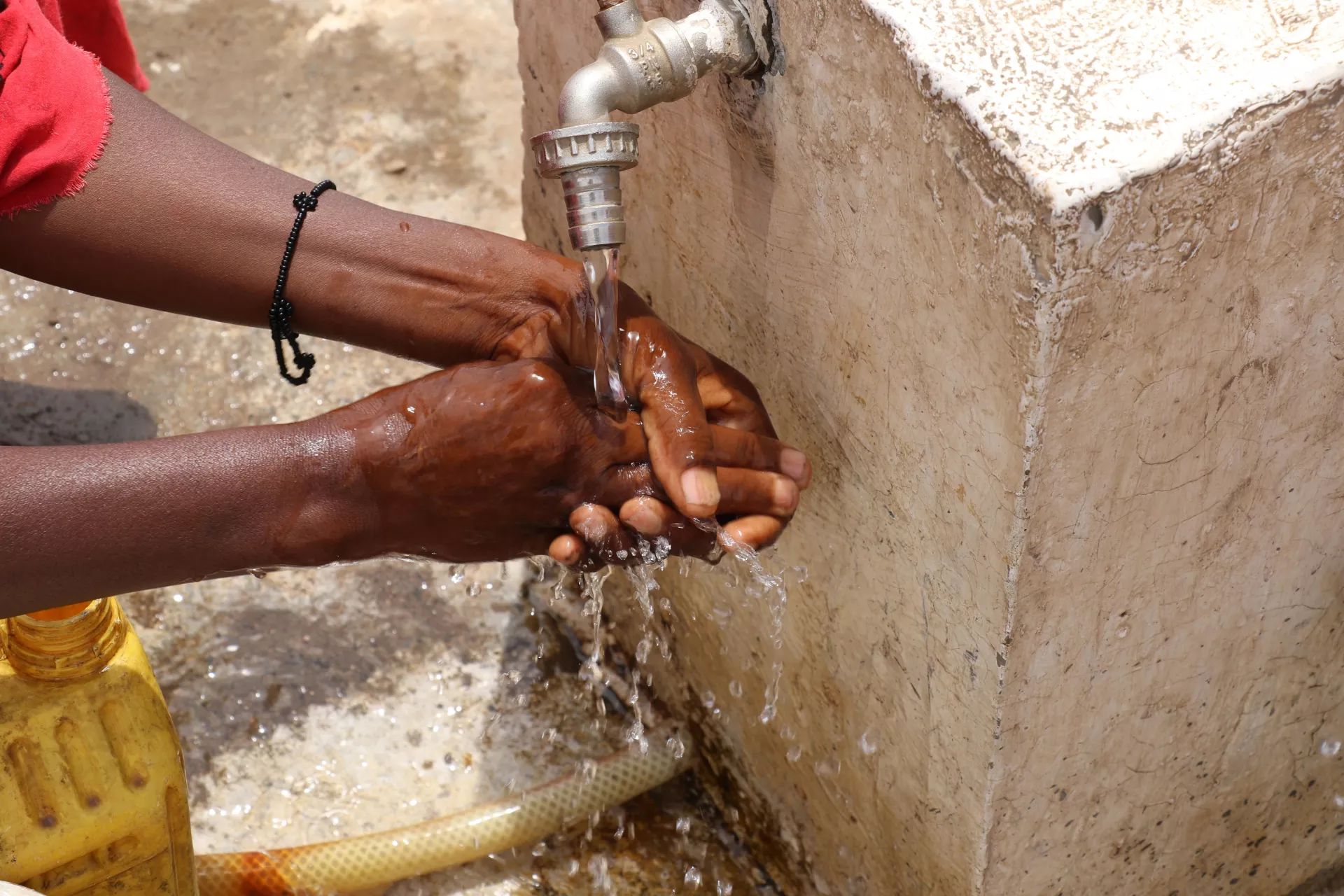
To address this challenge UNICEF is supporting Djibouti’s Directorate of the Hydrolic with financial assistance from USAID and UNICEF thematic funding. The collaboration is towards the construction of water infrastructures for the Beyadeh community which is now saving lives, keeping children in school and improving livelihoods. This WASH project erected a solar-powered water system in the community which has transformed water access for children and families in this remote area.
Clean water saves lives and time
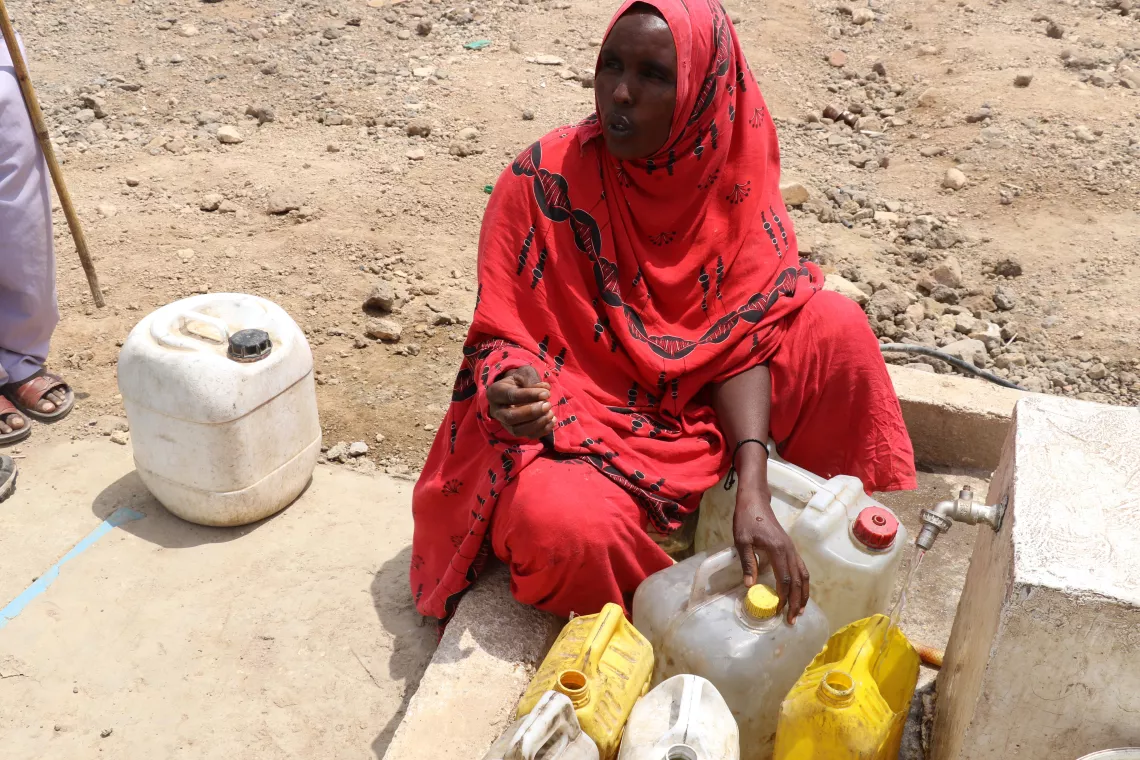
For the villages in Beyadeh their water woes are now a thing of the past. The project has liberated most women of the community of having to walk long distances to search for water which is not safe to drink.
Halima aged 40, although the vicissitudes of life may make her look older, the mother of nine radiates joy, especially as the new water pump was installed just 5 meters from her home. Set against this brutal landscape, UNICEF supported water project has given the women in the community renewed hope.
‘Before the intervention I have been sourcing water from the traditional wells and it has been an uphill task since wild animals also come to drink water from that same source. I also realized that all my children were suffering from diarrhea because of the unclean water’
A look at the green splash of the nutrition garden amidst the dry surroundings is a delightful sight of life against the odds. The agro-pastoral garden has tomatoes, onions, pepper, and grass for her goats which are constantly supplying her with milk leading to improved nutrition.
The WASH project has shown enormous potential to produce both food security and health benefits to the community. Access to cleaner water has reduced the cost of health care since children are less susceptible to water borne diseases.
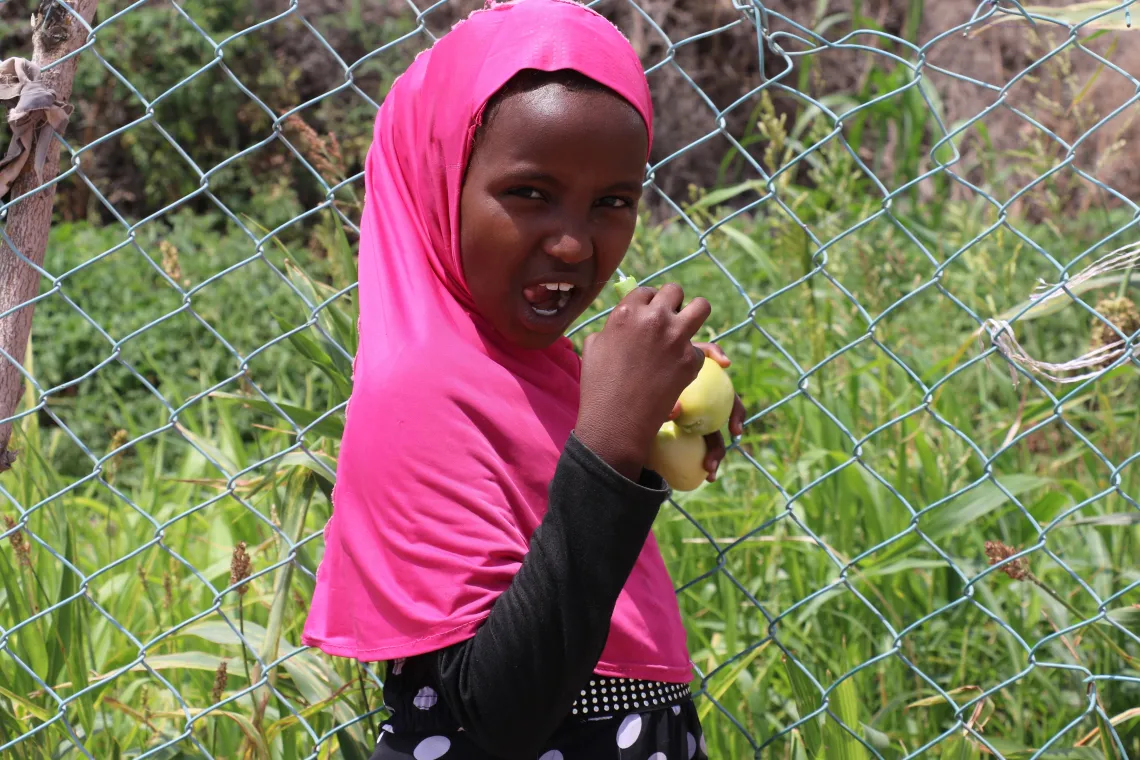
Every drop, keeps children in school.
As we continue talking to Halima about the change of her daily routine since the inception of the project, Halima recalls the most significant impact this project had on her as a mother with school going children. She narrates her life before the WASH project intervention and post intervention.
Two years ago, I was pregnant with my 8th child, whom I delivered through caesarean section and when I was discharged from the clinic I had no one to bring me water at home. This meant that I had to withdraw all my five children from the upgrade school, to come back and stay with until I am strong enough to fetch water. They had to miss school the whole year and this greatly affected them. Had the project come earlier my children would have continued with their classes without any disturbance.
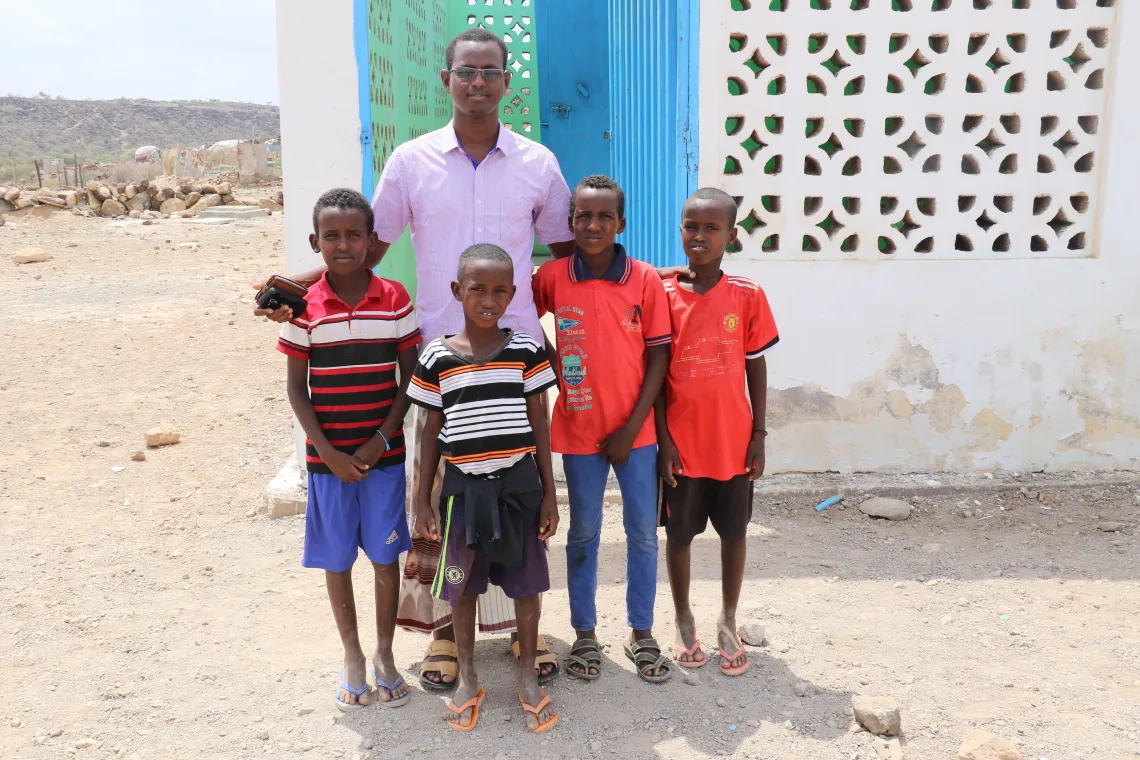
The traditional leaders like Abdourahman Eltireh who is a teacher at Beyadeh Primary School weighed in expressing gratitude for having clean water which has made the school toilets more hygienic and gender sensitive.
‘The project brought a new dawn for us, access to improved drinking water and sanitation makes a real difference to our lives and especially for our children who no longer fall ill every now and then. The community is healthier and happier and better prepared for the continuing drought’
In rural Djibouti, nearly 65 per cent of the population does not have access to safe drinking water and are at risk of catching diseases transmitted by unsafe water. The reservoir in Beyadeh, with its photovoltaic and solar powered pump installed by UNICEF, is meeting the needs of nearly 80 households of six people, within a radius of two kilometers, thus preventing some 600 people from contracting diseases transmitted by unclean water.

