Give vaccine-preventable diseases no chance
Amid the crisis in eastern Chad, mobilization in support of child vaccination remains strong

- English
- Français
Accessing the vaccination room of the Farchana health centre, means carefully making one’s way through mothers and their children seated on mats at the entrance. The veranda is overcrowded. With limited space, other women and their children gather under the sparse shade of nearby bushes, seeking relief from the heat. Some children sleep deeply, others are quietly breastfeeding, while a few looks on curiosity as health workers move swiftly between patients.
It is a scene that has become routine for the health workers serving on the frontlines.

“Fatimé Yaya!” calls out a health worker in charge of the registrations.
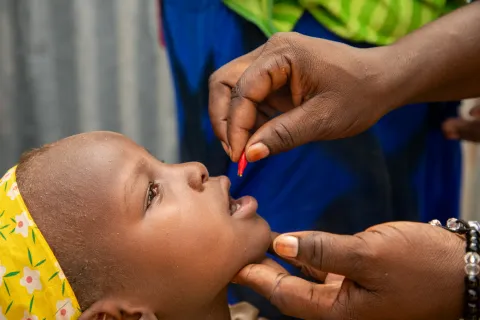
Holding her baby Usman, Fatimé quickly makes her way into the vaccination room. She immediately hands over her son’s vaccination card to another health worker. A few routine questions follow, before it is time for Usman to receive her vaccines.

A Sudanese refugee from Moudeina, in the Darfur region of Sudan, Fatimé and her family fled violence to seek refuge in Farchana, a locality in the Ouaddaï province in eastern Chad, which hosts both local communities and a refugee camp.
With the massive influx of displaced populations, health services are under immense pressure. Already limited infrastructure must now respond to rapidly growing healthcare needs.
Vaccination is essential because it protects children against diseases like polio, tuberculosis, and tetanus.
However, like many mothers, there was a time when Fatimé didn’t believe this. In her village back in Sudan, rumors circulated; some mistakenly believed that vaccines could make children sick or even sterile, fueling fear, hesitation, and refusal of vaccination.
Communication for Social and Behaviour Change interventions, led by UNICEF in collaboration with its partners in the camp and surrounding villages, have helped bring about lasting changes in perceptions among many community members.
Using simple images and clear messages, community volunteers move throughout the villages, reassuring families, listening to their concerns, and addressing their questions. Doubts from the past are now giving way to strong community acceptance of vaccination.
This close, community-based approach lies at the heart of UNICEF’s work. In support of Chad’s Ministry of Public Health, UNICEF relies on community volunteers from within the communities themselves to build trust and promote positive behaviours around vaccination. Catch-up vaccination sessions are also organized across several villages, helping reach children in hard-to-access areas.
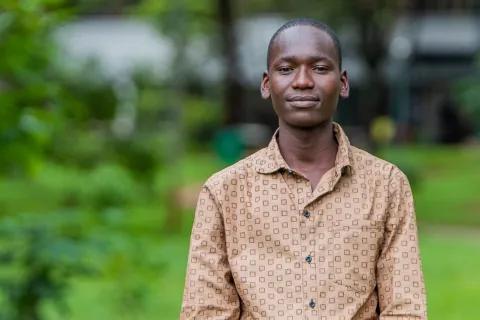
“Today, we hardly encounter any unvaccinated children in the camp” explains Hassan Garanga, a community mobilization officer with APRODEV, a partner NGO of UNICEF. Hassan spends most of his time mobilizing communities in the refugee camps, but also supports teams at the health centre, which are constantly overwhelmed by the high number of patients.


Despite these significant advances, health workers highlight a remaining challenge: the need for an appropriate refrigerator dedicated exclusively to vaccine storage.
In Chad, as elsewhere, vaccination remains one of the most effective ways to protect children against preventable diseases such as polio, tuberculosis, measles, and diphtheria.
With financial support from Gavi, the Vaccine Alliance, UNICEF and its partners, including the World Health Organization, support the Government of Chad in strengthening vaccination efforts across cities, villages, and refugee camps nationwide.
In 2025, four mass polio vaccination campaigns helped protect nearly 5 million children aged 0 to 59 months, including those from nomadic and cross-border populations who are often hard to reach. Thanks to these joint efforts and strengthened community engagement, routine immunization coverage has significantly improved in recent years, rising from 36 per cent in 2014 to 55 per cent in 2020 and 68 per cent in 2024, according to WHO and UNICEF (WUENIC) estimates.
Little Usman is now up to date with her vaccinations. Fatimé leaves with him, confident and reassured. Her child now has a better chance to grow up healthy, a chance, but above all a right for every child living in Chad.
A right made possible through sustained investments and the continued, strengthened commitment of all immunization stakeholders.