Bringing care closer to every community through mobile clinics
Mobile clinics give children and families access to essential health care, even in the most remote communities

- English
- Français
It is barely 7 a.m. when the usual calm of Tekéré village, in the Amleyouna health district of Ouaddaï Province, eastern Chad, is broken by the sound of an approaching engine. Children come running, and women make their way to the gathering point. For many of them, the arrival of the mobile clinic is a rare chance to see a health worker, receive medicine or have their children vaccinated.
Within minutes, the health team sets up and people begin to arrive in numbers. Some came very early; others reach the site by donkey, after travelling along difficult tracks.
Among the women waiting their turn is Hawa Ahmat, 21, holding her six-month-old son, Mahamat Abdel. Since his birth, he has not received a single vaccine. Today, Hawa has decided to take the step.
“This is the first time I am vaccinating my child. He often falls sick, and until now I treated him myself using traditional methods, because the hospitals are far away and I didn’t really trust vaccination. I even tried scarification on his arm, but it didn’t solve the problem. Fortunately, the community health workers came to talk to us, and the mobile clinic arrived in my village. Thanks to their explanations, I understood how important vaccination is, and I decided to bring my child to the mobile clinic to be vaccinated,”
says Hawa.
Like Hawa, many women in these communities face several barriers that limit their children’s access to vaccination. Long distances to health centres, limited awareness of the benefits of vaccines, beliefs, rumours, perceptions of illness and the use of other care practices all influence parents’ decisions and can hold back acceptance of vaccination.
Beyond vaccination, mobile clinics also provide primary health care consultations and medicines. This is the case for Zara, who lives several kilometres away and struggles to reach health services. Thanks to the mobile clinic, she received essential care without having to travel long distances.
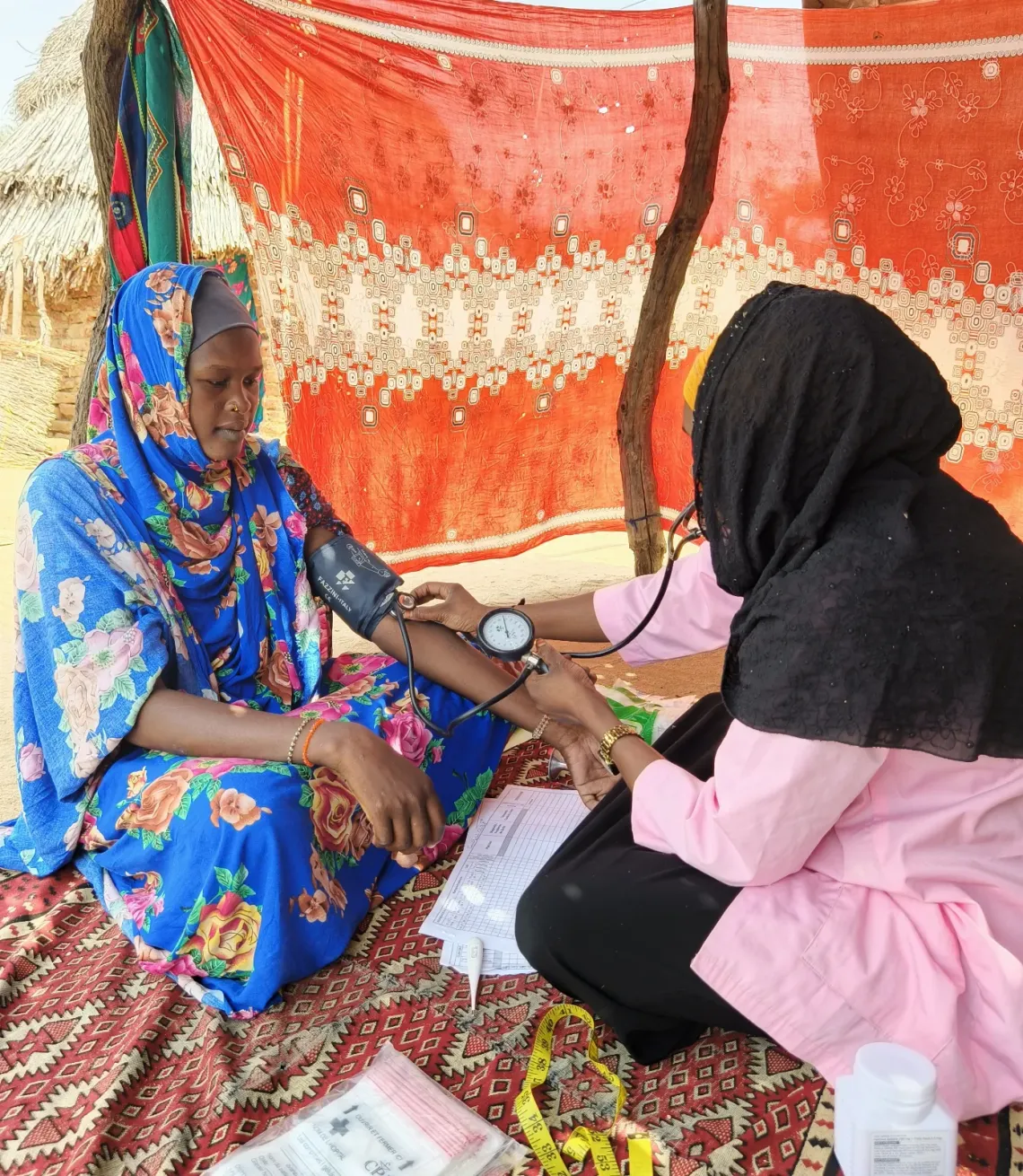
The results of this single outreach session show why bringing health services closer to communities matters. During this one visit, three zero-dose children were identified and vaccinated. In total, 63 children received vaccines, 14 pregnant women received antenatal consultations and 31 people received curative care.
Behind these figures in the registers are children and women who can finally access health services that had long been out of reach.
Bringing health services closer to the most remote communities, for the long term
In areas marked by long distances and difficult access, every mobile clinic outreach carries a simple but essential goal: to bring health services closer to communities, to identify children who have been left behind, and to ensure that distance, gender or lack of information no longer stand in the way of care.
A mobile clinic is a health team that travels directly to villages and localities far from health facilities to deliver essential services to the population. It reaches children, pregnant women and families who, because of geographic isolation, struggle to get to health centres. Through these community-based outreach services, people can access vaccination, antenatal care, primary health care and medicines.
This initiative, funded by the Regional Humanitarian Fund for West and Central Africa, helps strengthen access to primary health care, child vaccination, and maternal and newborn health services in the health districts of Bahaï, Tiné, Birack, Guéréda, Chokoyane, Amleyouna, Hadjer-Hadid, Farchana, Tissi and Koukou Angarana in eastern Chad.