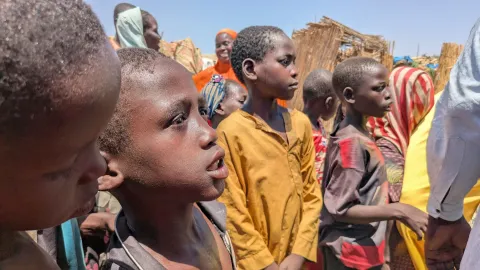
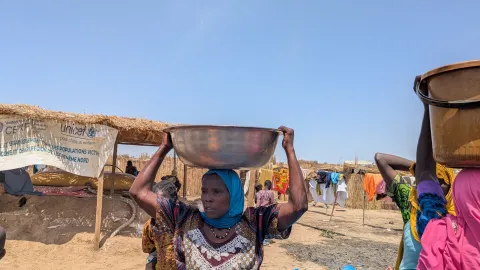
Kolofata after the blaze: UNICEF alongside displaced families
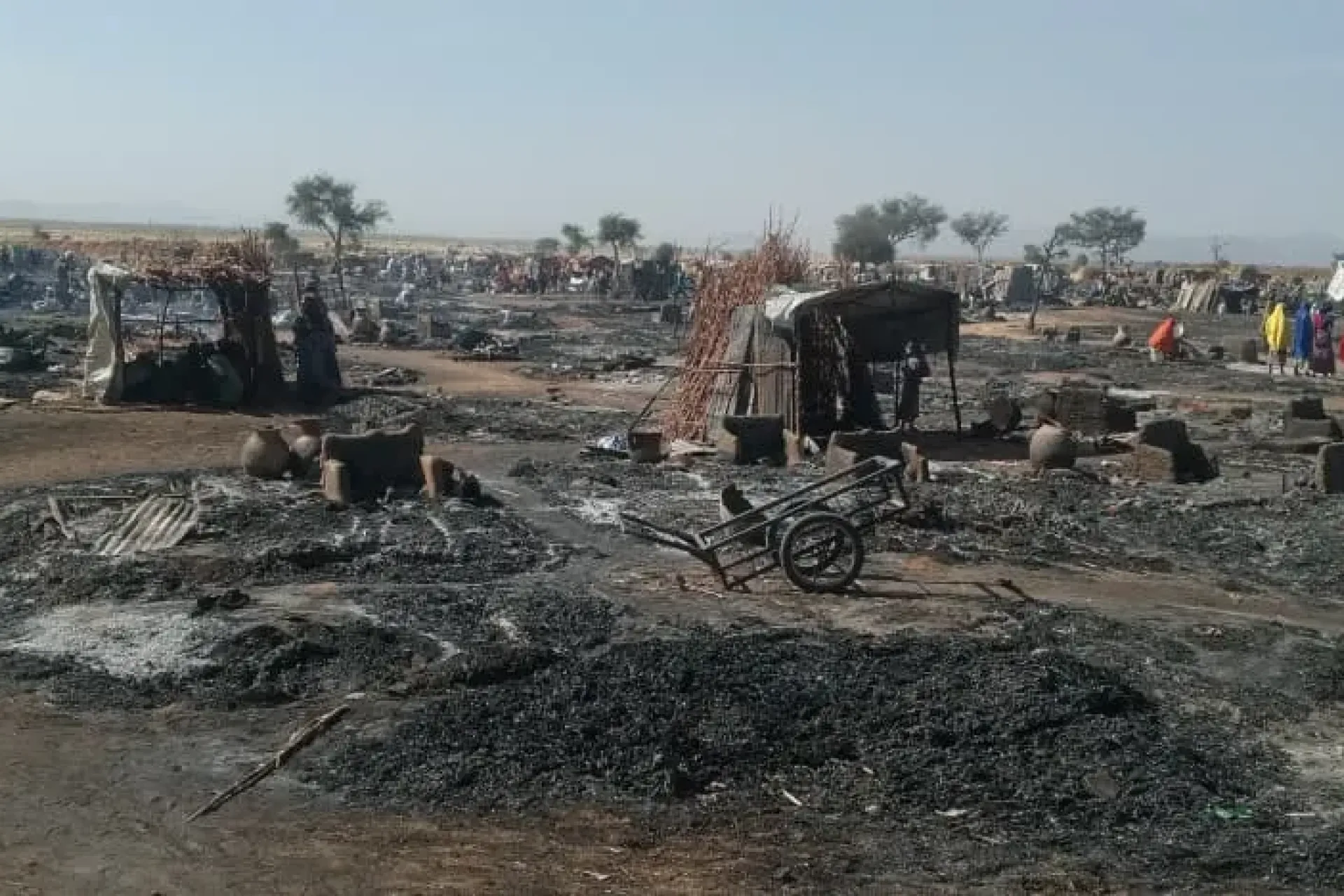
On 7 February 2026, fires swept through displacement sites in Kolofata, destroying makeshift shelters within hours and leaving thousands without housing or basic necessities.
- English
- Français
In the morning, the ground is still warm and the smell of smoke clings to their clothes. Children search through the rubble for anything that can be salvaged: a charred notebook, a sandal, a blanket. Many have lost their identity documents and birth certificates, which are essential for accessing services. In two primary schools, 56 pupils have seen their school supplies go up in smoke, putting their continued education at risk.
According to the multisectoral rapid assessment carried out by humanitarian organisations, nearly 1,000 households have been affected, and 6,065 people have lost their homes, food supplies or essential belongings. Children are among those most severely affected: in addition to material losses, many are in urgent need of psychosocial support to help them cope with the trauma.
The nutritional situation is also a cause for concern. Some families have lost the therapeutic rations intended for children receiving outpatient care, interrupting vital treatment. Access to water has become a major challenge, particularly at the Ndaba site, where the only water supply point was out of service following the fire. Most households have had to sleep under the open sky, whilst a few families have found refuge with host communities.
Key figures (as at 24 February 2026)
| People affected | 6 065 |
| Households affected | ≈ 1 000 |
| Children affected | 2 123 |
| Schools affected | 02 (56 pupils have lost their school supplies) |
| Destroyed shelters | ≈ 3500 |
A swift response, working closely with families
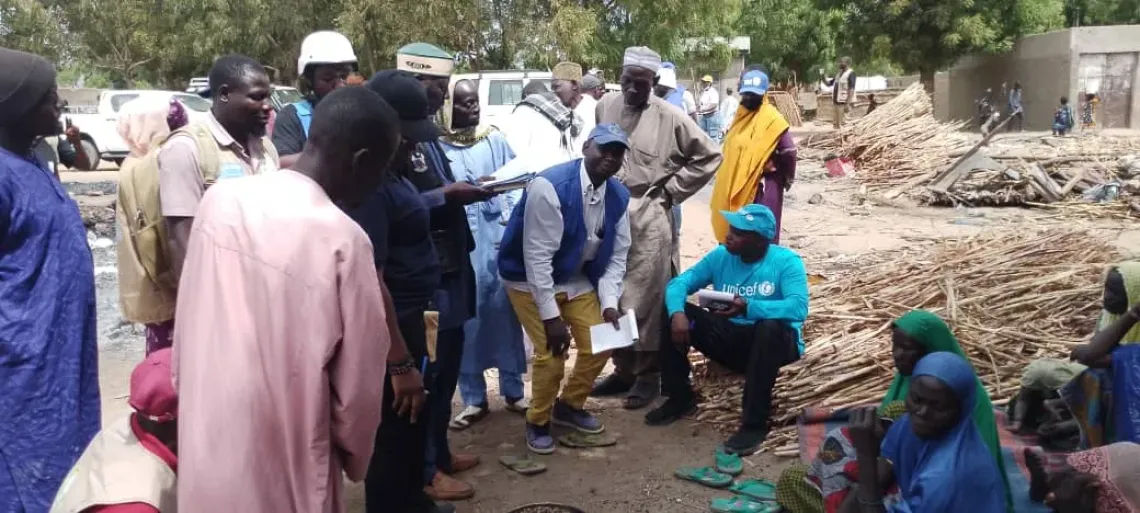
From the very outset, UNICEF, working in coordination with local authorities and humanitarian partners, has supported a multi-sectoral response to protect children and restore essential services – shelter, water, sanitation, health, nutrition, education and protection.
What UNICEF has done
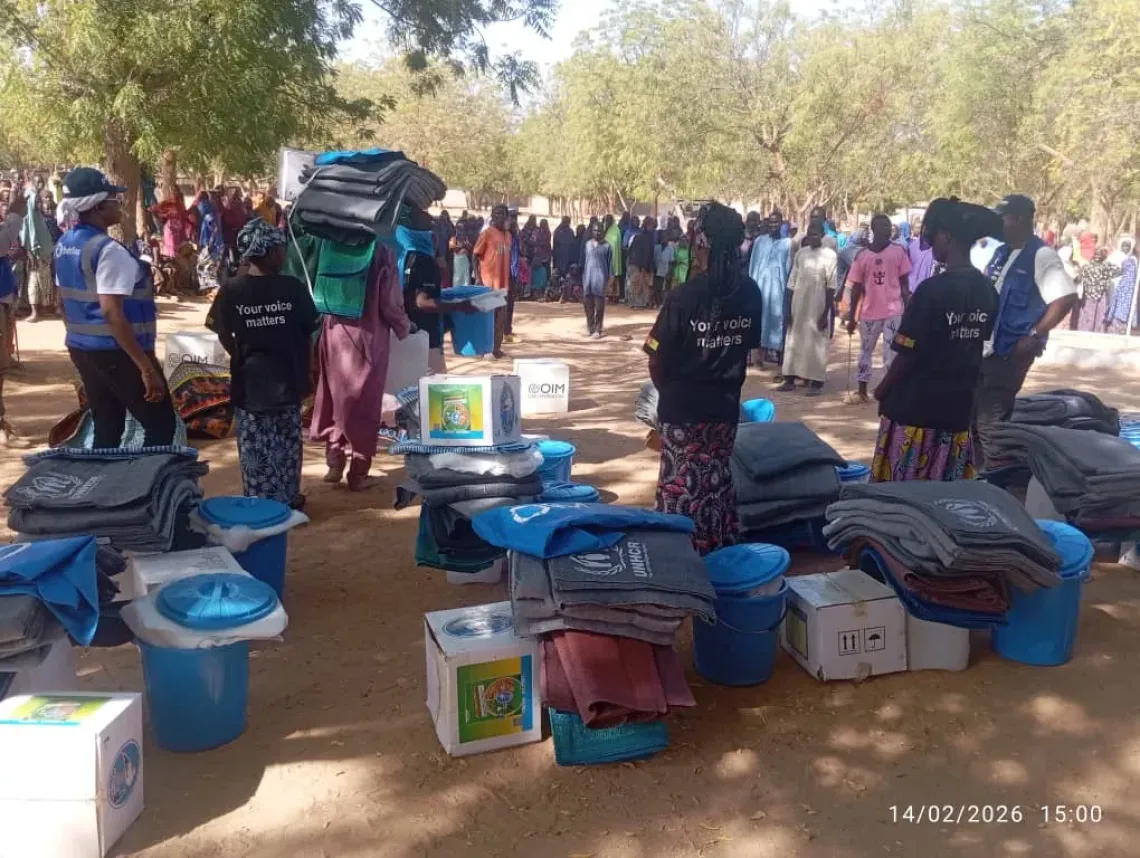
- Child protection: In partnership with ARDHU, distribution of 125 sleeping mats and 54 blankets, and community outreach to promote children’s rights and provide psychosocial support.
- Health: Distribution of 250 insecticide-treated mosquito nets to 250 households to reduce the risk of malaria.
- Nutrition: Continuity of care for children suffering from severe acute malnutrition; pre-positioning of 454 cartons of Plumpy’Nut and therapeutic milk in the district and health facilities.
- Water, hygiene and sanitation (WASH): In collaboration with AAEDC and volunteers, 350 WASH kits (soap, buckets, jerry cans, children’s pots, handwashing stations, cups and Aquatabs) were distributed to 2,397 people.
Participation of adolescents and young people: 40 U-Responders supported by UNICEF helped with community mobilisation, the distribution of kits and the assessment of needs.
On the ground, these practical measures – a mat to sleep on, a mosquito net for protection, treated water to prevent disease, and a therapeutic ration to continue treatment – make the difference between vulnerability and restored dignity. They also help to reassure children: in the midst of chaos, an adult who listens, a safe space, and the return of a school routine all provide a sense of stability.
Beyond this immediate response, these actions form part of UNICEF’s ongoing commitment to communities facing recurring crises in the Far North. In humanitarian emergencies, UNICEF works alongside authorities and partners to strengthen the resilience of children and their families: psychosocial support, mobile health services, safe spaces for learning, nutritional care, access to water and sanitation, and community mobilisation to prevent protection risks. Every emergency response is accompanied by long-term efforts to restore essential services, improve local capacities and ensure that children, wherever they are, can continue to learn, receive healthcare and grow up safely despite the hardships they face.
UNICEF would like to thank the Government of Japan, the Pandemic Fund, KfW and Global Affairs Canada for their support, which has enabled a rapid response in the areas of health, nutrition and WASH.