Nafissetou: Balancing Studies and Breastfeeding Through Breast Milk Expression
Thanks to the support she received, Nafissetou is continuing her studies without giving up breastfeeding her child.

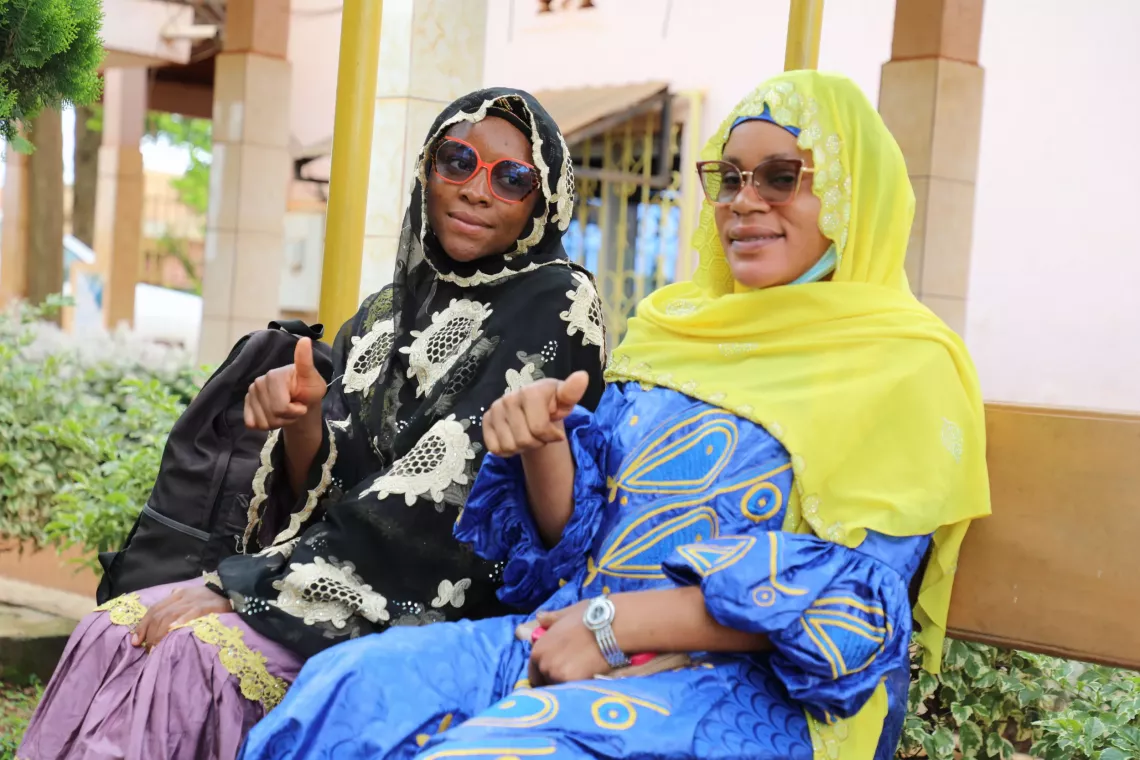
In a classroom at the Higher Institute of Management and Applied Technologies in Foumban, 24-year-old Nafissetou attentively follows her lecture… while at home, her eight-month-old baby continues to benefit from carefully expressed and stored breast milk.
For this young mother, balancing motherhood and higher education once seemed impossible. “Before, I didn’t even know you could express and store breast milk,” she recalls. “I thought that once I resumed classes, I had to switch to formula. I had no idea that breastfeeding could continue in another way.”
Everything changed when she met a counselor from the “Stronger with Breast Milk Only” project during a prenatal consultation. Informed about breast milk expression and storage techniques, Nafissetou not only learned how to express her milk but also how to organize it according to a schedule that fits her student life.
Every morning, she uses a manual breast pump to carefully collect her milk. “I would nurse on one side at night, and in the morning I’d pump the other side, that way I had enough milk. Sometimes I’d fill an entire 180 ml bottle,” she remembers.
She stores the milk in sterile containers, refrigerates it carefully, and leaves clear instructions for the person caring for her child. Thanks to this organization, her baby benefited from exclusive breastfeeding for six months, followed by gradual food diversification from six months onward, still accompanied by breast milk. “My second child is growing better than the first,” she confides. “With the first, I didn’t know how to express milk. But now, thanks to the advice I received, I do things differently. And I see the difference.”
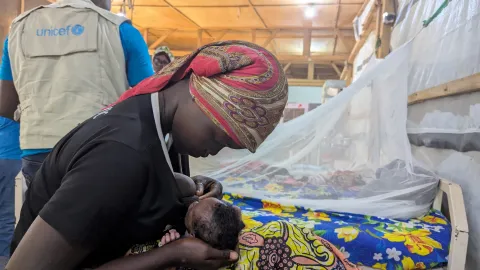
Nafissetou’s story highlights one of the most innovative aspects of the “Stronger with Breast Milk Only” project: supporting mothers to continue breastfeeding even when returning to work or school. In addition to actions in health facilities and communities, the UNICEF-supported project trains counselors to provide practical solutions tailored to the realities of modern women. “It’s thanks to Mrs. Moguem that I learned everything about milk expression. She showed me how to do it, what to use, how to store it. I’ll never be able to thank her enough,” Nafissetou says gratefully.
In the West Region, more than 2,050 health professionals have been trained and over 50,000 people sensitized in health facilities through this initiative. The project has increased exclusive breastfeeding rates from 29% to 62% (Project Monitoring Data – Stronger with Breast Milk Only), a change that directly benefits children’s health and development.
Nafissetou’s case shows that even without being physically present, a mother can nourish, protect, and build a strong bond with her child, provided she has the knowledge, support, and confidence she needs. “Some women think breastfeeding ruins your breasts. I say: that’s not true. Breast milk is the best there is. And you can keep breastfeeding, even when you’re not at home.”
Nafissetou’s story is one of quiet but powerful triumph: a woman who chose both education and nurturing, knowledge and care. A perfect illustration of what inclusive and tailored approaches can achieve in prioritizing breastfeeding, as emphasized by the theme of World Breastfeeding Week 2025: “Prioritize Breastfeeding: Build Sustainable Support Systems.”
[i] Données monitoring du projet Plus Fort avec le Lait Maternel Uniquement