A conversation on mental health
Many young people in Cambodia struggle to speak openly about their mental health. By listening to their experiences, UNICEF is helping shape better support for children and adolescents.

- English
- Khmer
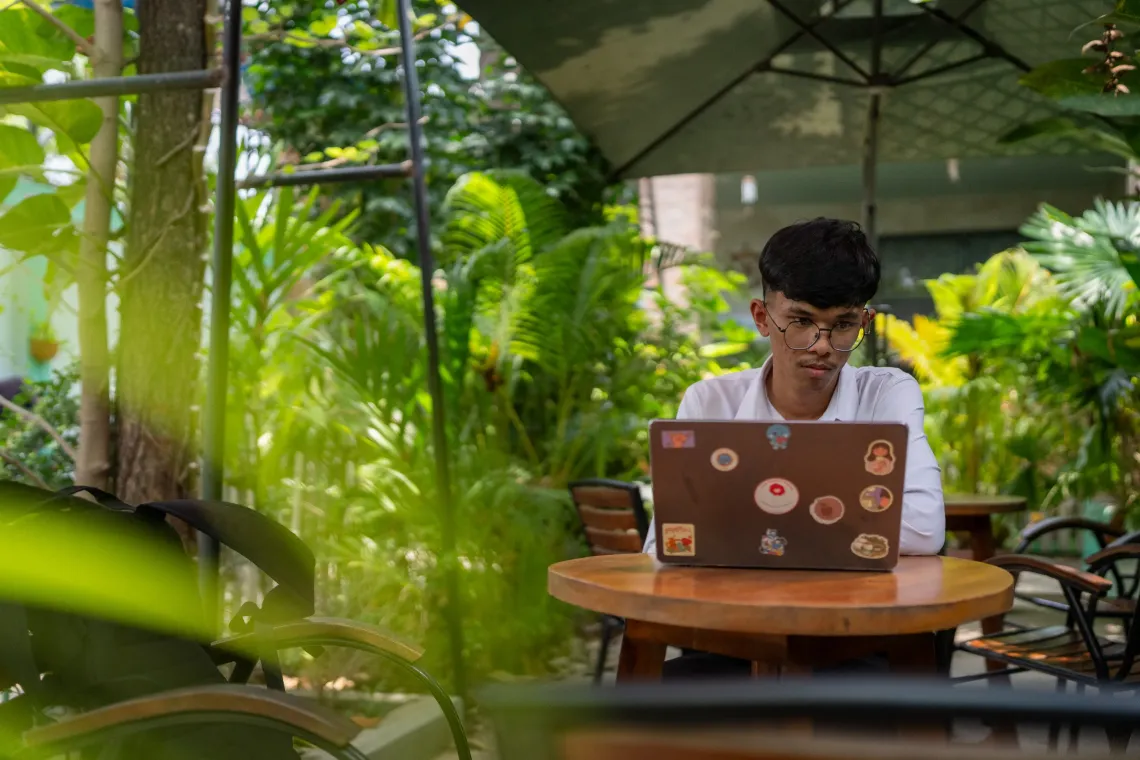
12 May 2026, Phnom Penh – Like many soon-to-be graduates, 18-year-old Vanthea worries about the future.
“I worry because I have to manage a lot of things,” he says. “Because there are still many responsibilities. Helping mom, helping dad, and saving money to get married.”
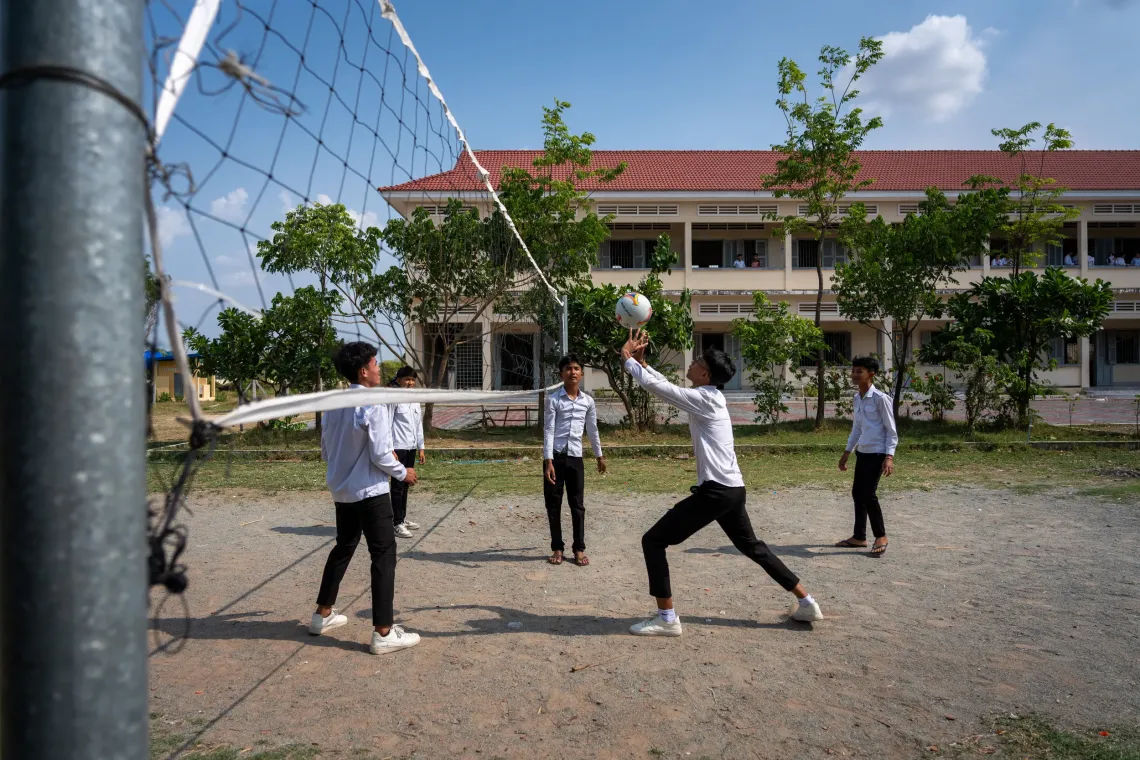
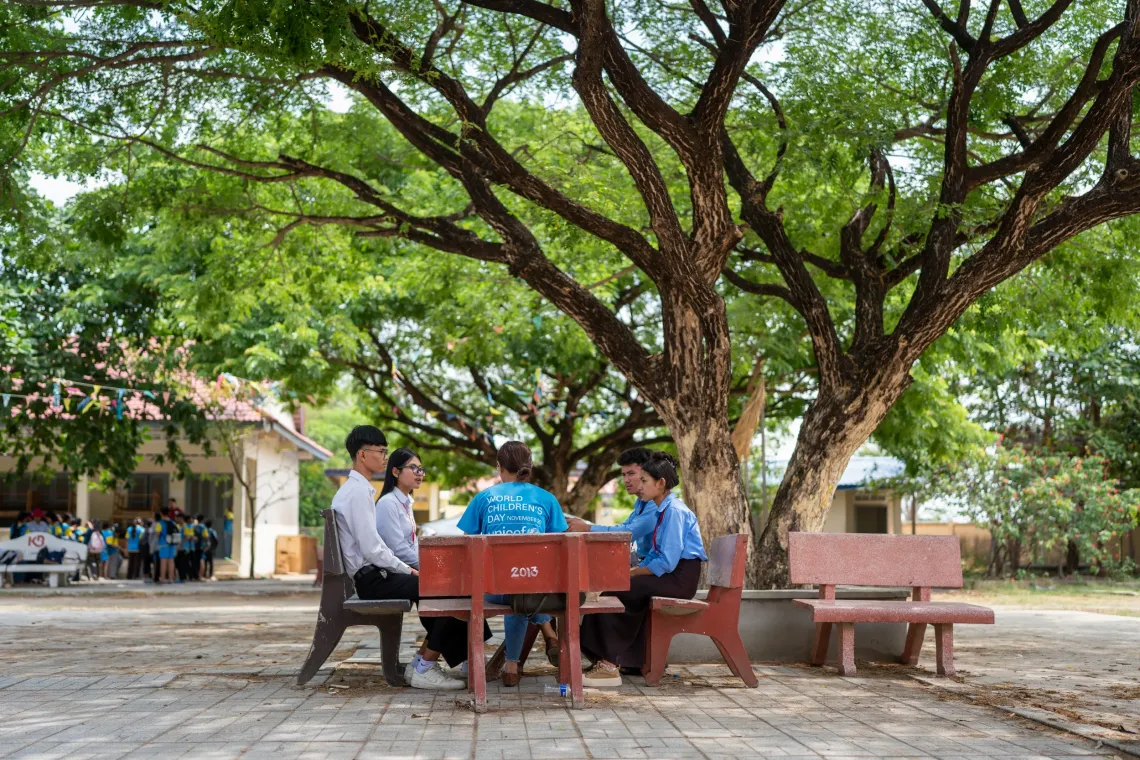
At Vanthea's secondary school on the outskirts of Phnom Penh, a small group of students are gathered under the shade during their breaktime. Their eyes are closed, and their hands are gently crossed against their chests, making the shape of a butterfly.
“Imagine a place you want to be, somewhere that makes you happy,” says group facilitator Rachana Cheu, UNICEF Cambodia child and adolescent mental health consultant. “Then take a long breath in, and take a long breath out. Tap your shoulders gently, one by one. Tell yourself: I am strong, I will succeed, and I will reach that place where I am happy.”
It’s the beginning of a session designed to get young people to start talking about mental health, still largely a taboo and misunderstood subject in Cambodia. “This is a self-care and self-love method for any day when you feel like, ‘Oh, I can’t do anything,’” Rachana tells the students.
Vanthea is sitting among the group. He took part in a similar exercise with Rachana towards the end of 2024, supported by UNICEF in collaboration with the Ministry of Health’s Department of Mental Health and Substance Abuse. Participants were asked about the pressures they face, where they seek help, and what barriers they encounter.
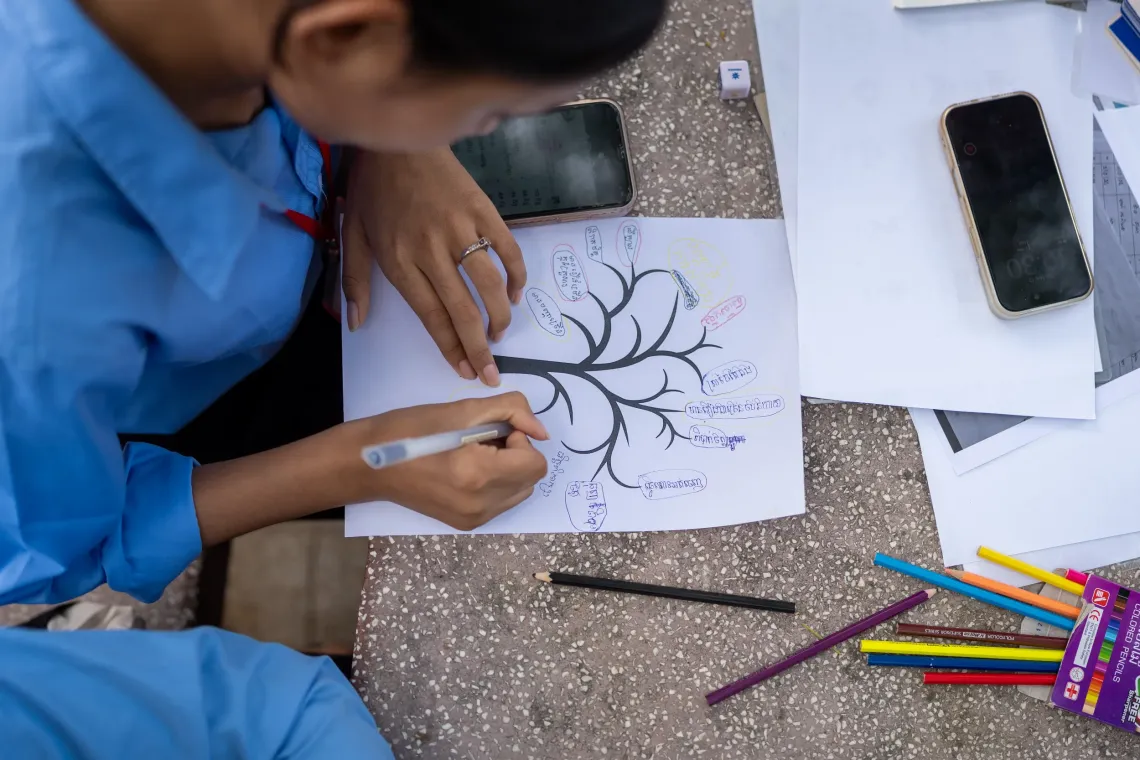
That was the first time he’d ever taken part in such a session, he says, so it wasn’t easy to speak up at first. The exercises pushed him to reflect on problems at home, put words and drawings to feelings he’d never fully expressed to many people apart from his own grandmother, and think about how parents, teachers, and communities could better support young people to cope with the challenges of growing up.
“That time you had me draw a picture to express my feelings,” he says. “I drew something messy because I felt overwhelmed.”
Vanthea’s experience is not unique. Global estimates suggest that around 1 in 7 (15%) adolescents aged 10–19 experience a mental health condition, yet many remain unrecognized and untreated. In Cambodia, like in many countries, young people may feel like they don’t have a safe space to share their thoughts and feelings, feel ashamed to seek help or speak up, or don’t know where to go to access mental health services.
Insights from Vanthea and his classmates are being used by UNICEF and the Ministry of Health to better understand the lived experiences of children and young people, their barriers to accessing support, and the gaps in existing mental health services. Consultations took place with 114 children, youth, and caregivers in schools, communities, and health facilities across Ratanakiri, Siem Reap, and Phnom Penh, with the goal of ultimately strengthening the support network for children and adolescents.
By consulting with youth directly, the voices of young people also become part of the solution. Many had clear suggestions for what would help: more trusted adults and peers to share their emotions without judgement, deeper family empathy, and relatable content creators who share practical self-development advice. Crucially, they also called for male-inclusive support systems, integrated mental health education in the community and schools, and destigmatized spaces where emotional vulnerability is treated as normal and valid.
Vanthea hopes to see more engaging and relevant mental health content on social media. He thinks that boys in particular need more support to open up. And he thinks parents and caregivers should go easier on their children.
“In my opinion, to support their mental health, caregivers should pay more attention to their children,” he says. “And I ask parents to encourage children rather than belittling them when they don’t get good grades. Don’t compare your child to other people’s children, saying ‘look at those kids...’”
UNICEF promotes solutions that help children and adolescents build lifelong resilience – including through healthy habits, trusting relationships, and positive help-seeking behaviours – while ensuring that mental health care reaches those who need it most. Across Cambodia, health staff, teachers, and Village Health Support Groups have received intensive training and on-site coaching in delivering psychosocial interventions, psychoeducation, mental health screenings, and referrals, while monks, social workers, and caregivers are being trained in psychological first aid and psychoeducation. At the same time, online campaigns are helping young people and families dismantle stigma and build an environment where mental well-being can truly thrive.
UNICEF is also enlisting the help of young people as changemakers and advocates for mental health.
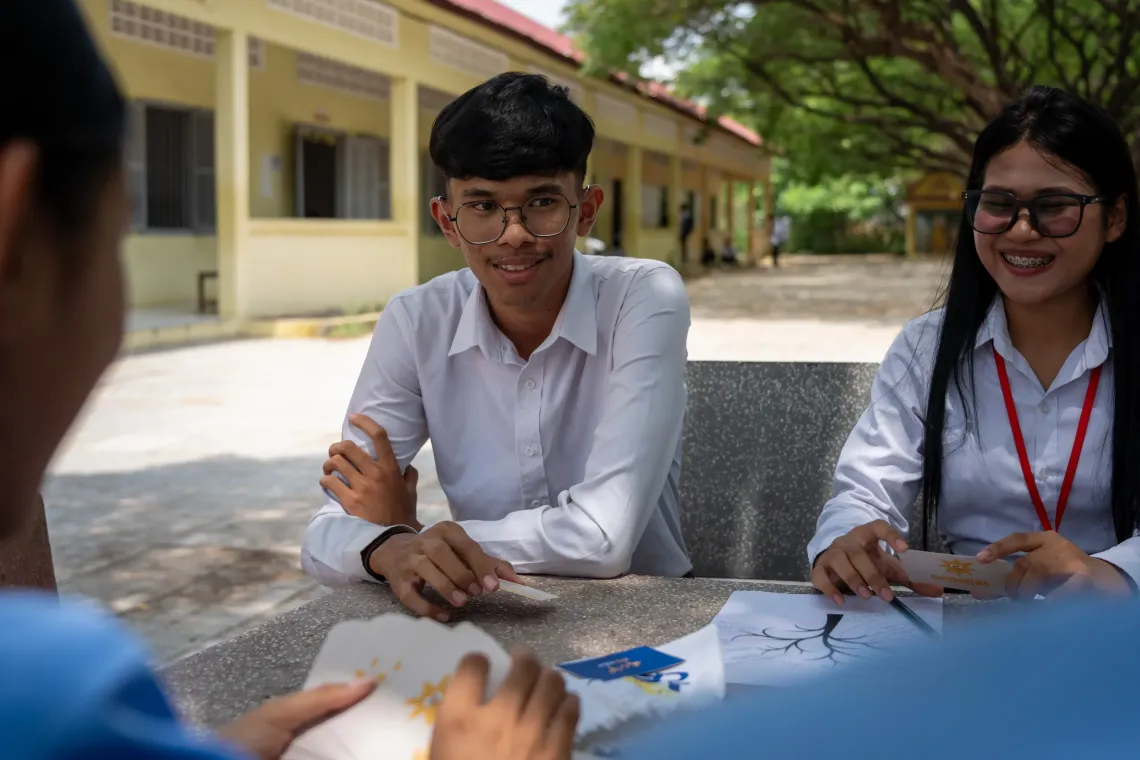
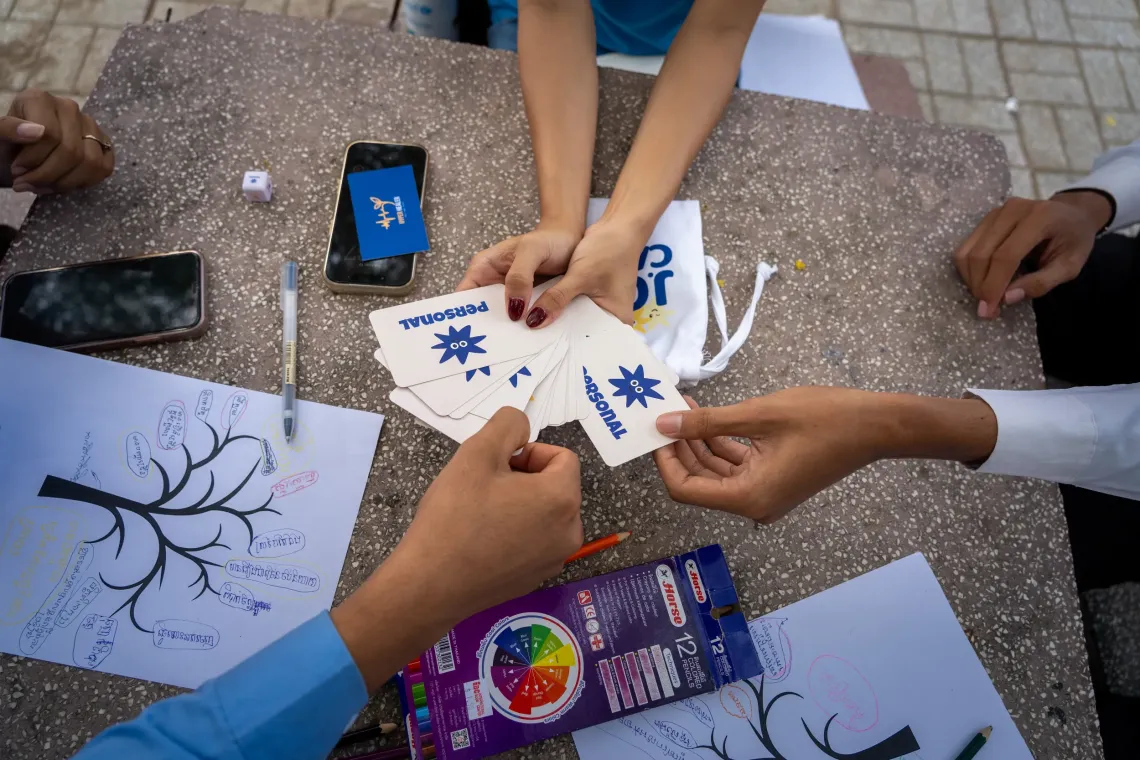
During today’s session with Rachana, the group took turns answering question cards developed by a team of young innovators participating in UNICEF’s entrepreneurship programme Generation Future. Over seven months, they joined bootcamps, visited communities, and connected with local partners to better understand challenges and shape solutions to issues impacting young people and the community today. The end result: Hyper Healer, a card game that sparks conversation and encourages self-reflection, reaching hundreds of young people so far. The team eventually won additional seed funding to continue developing their prototype.
To play, participants take turns answering questions written on a card drawn at random. For Vanthea, some felt more familiar, like “What do you worry about the most?”, while others encouraged deeper thought, like “What’s one emotion you find hard to face, and why?”
“The feeling I think is difficult to face is losing a loved one,” he says. “Because I lost an older brother. He drowned. Whenever people ask, it affects my emotions.”
Vanthea sees the value of talking. And while opening up is not always easy, he’s realising that speaking about difficult feelings in a safe space can make problems feel lighter, and that his voice matters.
Like many young people, Vanthea still faces worries about the future. But he also has ways of coping, people he trusts, and goals that keep him moving forward. He dreams of becoming a graphic designer, he says. He’s already got a part-time job to help him build his design skills and has his eyes set on a university course, for which he hopes to find a scholarship. If he re-did some of the exercises from the original consultation, some of his answers would be different.
“If you had me draw now, it wouldn’t be like before,” he says. “Before, I thought too much because there were many problems then, but now I feel better.”
And talking about his mental health feels easier, now, too.
“I’m braver than before talking face-to-face like this. Because I didn’t used to like being around too many people. Now I have developed myself a lot.”
UNICEF’s ongoing work to strengthen mental health support services for children and adolescents is funded by partners including the Australian Government through the Australian NGO Cooperation Program (ANCP).