UNICEF and UNFPA call for collective action to invest more on mental health and the well-being of children, adolescents and youth in Cambodia

- English
- Khmer
On this World Mental Health Day 2023, with the theme ‘Mental health is a universal human right’, we spotlight the mental health of children, adolescents and youth in Cambodia. The COVID-19 pandemic undeniably thrust mental health issues into the global spotlight, exposing a crisis that had been quietly unfolding worldwide for many years. The pandemic was merely the tip of the iceberg. According to UNICEF, 1 in 7 adolescents aged 10–19 experiences a mental disorder.[1] Globally, suicide is the fourth leading cause of death among young people aged 15–19.[2]
UNICEF and UNFPA work closely with the Cambodian Ministry of Health, which is fully committed to providing adequate mental health care for the country’s children, adolescents and youth. However, mental disorders or anxiety should not remain solely a public health issue but should be recognized as a societal concern. The magnitude of this crisis on children, adolescents and youth is unprecedented.
In 2022, at least 873 people died by suicide,[3] most of whom were between the ages of 15–19. Approximately half a million people in Cambodia are affected by depressive disorders or anxiety, which are major contributors to suicide.[4]Shockingly, an estimated 58 per cent of secondary school students reported experiencing at least one mental health issue following the prolonged COVID-19 school closures.[5]
The pandemic pushed almost half a million families into poverty[6], exacerbating their vulnerability and leading to a significant surge in abuse and gender-based violence. Alarmingly, an estimated 40 per cent of children and adolescents endure physical and psychological violence and abuse, including sexual abuse and bullying.[7]
Like many children worldwide, Cambodia's younger generation also faces an uncertain future because of a climate crisis handed to them by previous generations, which can make them feel helpless or desperate.
The pandemic took a heavy toll on mental health, yet it also helped us break the silence.
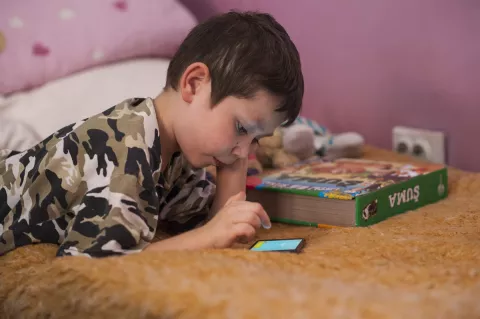
We took part in the conversation. Last year, UNICEF and UNFPA invested in digital and mobile platforms to create more opportunities for dialogue and to provide information on mental health as well as spaces to seek support. UNFPA, together with the national authorities, launched the Youth Health mobile App to connect adolescents and youth to comprehensive sexuality education, giving them access to information and free 24/7 helpline counselling services.UNICEF launched the #IFeelBetterWhen campaign, reaching approximately 1.4 million young people and adolescents with online guidance to help cope with anxiety.
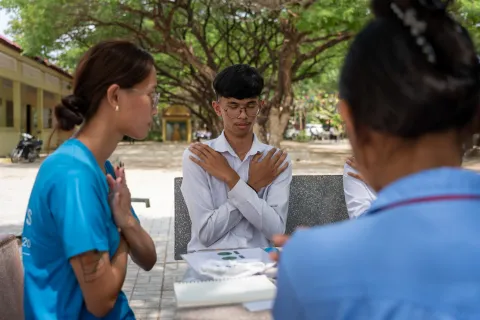
We took action. In schools, UNICEF and UNFPA are actively involved in life skills education, which helps students build positive mental health, establishing school health rooms that can provide care services and training youth peer educators. Additionally, we collaborate with national institutions to implement Mental Health and Psychosocial Support (MHPSS) within public services and the Parenting Tips initiative, which supports public services by providing advice to parents and caregivers.
Cambodia is rapidly advancing its human capital and development through the implementation of its Pentagonal Strategy Phase One (2024–2028), which gave direction to the forthcoming United Nations Sustainable Development Cooperation Framework (UNSDCF 2024–2028). However, reaching many of the nation’s ambitious goals will be difficult without realizing child and youth rights, including investing in the much-needed expansion of mental health care services across the country. A generation unable to access necessary support becomes a generation of lost potential.
A recent analysis found that the economic benefits of investing in MHPSS interventions strongly outweigh implementation costs.[8] For every U$1 invested in social and emotional skills education, an astounding U$225 of lifetime earning loss is averted.[9]
More needs to be done.
We call upon the government, civil society and public and private sector partners to commit, communicate and take collective action to better support mental health and promote the well-being of all children, adolescents and caregivers. Together, we need to take five actions immediately:
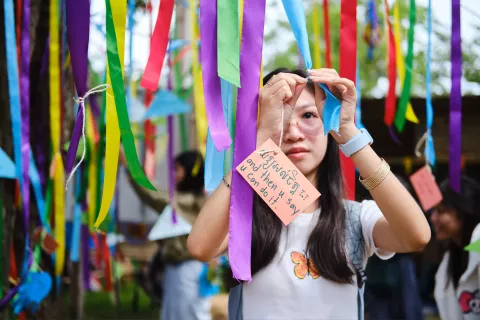
- Break the silence surrounding mental health issues, combat stigma and empower communities with a better understanding of and ability to speak about mental health at home, school, work and in all forums and discussions. We need to promote mental health through education and peer support teams, support community awareness campaigns, use social and mass media channels to initiate dialogue, and provide quality information and guidance on how to cope with mental health challenges and ways to seek support.
- Give children, adolescents, youth and caregivers access to quality, timely support whenever and wherever they need through urgent public and private investment in MHPSS services and adequate training of personnel across all sectors, especially health, education, child protection and social protection. Existing programmes and services for mental health need to be scaled up, with good coordination between public and private sectors. MHPSS interventions need to be integrated into hospitals and health centers including maternal child health care and pediatric services across the country, including in remote and rural areas, to ensure no one is left behind. Tailored and comprehensive support services for vulnerable groups, including those with disabilities, ethnic minorities, HIV/AIDS, migrants, LGBTQI+ and survivors of abuse and violence, should also be widely available.
- Engage communities and families in promoting well-being and good mental health through parenting programmes that give caregivers the tools they need to support themselves and their children, life skills education that helps adolescents build emotional resilience, and avenues for active and meaningful participation on MHPSS.
- Generate more data and conduct further research on MHPSS to drive continued policy development and investment decisions.
- Expand digitalized access to comprehensive sexual and reproductive health education to connect more young people to educational resources and mental health support services.
If we don’t act now, we undermine the next generation’s chance to learn, develop, build meaningful relationships and contribute to the world. And when we ignore the mental health of parents and caregivers too, we fail to support them to nurture and care for their children to the best of their ability.
Mental health is a universal human right, and it is a universal child right, which supports the fulfilment of the Convention on the Rights of the Child. Let us envision a Cambodia where mental health is a foundation for building a brighter future. Unleashing the potential of Cambodia's youth means nurturing their mental well-being. And when the mind thrives, the country prospers too.
The time to act together is now.
[1] Adolescent mental health statistics - UNICEF DATA, 2023.
[2] The State of the World’s Children Report, UNICEF, 2021.
[3] 873 suicides this year so far: Cambodia National Police - Asia News NetworkAsia News Network
[4] Depression and Other Common Mental Disorders: Global Health Estimates, WHO, 2017.
[5] Joint assessment, Ministry of Education, Youth and Sport, Education sector Working Group, UNICEF, 2021.
[6] Cambodia Poverty Assessment: Toward a More Inclusive and Resilient Cambodia, World Bank, 2022.
[7] Situation Analysis of Children and Adolescents, UNICEF, 2023.
[8] UNICEF Policy Brief: Cost-benefit analysis of mental health and psychosocial support interventions in schools and learning environments in emergencies(2023)
[9] UNICEF Policy Brief: Cost-benefit analysis of mental health and psychosocial support interventions in schools and learning environments in emergencies(2023)
Media contacts
About UNICEF
UNICEF promotes the rights and wellbeing of every child, in everything we do. Together with our partners, we work in 190 countries and territories to translate that commitment into practical action, focusing special effort on reaching the most vulnerable and excluded children, to the benefit of all children, everywhere.
For more information about UNICEF and its work for children, visit www.unicef.org.