Two UNICEF partner ministries appreciate the effects of interoperability in Kirundo.
The Ministries of the Interior, Community Development and Public Security and Public Health and the Fight against AIDS, UNICEF noted that interoperability is contributing to better management of birth registration and immunization services.
- English
- Français
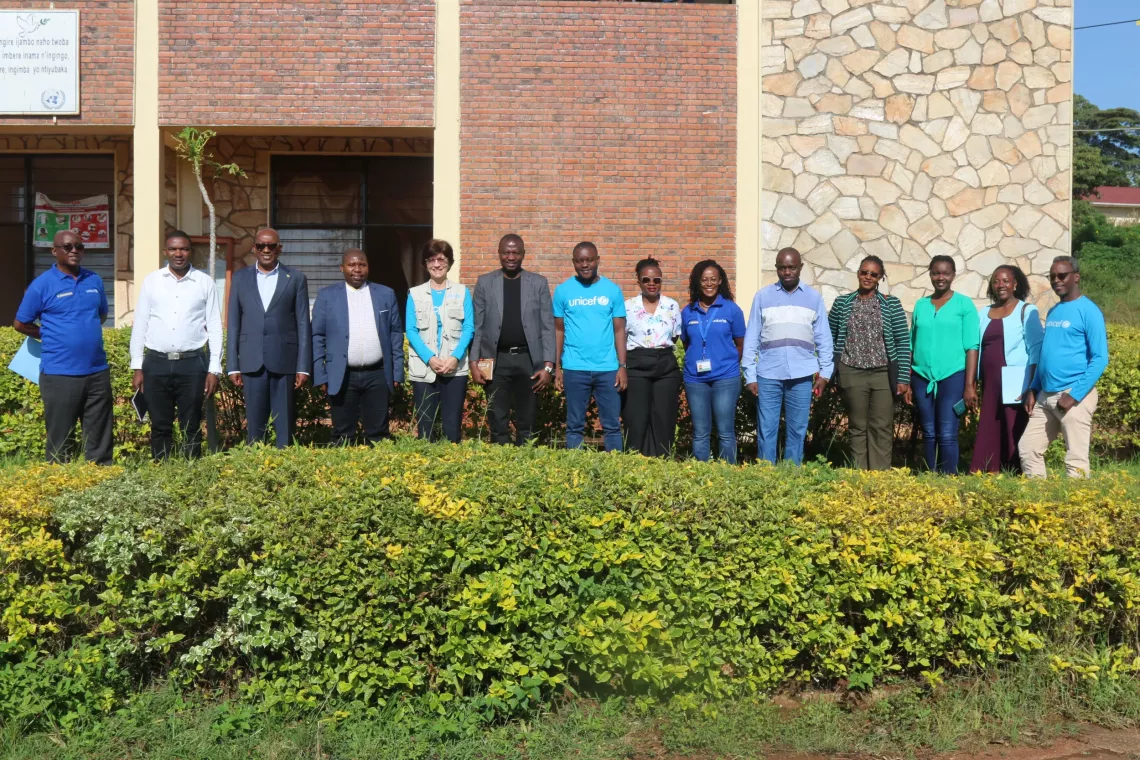
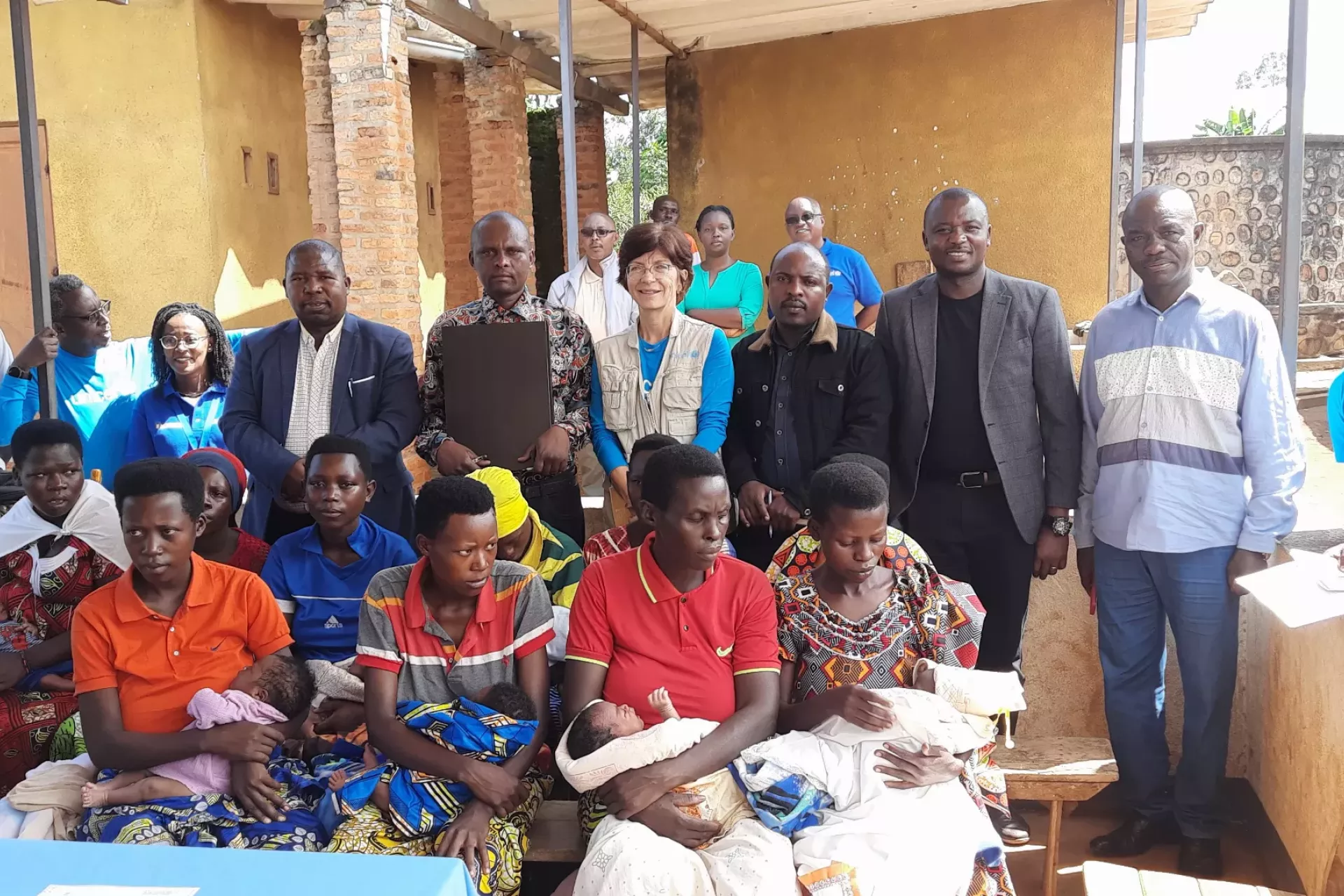
Since 2023, an interoperability between civil registry services and health facilities (FOSA) approach has been in place. In light of this, a delegation from UNICEF, the Ministry of the Interior, Community Development and Public Security (MIDCSP) and the Ministry of Public Health and the Fight against AIDS (MSPLS) made a joint visit to Kirundo province from 1 to 2 April 2025.
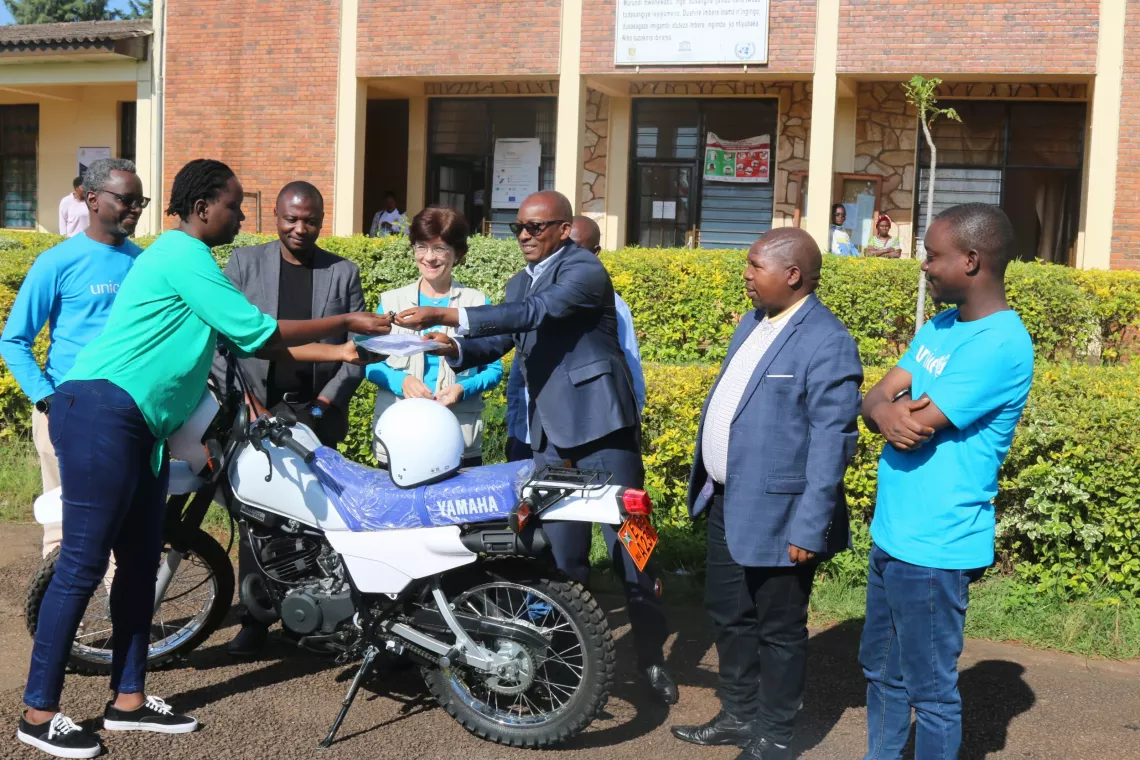
The visit began with a meeting at the provincial capital between the governor and the delegation. On this occasion, the UNICEF Representative officially handed over a motorbike to the Governor for the civil registry service in Kirundo. ‘'I have to pay around 50,000 Burundian francs to go to a commune for follow up. With this motorbike, I will now be able to reach the remotest hills’' said a delighted Grâce Itangishaka, Provincial Supervisor of birth registration.
Under a sparkling sun, the participants then visited the Marembo health center (CDS) in the Busoni commune. They were welcomed by the head of the CDS, the local administrator and a civil registrar assigned to the CDS to register births. Discussions with the beneficiaries highlighted the positive impact of interoperability on children's access to registration within the legal timeframe, as well as on the CDS attendance rate.
‘'With the mother-child record book, we can track the details of each child's vaccination throughout the immunization schedule, as well as registering the child immediately with the civil registry,’' explains Modèste Bazumbaze, head of the Marembo CDS.
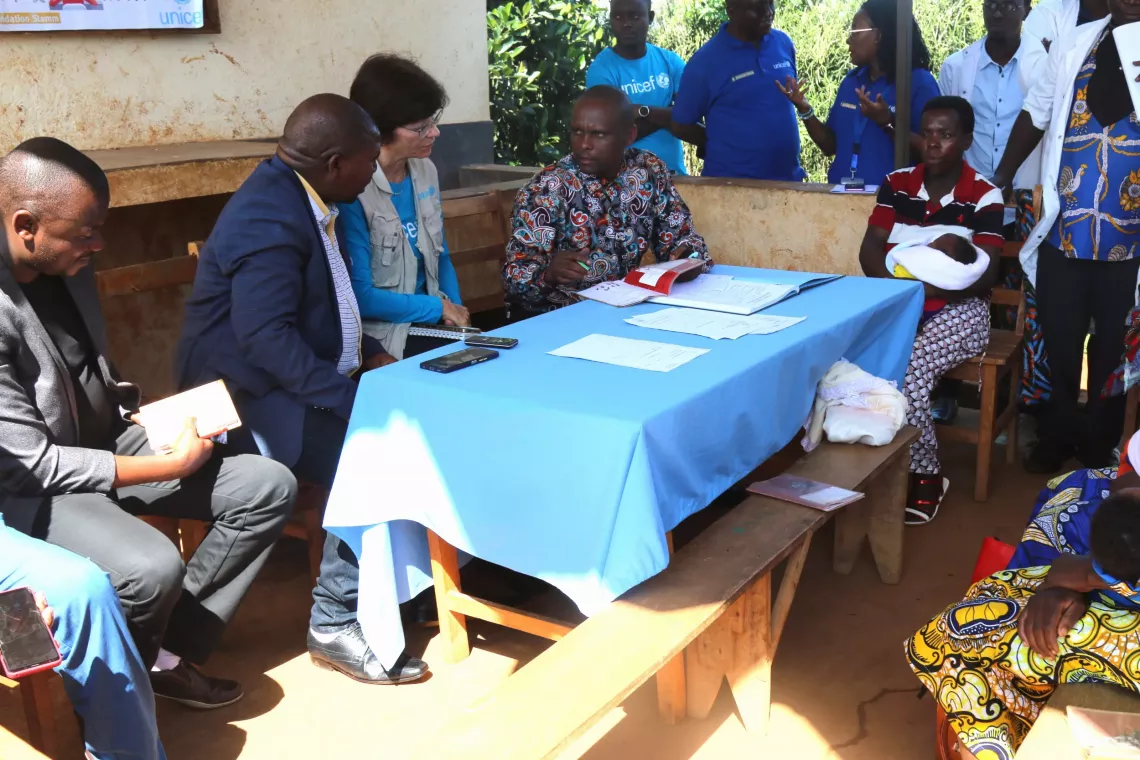
In Marembo, the UNICEF Representative and the delegates noted the progress of interoperability, interacted with field actors, and gathered testimonies from beneficiaries. The objective was to identify best practices and guide the national scale-up.
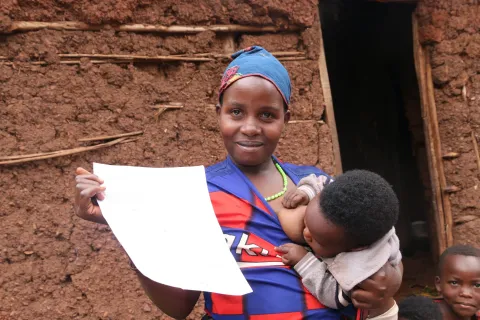
Among the beneficiaries, Yvette, 35 years old, testifies: "Before, I had to walk more than 19 km to register my child and obtain their birth certificate. Today, everything is done directly at the health center after childbirth."
To date, 52 public facilities are covered by interoperability in the province of Kirundo. Thanks to the civil registrar present at the FOSA, birth registrations are carried out on-site, at birth or during the first vaccination appointment.
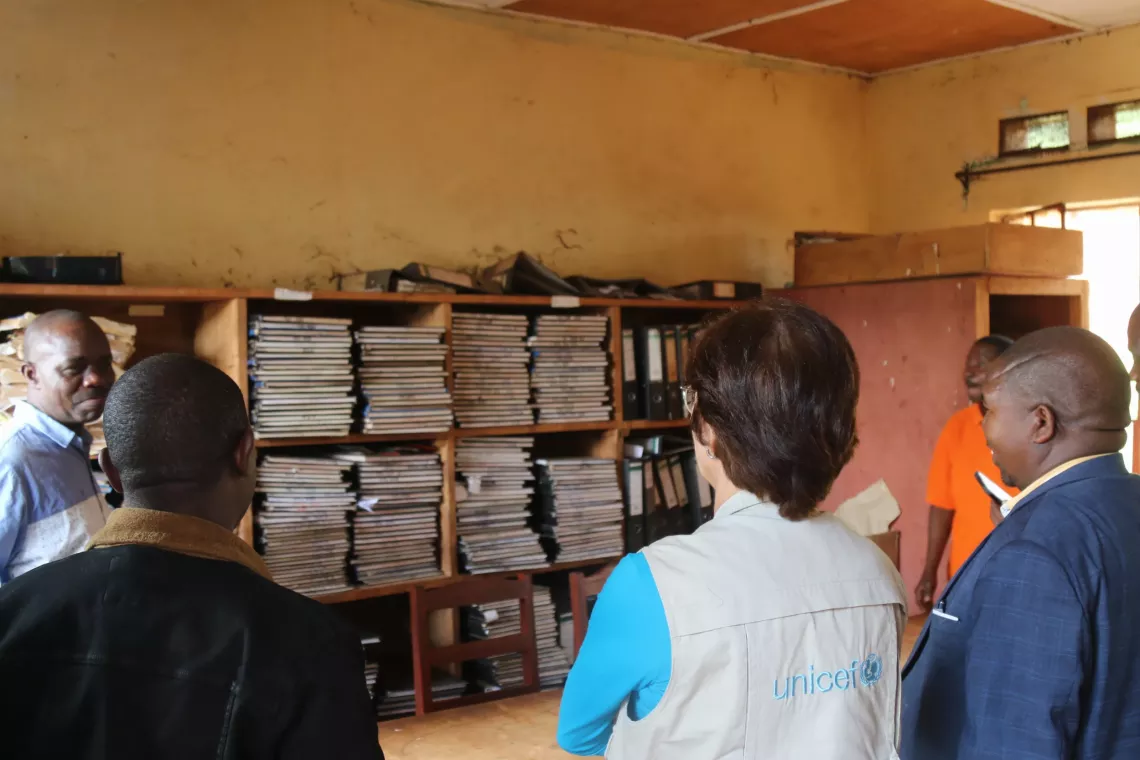
The visit to the commune of Busoni allowed for an appreciation of how records are kept and centralized. "Interoperability has reduced disputes related to paternity," emphasized the administrator of Busoni.
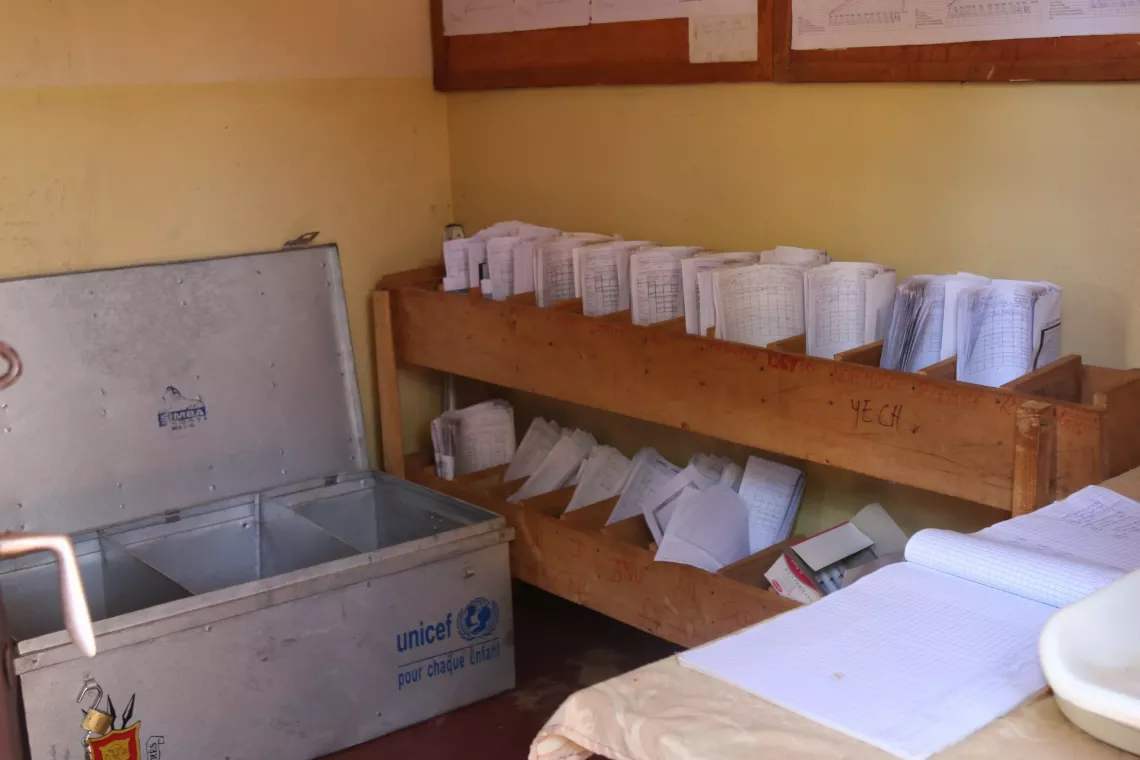
For Samuel Ndihokubwayo, representative of the Ministry in charge of health, linking birth registration with immunization reduces the workload, improves the quality of the data and reaches unimmunized or under-immunized children more effectively.
While interoperability offers many advantages, it is not without challenges. The increase in the number of births in the CDS puts pressure on civil registrar who sometimes lack transportation means to cover all the CDS. The archiving of records remains manual, awaiting the implementation of digital solutions. Stock shortages of registration forms and health booklets continue to be reported in most CDS.
Despite these constraints, the results are encouraging: six months after its launch in October 2023, the birth registration rate within the legal timeframe increased by 34%, according to the case study conducted in 2024.
In addition to Kirundo province, the approach is also underway in 25 health centers in the Muyinga province and 15 in the Kayanza province, thanks to funding from the UNICEF National Committee in the United Kingdom.
‘'This interoperability project deserves to be extended nationwide to ensure every child's right to a legal identity’" , concluded Théophile Ndarufatiye, Permanent Secretary of the Interior at the Ministry of Interior, Community Development, and Public Security.