Rising from the ruins of teenage prostitution
How Estella rebuilt her life after years of sexual abuse

Bujumbura, Burundi – In the slums of Buterere, poverty can not only be seen, but smelled. Here, just outside Burundi’s capital, an acrid smell of burnt plastic and rotting refuse lingers in the air. The stench intensifies as I get closer to my destination, Buterere’s landfill.
The sight is one of the saddest in the capital – a sprawling garbage dump, where rubbish fires burn under a blazing sun. Trucks surrounded by hordes of flies rumble up a dirt road towards the base of the site.
As the vehicles dump their loads, dozens of locals, most of them children, begin searching through the mounds of rubbish – some of them barefoot and shirtless.
Many of the children here were born into poor families that relocated to the area from the countryside. Instead of finding urban prosperity, most of them settled in makeshift dwellings around the dump. About 1,000 families live off its refuse.
“Since he was 2 years old, my son came here every day to scavenge for food,” says Estella*, 26. The single mother used to live with her three children in a stinky, airless room half a kilometer from the landfill. “On lucky days, he’d bring back enough food for us to have a second meal. I could only offer one.”
Estella glances at me with an impenetrable stare, as she recounts the harrowing events which led her and her children to this place of utter desolation.
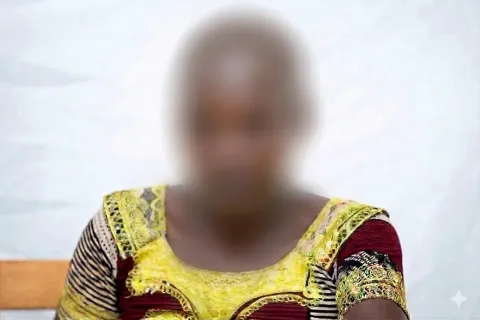
“I want to tell my story in hope that it inspires other women never to despair,” she says.

Estella was only a child when she traded her virginity for food. Raised in Buterere by her mother and an abusive stepfather, she was often left without anything to eat. She never went to school — the norm for many children from impoverished families in Burundi. Since she was seven years old, Estella worked as a maid in several homes across the neighborhood.
By the age of 14, she encountered a man who charmed her. The man, twenty years her senior, promised her enough food to keep her going from dawn to dusk. “For one week, he held his promise. I trusted him,” she says. “Then, he asked to sleep with me. I was aware that if I refused, his benevolence would cease. So, I agreed.”
Little did she know she would become pregnant. “I knew nothing about how a baby is made. No one had ever told me.”
When she found out she was pregnant, all aspirations she had left shattered. Whom could she have turned to for help? She was too ashamed to reveal the truth, which she feared would madden her parents as never before. Despite her youth, she knew about the great stigma attached to her situation in Burundi, where it is believed unmarried pregnant girls bring curse to their families.
“When my belly started to swell and couldn’t hide my pregnancy anymore, my stepfather told me I finally gave him a reason to throw me out,” she says. And so he did.
Estella believed she would be able to find refuge with the man who impregnated her. His deserted home disabused her of that notion right away. The man had fled. She was all alone.
Estella’s pregnancy was a prison, the jailer, her solitude. Suicide seemed like the only exit. “I wanted to die,” she says. “But I was too poor to afford any poison.”
For days, maybe weeks, she wandered the streets, markets, and the piles of rubbish of Buterere. One day, as she was sitting in the dirt, a girl approached her. She was a prostitute. She offered Estella to move in and work with her. She would have a room, where she could meet customers and earn money. Pregnant, homeless, and despondent, Estella accepted the girl’s offer.

That’s how Estella entered the dark world of prostitution. Customers came in day and night. Drunk men would stumble into her room to abuse her. Many were violent despite her pregnancy, threatening to leave without payment when she complained.
After months of abuse, she became numb to it, almost. “During this time, nothing brought me joy,” says Estella. “I only lived to see the sun set and rise again.”
But worries about her child’s health were inescapable as she endured clients’ brutality. When she reached the eighth month of pregnancy, she took a job as a maid for several families.
The pay was meagre, the housework strenuous. She worked more than twelve hours a day, fetching water, scrubbing floors, and washing dishes, until the very day she gave birth to little Jean*.
“After giving birth, life became even more difficult”, says Estella. “I couldn’t find enough food for both of us and could no longer afford the rent. So, we found ourselves having to rely on people’s pity for food and shelter.”
She eventually got back on her feet, as she resigned herself to work as a farmer, making a paltry $0,25 dollar a day.
“During those years, we would eat once a day. We were miserable.” From Monday to Sunday, Estella worked in the fields until nightfall. Little Jean would go the dump.
Sometimes, Estella could save enough money to afford the rent. For a couple of weeks, she could meet clients again, who paid her better.
In 2018, two additional unwanted pregnancies later, Estella’s life took an unexpected turn. She was admitted to a program to rehabilitate vulnerable girls, to help them overcome social stigma and build decent lives for themselves.
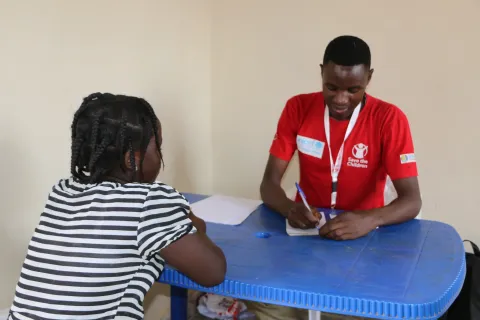
The program, set up by UNICEF Burundi and its partner UCBUM with the funding of the Spanish National Committee for UNICEF, accepts vulnerable girls, including teen mothers and victims of sexual abuse. 841 girls are currently supported by the program.
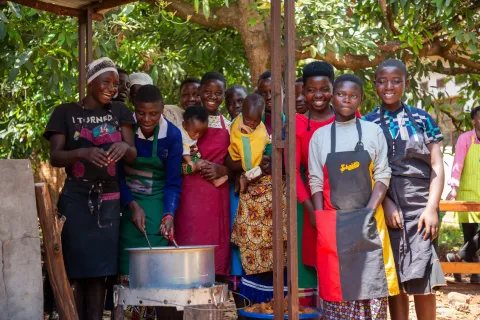
Along with counseling and awareness sessions, participants receive training in trades, such as tailoring or bakery, to prepare them for an easier return to society. They also join solidarity groups to access saving and lending opportunities.

A year after she joined the program, Estella had managed to beat the odds. With her newfound skills and savings, she ran a small street business of cassava and peanuts. Two years later, Estella opened a stall at the Cotebu Market, in one of Bujumbura’s commercial districts.
Life of prostitution and begging is now a distant memory. “With my income, I am able to properly feed my children three times a day. I can pay for their healthcare and school supplies,” she says with a proud smile. “I can even employ a maid to care for them when I am off to the market.”
“For the first time in years, I am having friends again.”
Estella and her children now live in a tiny two-room house, a couple of kilometers away from the reeking landfill. She moved here four months ago, thanks to her solidarity savings. She wanted her children to grow in a safer, enclosed place.
In the outer room, sitting on a plastic chair, Estella looks at her reflection in a tiny, pink compact mirror. Her brown, almond-shaped eyes glisten with satisfaction.
“I am grateful for what I see,” she says. “I don’t feel shame anymore. With the graceful dresses I can wear, I feel proud and reassured. On the streets, people now call me madam.”
* Names changed to protect privacy.
By Ruben Julian Hamburger – Communication Officer, UNICEF Burundi