The Power of Vocational Training: Inspiring Journeys of Adolescent Girls from Buterere
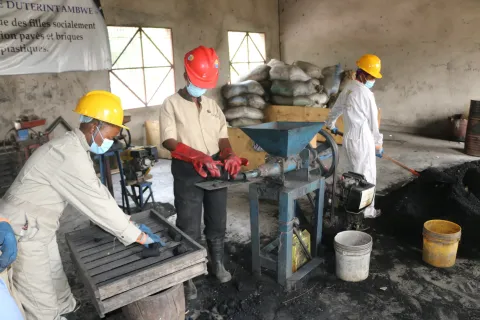
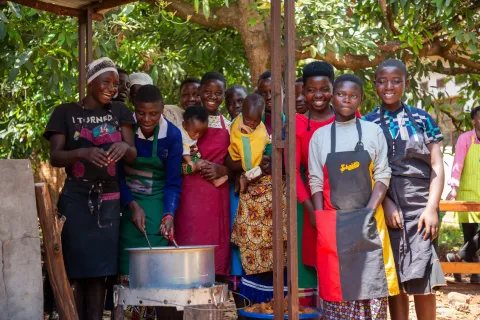
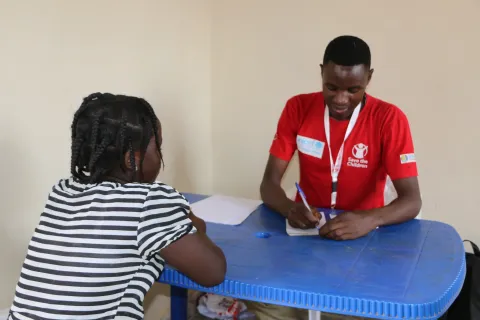
Guided by United for Children Burundi bw’Uno Munsi (UCBUM), a local NGO, with support from UNICEF, vulnerable girls are determined to transform their lives through the skills they have acquired.

- English
- Français
Buterere is one of the densely populated neighborhoods where life is often marked by extreme hardship. Many children and young people live in difficult conditions due to a lack of resources. This harsh reality can sadly lead some into survival strategies such as prostitution, delinquency, or homelessness.
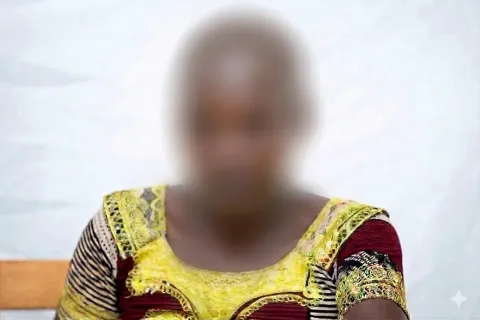
Tracy lives in this neighborhood. “My parents are divorced. My father kicked us out. My mother and I had to rent a house,” she recalls. In this situation, Tracy had to drop out of school at the age of just seven. Her struggles continued until one day she crossed paths with a man on the street. “I had nothing to do; I was walking around aimlessly when I met a member of the Child Protection Committee of Buterere. He asked me if I wanted to join a vocational training program. I wasn’t sure what it meant, but I said yes,” Tracy explains.
Thanks to that encounter, Tracy was selected among the girls who would benefit from the training offered by UCBUM. She chose to be trained in a bakery alongside other adolescent girls. After three months of learning, she had mastered the art of making bread, doughnuts, and pastries. She also received seed funding from UCBUM to start an income-generating activity.
“Together with two other girls from the training, we decided to open a bakery. So, we pooled our money and took out a loan,” Tracy explains. They bought equipment and rented a space to set up their bakery.
To launch their business, they brought in four young boys, forming a seven-member team. “Before joining this group, I was living on the streets. But these girls took me in and taught me how to make doughnuts. I see them as my own family, my sisters,” says Kevin, one of the boys now working with Tracy at the bakery.

In the beginning, the group could only afford one bag of flour per week to make doughnuts. But over time, as new markets opened up, Tracy and her colleagues managed to increase production to over 10 bags, earning a profit of 28,000 Burundian Francs per bag. “With this income, I can help my mother buy food or even buy myself nice clothes,” Tracy says with excitement, proud of what the project has achieved.
Before taking part in UCBUM’s activities, Tracy had no income and no vision for her future. She says the training has changed her life. Today, she feels safe: “Before, my mother and I could be evicted at night for not paying rent, and we’d spend the night looking for somewhere to sleep. Now, we’ve rented a comfortable house. The income from selling my doughnuts allows me to pay our rent regularly,” Tracy explains with satisfaction.
While the children of Buterere enjoy Tracy’s doughnuts, another adolescent girl trained by UCBUM has chosen a different path: hairdressing. Her name is Fabiola. The youngest of six children in a modest family, Fabiola lacked the means to complete her schooling. Like the other girls in the program, after completing her three-month training, she was welcomed as an intern at a hair salon in Bujumbura.
“Since Fabiola started interning here, many clients now prefer her styling,” said the salon owner.

“Since I was a little girl, I’ve always dreamed of becoming a hairdresser. I pick up techniques and styles quickly and love creating beautiful hairstyles. That’s why my boss decided to hire me at the end of my internship,” Fabiola tells us.
Before starting the training, she was extremely afraid of interacting with people. She felt lost, truly hopeless. She never imagined her life could change this much. Today, she’s thrilled that the training led to a job opportunity and helped her build social confidence.
“The time I spend at the salon is full of well-being and smiles. It almost makes me forget how difficult things used to be,” she shares with a big smile.
To date, 175 girls have benefited from various vocational trainings thanks to the UNICEF Spain's National Committee support.
Beyond practical skills, the programme helped them regain confidence and reclaim their role in the community.