Joint Monitoring of KfW Humanitarian Actions in Burundi to Ensure Sustainability of Achievements
Funded by the KfW, a multisectoral programme implemented by UNICEF & WFP is improving the lives of vulnerable communities in Kirundo, Karusi, Ruyigi & Rutana. A recent joint monitoring mission confirmed its positive impact.

- English
- Français
Under bright sunshine on the morning of 26 August, the Kirundo municipal office welcomed an unusual delegation. Representatives from UNICEF, the World Food Programme (WFP), the NGO Concern Worldwide, and a representative from the German Development Bank (KfW) gathered for the start of a joint mission to monitor the interventions. The main objective was to measure the impact of a development programme taking a holistic, multisectoral approach, launched in April 2021 and funded by KfW.
Over four days, from 26 to 29 August, the mission travelled through the former provinces of Kirundo, Karusi, Rutana, and Ruyigi to visit activities supporting the most vulnerable populations. At each stage, a formal visit to the local authorities opened the discussions, highlighting the importance of institutional ownership for the success of the interventions.
The programme, currently implemented by the NGOs Concern Worldwide and GVC WeWorld, aims to address several challenges previously identified within communities, such as child malnutrition, food insecurity, limited access to safe drinking water, and the need to strengthen households’ economic independence.
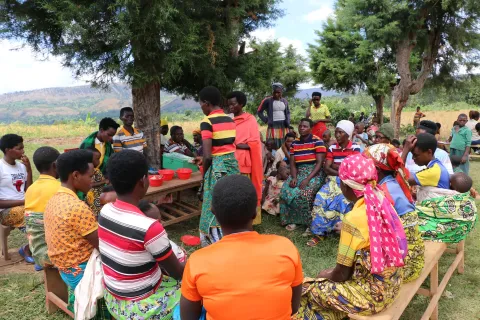
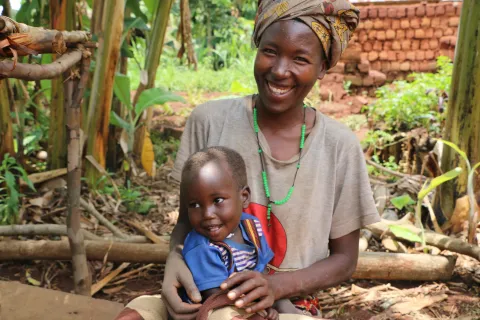
In Bugabira, members of the mission visited a Nutrition Learning Centre (FAN), where mothers learn how to prepare varied and nutritious meals for their children. “I have just started this programme. I hope to learn how to combine foods properly for my children’s health,” explains Igiraneza Gisèle, mother of three.
These FANs are run by Mamans Lumière (“Light Mothers”), women volunteers trained to promote good nutrition practices, screen for malnutrition, monitor progress, and support children.

The programme is not limited to nutrition. In Gihororo, in the commune of Shombo, beneficiaries testify to the positive effects of cash transfers and Village Savings and Loan Associations (VSLAs) established under the programme. “Thanks to this money, we were able to start a small banana wine business, which allowed us to buy livestock and a few plots of land with the profits,” say Nzeyimana Viola and Léonidas Bigirimana, one of the families visited by the mission. Thanks to these social safety net mechanisms, several families have been able to start small businesses, develop livestock or market gardening, and improve their living conditions. Several families have also used the funds received to start market gardening, especially on the shores of Lake Cohoha. “Traders are already offering me up to 4 million Burundian francs for my field,” says Clémentine Ninziza, a young mother we met while she was working in her onion field.
Another fundamental pillar of the programme is access to safe drinking water. In collaboration with its partners, UNICEF has installed water points, thereby promoting better hygiene and reducing diseases linked to water shortages. The residents of the area surrounding the KARWA water supply system in the municipality of Shombo, whom we met as they drew water from one of the network’s taps, unanimously welcome these facilities, which they see as a real improvement in their daily lives thanks to having water close to their homes.


As the programme enters its final eight months, the mission aimed to take stock and ensure that the achievements are on track to be sustained. During another FAN session in Ruhororo, the KfW representative asked the question of continuity: “Would you like the project to continue?”
One beneficiary replied without hesitation: “Yes, we would like it to continue, not necessarily for us, but especially for those who have not yet had the chance to benefit from it.” This testimony illustrates the need for greater community coverage and ownership of interventions, which is essential to ensure their sustainability.
The mission found that the testimonials of beneficiaries, as well as the results observed in the field, confirm that change is possible when it is driven by the communities themselves.