Co-creation: Kibogoye communities reflect on their problems and find solutions together
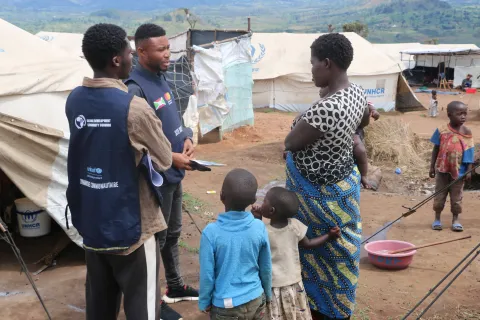
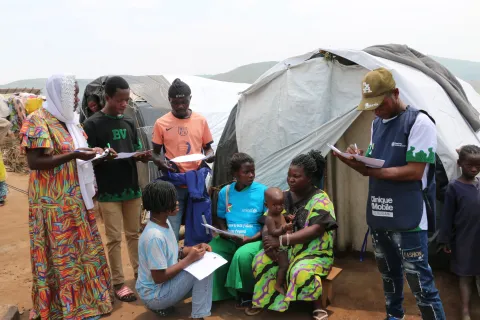
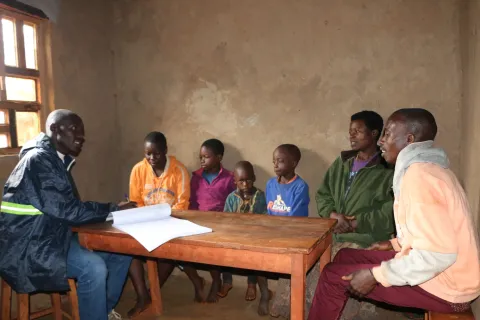
Participants in the training of trainers in social and behavioral change interact with community actors in Kibogoye for a practical exercise in co-creation.

- English
- Français
Around 10:30 a.m., in the commune of Giheta, on the Kibogoye hill, participants in a workshop organized as part of a training program on social and behavioral change gathered with a group of community stakeholders, local leaders, and health workers for a co-creation exercise. The goal was to reflect together on the issues affecting the community, particularly Mpox, and to find appropriate solutions through a participatory process.
The co-creation technique brings together all stakeholders, including members of community listening groups, health workers, and community group leaders, to identify challenges and potential solutions.
First, participants expressed their concerns: although they had heard about Mpox, they had never seen a case and lacked clear, particularly visual, information on the disease, its modes of transmission, and prevention measures. “We’re very afraid of what might happen to us if the disease spreads to our hillside,” says Jean, a local stakeholder.
Next, the communities shared one of the reasons blocking the adoption of prevention methods. “Changing certain habits, such as greetings without shaking hands, can create social tensions,” says Marie, a member of a listening group. She also highlighted that while radio is useful, it is not enough as the sole means of communication. “Other channels need to be considered to reach a wider audience, especially young people,” she concludes.

Afterwards, the community worked together to find as many solutions as possible. Community leaders committed to raising awareness within their communities, while community health workers pledged to share the outcomes of the discussions with the population. Young people planned dialogues focused on Mpox prevention after their daily activities.
In the final phase of co-creation, participants moved on to creating prototypes. Divided into two groups, they developed simple drawings illustrating the prevention messages. These prototypes were designed to be easily understood and disseminated within the community.


The session concluded with an interactive test of the prototypes, enabling participants to assess their relevance and adjust the messages if necessary, while actively involving communities from the start of the process.
This co-creation exercise strengthens the ownership of solutions by the people of Kibogoye, who become key players in their own mobilization for prevention. It also relies on a participatory process with communities from the outset, giving them an opportunity to ask questions, reflect, and collaborate.
This collaborative approach not only generates innovative ideas tailored to local needs but also strengthens social ties and stimulates genuine behavioral change rooted in the community’s reality.