The fight against malaria: at last, a vaccine to save thousands of children's lives in Burkina Faso.
After Cameroon in January, Burkina Faso has introduced the RTS S malaria vaccine to immunize more than 218,000 children aged between 5 and 23 months during a first round.

- Français
- English
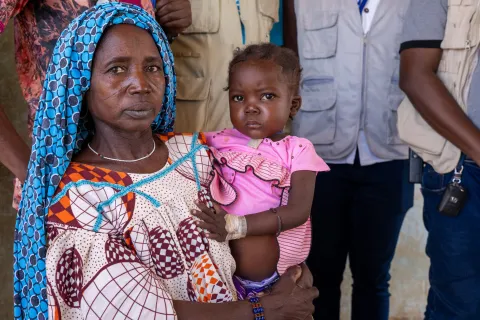
Monday 5 February 2024 was a day of deliverance for Innocent Bakiono’ family. Coming from sector 4 in the town of Koudougou, they managed to get their 5-month-old daughter, Lavido Yiwizyna, vaccinated. She is one of the first children in Burkina Faso to receive the first malaria vaccine doses. "For me, it's vital to be able to prevent malaria, which still claims many lives in our country, especially among children under the age of five", says 41-year-old Bénédicte, baby Lavido’s mother.

Bénédicte Bakiono, mother of five, speaks from experience: " Some months ago, our son Mohamed was down with malaria for several days at the start of his school year. We quickly ran out of our financial resources to buy all the medicines health workers prescribed. My husband Innocent is a seasonal construction worker, currently unemployed, and therefore we have no income," explains Bénédicte.
Sitting next to her, Innocent nods and shares "I had to call on my family members, who lent me money, so that I could buy some of the medicines."
In hospitals and health centers across Burkina Faso, malaria is the leading cause of consultations and hospital admissions. In 2023 alone, the country recorded 10,199,441 cases of malaria, with 502,077 severe cases and 5,203 deaths. 3,721 malaria-related deaths are among children under the age of 5, accounting for nearly 72% of total deaths.

Mohamed, Innocent Bakiono's son, is now 7 years old. He perfectly recovered and he hopes to start CP1 again in September 2024.
The RTS,S malaria vaccine, utilized in Burkina Faso, is the culmination of nearly 40 years of research, with tests conducted in some of the African countries most severely affected by the disease. Eminent African researchers such as Professor Halidou Tinto from Burkina Faso contributed to the development of this vaccine.
The vaccine has a 4-dose schedule for children aged 5 months and over. After a 4 years' follow-up, researchers observed a 39% reduction in clinical cases; a 29% reduction in severe cases; a 37% reduction in the rate of hospitalization; a 62% reduction in cases of anaemia linked to severe malaria; and a 29% reduction in the need for blood transfusions.
"I would like to take this opportunity to congratulate our valiant researchers, who have played a major role in the development of this vaccine. I would like to make a special mention of a worthy son of this country, Professor Halidou Tinto, who is recognized worldwide. We are proud to say loud and clear today that this precious vaccine has some Burkina Faso segment in it," declared the Minister of Health and Public Hygiene, Dr Lucien Robert KARGOUGOU, speaking at the launch of the malaria vaccine.

The Minister reassured parents about the reliability of malaria vaccine, while urging them to get their children vaccinated in large numbers. "Dear mothers and fathers, let's seize the opportunity offered by this vaccine to alleviate the physical, moral and socio-economic suffering so heavily imposed on us by malaria, this merciless disease," he pleaded.
Like Lavido Yiwizyna Bakiono, one of the first children to receive their first malaria vaccine doses in Burkina Faso, 218,222 other children aged between 05 and 23 months will be able to receive during this first round four doses of RTS, S vaccine, the only vaccine currently available on the world market. Thanks to the combined efforts of the Government and health technical and financial partners such as WHO, UNICEF, GAVI, JHPIEGO and USAID, Burkina Faso was able to obtain approximately 878,000 doses for approximately 3,680,000 doses needed in 2024.
During this malaria vaccination campaign, health workers continue to track children who missed vital vaccine doses and are not fully protected against many preventable diseases. The Canadian funding, allowed as well to integrate COVID-19 vaccination into the expanded programme on immunization (EPI) a vital support to find and help zero-dose children complete their immunization calendar in Burkina Faso.

“Vaccination remains one of the most cost-effective interventions in public health. This country has one of the best vaccination coverage among children in Africa. Vaccination against malaria will help reduce the economic burden of this disease on household income, while reducing child morbidity and mortality rates,” said John Agbor, UNICEF Representative in Burkina Faso.
To enhance the effectiveness of its fight against malaria, the Government of Burkina Faso, with support from its partners, is actively distributing long-lasting insecticidal nets (LLINs), ensuring intermittent preventive treatment for pregnant women, offering chemo-prevention of seasonal malaria, and advancing vector control efforts through the destruction of larval breeding sites and both indoor and space spraying.
A strategic vaccination plan targeting children like little Lavido Yiwizyna, who live in the country's 27 health districts where there are the highest number of cases and deaths linked to malaria.