
Burkina Faso’s Children Call for Inclusive, Quality Education on World Children’s Day
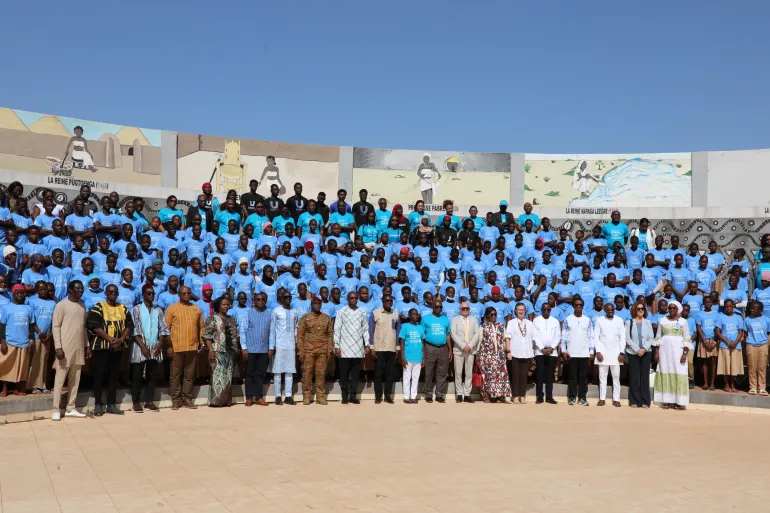
150 children met with the Prime Minister to advocate for improved education for all children in the country
- Français
- English
Download multimedia package ICI
OUAGADOUGOU, November 21, 2025 – In a powerful demonstration of advocacy, Burkina Faso’s children met with Prime Minister Rimtalba Jean Emmanuel Ouedraogo to urge the government to ensure quality education for every child in the nation. The meeting held to mark World Children’s Day, highlighted the urgent need for inclusive policies, especially for out-of-school, displaced, and vulnerable children.
During the session, the children presented a formal appeal for the establishment of a dedicated component within the Presidential Initiative for Quality Education (IPEQ), adopted on July 23, 2024, specifically targeting out-of-school children.
“We are asking for a special section dedicated to children who do not attend school. This will help all children living with disabilities, displaced children, and vulnerable children to have the same opportunities, to learn better, and to build a brighter future for our country,” declared 14-year-old Djeneba Ouedraogo, reading from the group’s advocacy document.
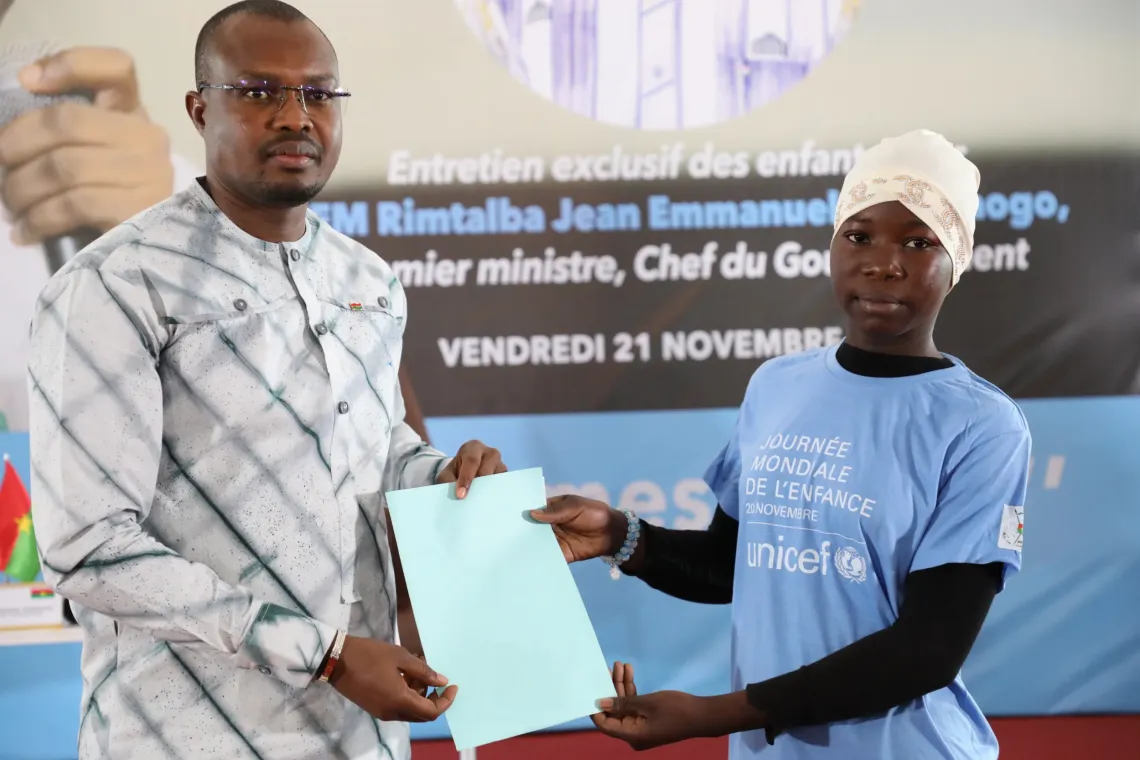
The children’s demands extended beyond the classroom, calling for accessible health centers, school canteens in every school, clean water for sanitary facilities, and robust measures to prevent child labor in gold mining sites—an issue that continues to disrupt education.
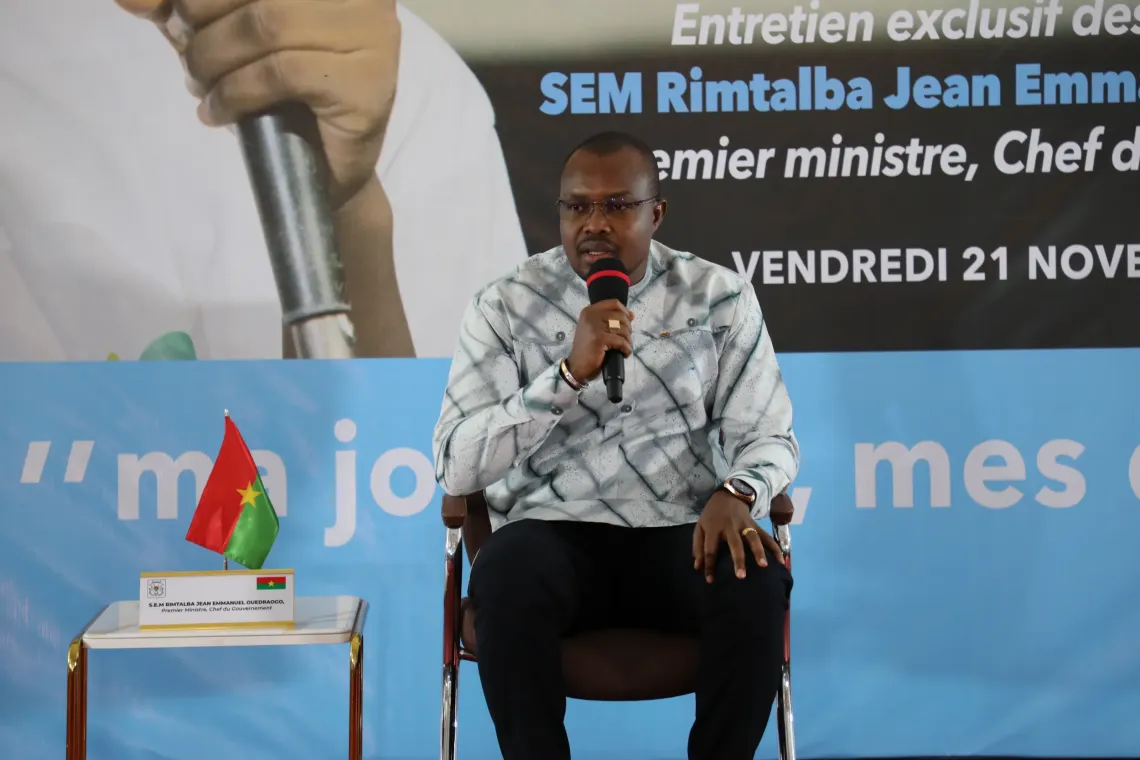
Responding to the children’s questions, Prime Minister Rimtalba reaffirmed the government’s commitment to inclusion:
“All children have the same rights. Just because a child has a disability doesn’t mean they don’t have the same rights as children without disabilities. That’s why we have an inclusion policy. School inclusion means taking into account the disabilities of some children to allow them access to knowledge just like all other children.”
Despite recent progress, Burkina Faso continues to face significant challenges. In 2021, 42 percent of primary and post-primary children were not enrolled in school, a decrease from 51.4 percent in 2015. However, the country’s out-of-school rate remains among the highest globally, well above the regional average of 31 percent and the global average of 17 percent in 2023.
This situation threatens national ambitions for human development and sustainable growth. To address these challenges, accelerated learning programs and pathways to formal education are being implemented, particularly in regions affected by security concerns.
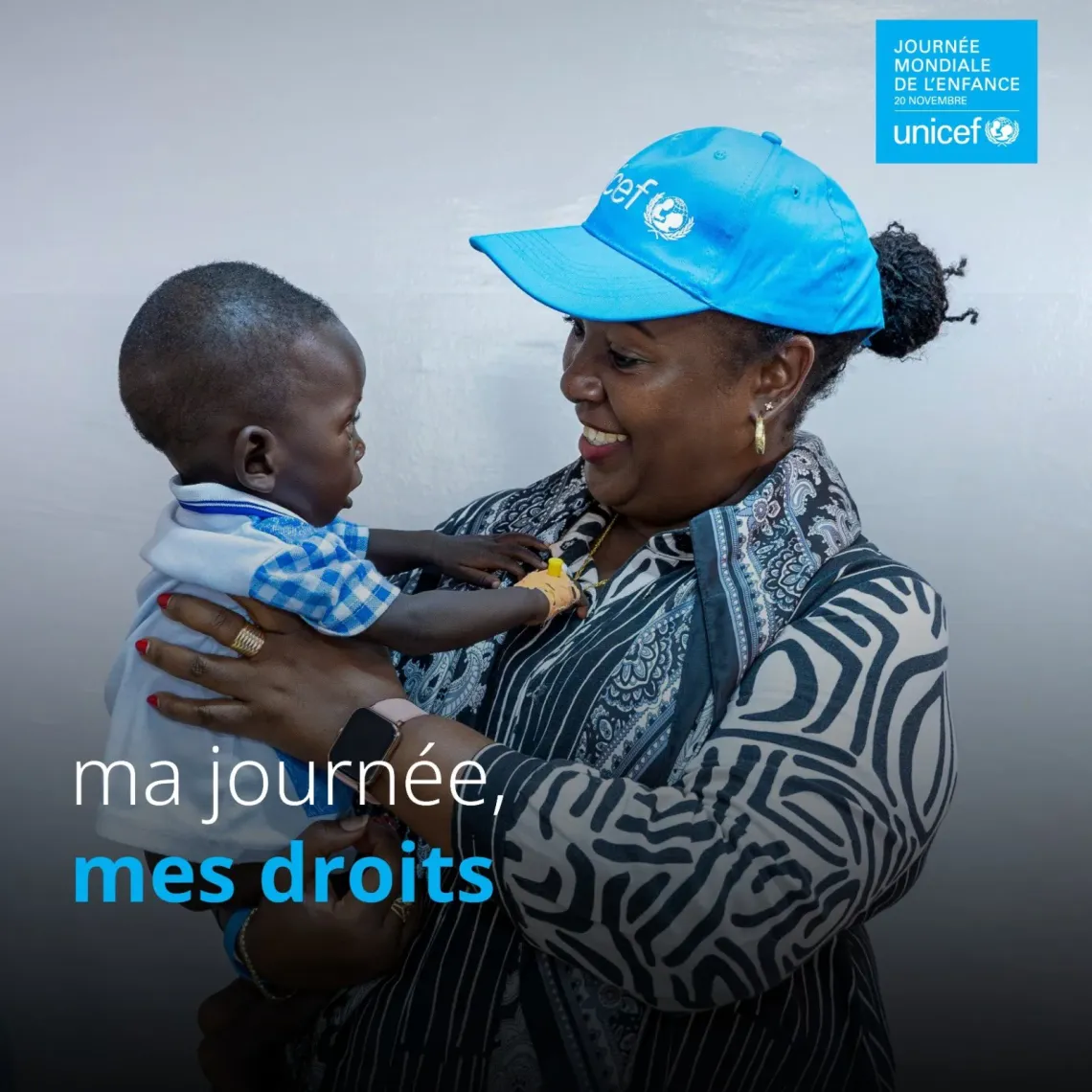
“Education is the engine of development. The advocacy that children have made today will help to encourage policymakers, partners, and donors to step up efforts to address the far too many out-of-school children in Burkina Faso,” said Chantal Umutoni, UNICEF Representative.
The IPEQ initiative encompasses seven components, including the construction and modernization of educational infrastructure, the creation of a polytechnic university, the strengthening of technical and vocational education, and the promotion of discipline, cleanliness, and community mobilization in schools.
The proposed ad-hoc supplement for out-of-school and unschooled children aims to foster educational reintegration and vocational training, making education in Burkina Faso more inclusive, equitable, and resilient for all.

Media contacts
About UNICEF
UNICEF promotes the rights and well-being of every child, in everything we do. Together with our partners, we work in 190 countries and territories to turn this commitment into practical action, focusing our efforts on the most vulnerable and excluded children, for the benefit of all children, everywhere in the world.
For more information about UNICEF and its work for children, visit www.unicef.org.


