A Place Where She Can Be Herself
“When people accept you like that, you want to stay there and really pursue that work.”

- Bosanski/Hrvatski/Srpski
- English
Room to Flourish
When Aida started secondary school, her parents noticed a change within days. She began to laugh. Zemina says she could see in her eyes that she was blossoming.
She also remembers the name of Aida’s class teacher, Sanela Maličević, who gave her important support. After years of being told what she would not be able to do, Aida now had people beside her who supported what she wanted.
Being accepted into the Academy did not mean the difficulties were over. At first, she considered giving up. She was the only student in her class. She wondered why this had happened to her.
Then she asked herself a different question: she had come this far, so why not keep going and see it through?
Now she is completing her studies.
The journey from Kakanj to Tuzla takes her four hours because there is no direct public transport connection. Being apart was hard for both her and her parents. Their conversations often moved to video calls, but remained a constant in their relationship.
“We always talked about what was troubling me, whether I had a problem, whether everything was all right. Whatever it was, we would work it out.”
Aida credits those conversations with much of who she is today. She could say what she thought and what hurt her. She learned to have her own opinions and defend them when she believed she was right, while staying grounded and caring about others.
Discrimination has not disappeared. Aida says she encounters it as a Roma woman, just as others do when they are seen as different. Success can bring its own burden: she knows she is entering spaces where people from her community have not been before her.
“I’m breaking new ground where others from my community haven’t been,” she says. “Above all, I’m trying to show myself what I can do, and only then as someone who is Roma.”
From Her Own Struggles to Supporting Others
In her own way, Zemina also began to step beyond the boundaries others had set for her.
As a young woman, she was isolated and had no female friends. Spending time with women from her community and talking over coffee led them to the idea of setting up an association. She wanted to get out and learn about her rights as a woman. Her husband initially discouraged her, saying it was not for her. But the women persisted and registered their association.
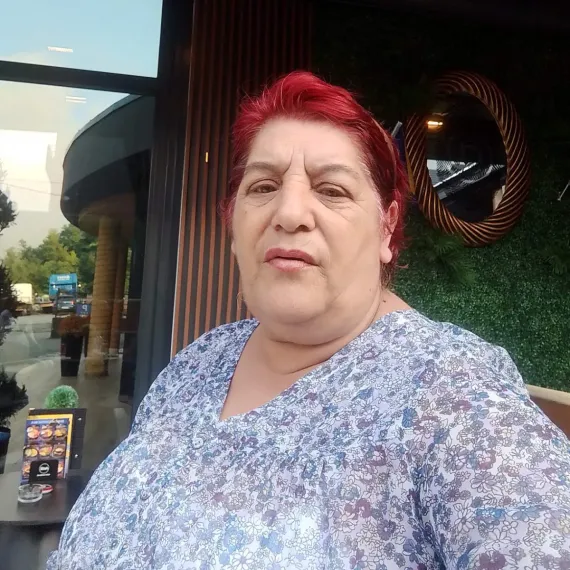
Today, she is president of the Roma Women’s Association, the “Nada” Centre for Mothers in Kakanj. Women come to her with problems involving domestic violence, discrimination, unemployment and poverty. They also talk about child marriage.
The association cannot afford premises of its own. Its office is now in Zemina’s home, while workshops are held elsewhere in town. She misses having a place where women could come and talk outside the familiar circles of their community.
She helps as much as she can, drawing on her experience as a woman who also spent a long time finding a way to voice what was difficult and what she wanted to change.
The Freedom to Choose for Themselves
In conversations with other Roma girls and women, Aida has heard stories of girls and young women whose marriages were expected to bring a better life, but instead brought even greater hardship. For her, education also means giving girls the opportunity to understand their rights and make decisions about their own lives.
She wants institutions to be more directly present: to visit Roma communities, speak with children and families, and hold educational sessions there. To see how people live.
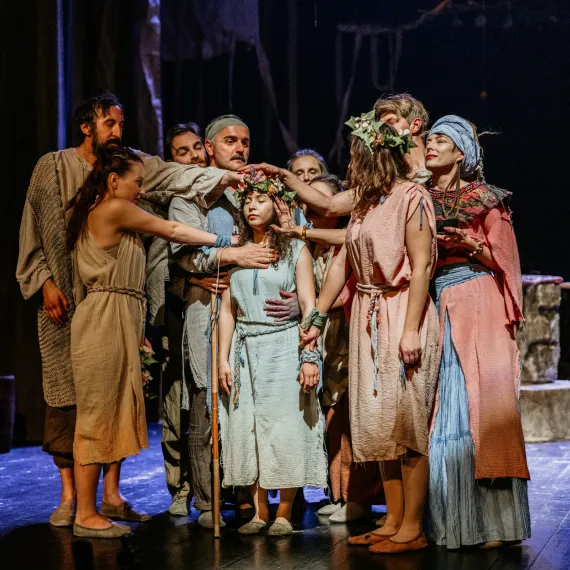
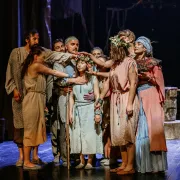
Aida already works as an external collaborator with the National Theatre Tuzla, where she performs in the musical “Plavi avion”. She also appears in “Offline”, a Studio Teatar production co-produced with the Bosnian National Theatre Zenica, and in the children’s play “Crvenkapica i dobri vuk”, produced by the Zenica theatre. Her experience also includes her original performance “Habitus”; “Sladoled”, her second-year final examination production; “Poslednja”, produced by the Children’s Centre Zaječar; and the documentary “Me sem Aida”.
She is particularly drawn to physical theatre, stage movement and dance, which she sees as important elements of acting and exploration on stage. She would like to try different forms of dramatic art before deciding what to focus on. That desire leaves room for a future that has not yet been decided.
When she speaks about what she wishes for other girls and young women, she returns to freedom: the freedom to think for themselves, to have a sense of self and to know who they are.
“When they know who they are, they can ask others to recognise and accept them, too.”
On the bench where she told her parents she had been accepted into the Academy, Aida was only beginning to live what she had once dreamed of. Today, her name is accompanied by roles, productions and years of study. Ahead of her are new things she wants to try.
When people ask who she is, she knows where she wants to begin.
Aida Vehabović. A student. An actress.
This story was written to mark the International Day of the Girl, observed on 11 October, which this year calls for an end to child marriage and investment in girls’ rights. Aida and Zemina’s story reminds us of the importance of education, support and every girl’s freedom to shape her own future.

Prostor da procvjeta
Kada je Aida krenula u srednju školu, roditelji su primijetili promjenu već nakon nekoliko dana. Počela se smijati. Zemina kaže da se u njenom pogledu vidjelo da cvjeta.
Pamti i ime razredne nastavnice, Sanele Maličević, od koje je Aida dobila važnu podršku. Poslije godina u kojima su joj drugi govorili šta neće moći, uz nju su bili ljudi koji su podržavali ono što je željela.
Upis na Akademiju ipak nije bio kraj teškoćama. Na početku je pomišljala da odustane. Bila je sama u klasi. Pitala se zašto se baš njoj to moralo dogoditi.
Onda je sebi postavila drugo pitanje: stigla je dotle, zašto ne bi nastavila i istrajala do kraja?
Sada je apsolventica.
Od Kaknja do Tuzle putuje po četiri sata jer nema direktne veze javnim prevozom. Razdvojenost od porodice teško je padala i njoj i roditeljima. Razgovori su se često preselili na videopozive, ali su ostali dio njihovog odnosa.
„Uvijek smo razgovarali o tome šta me muči, da li imam neki problem, da li je sve u redu, šta god da je, riješićemo.“
Aida upravo tim razgovorima pripisuje mnogo toga što danas jeste. Mogla je reći šta misli i šta je boli. Učila je imati svoje mišljenje i braniti ga kada smatra da je u pravu, ali i ostati prizemna, s osjećajem za ljudskost.
Diskriminacija nije nestala. Aida govori da se s njom susreće kao Romkinja, kao što se susreću i drugi koji su drugačiji. I uspjeh može donijeti teret: zna da ulazi u prostore u kojima ljudi iz njene zajednice prije nje nisu bili.
„Ja probijam led tamo gdje drugi iz moje zajednice nisu bili“, kaže. „Pokušavam, prije svega, sebi pokazati koliko ja mogu, pa tek onda kao neko ko je romske nacionalnosti.“
Od vlastite borbe do podrške drugima
I Zemina je, na svoj način, počela izlaziti iz prostora koji joj je bio određen.
Kao mlada žena bila je zatvorena i nije imala prijateljica. Druženja sa ženama iz zajednice, razgovori uz kafu, doveli su ih do ideje da osnuju udruženje. Željela je izaći, saznati kakva prava ima kao žena. Muž ju je u početku odgovarao, govoreći da to nije za nju. Žene su ipak ustrajale i registrovale udruženje.
Danas je predsjednica Udruženja Romkinja Centar za majke „Nada“ Kakanj. Žene joj dolaze s problemima nasilja u porodici, diskriminacije, nezaposlenosti i neimaštine. Razgovaraju i o dječijim brakovima.
Udruženje nema sredstava za poseban prostor. Kancelarija je sada u Zemininom domu, a radionice organizuju drugdje, u gradu. Nedostaje joj mjesto na kojem su žene mogle doći i govoriti izvan svakodnevnog kruga zajednice.
Pomaže koliko može, s iskustvom žene koja je i sama dugo tražila način da kaže šta joj je teško i šta želi promijeniti.
Mogućnost da same biraju
Iz razgovora s drugim romskim djevojčicama i ženama, Aida je čula i priče o udajama djevojčica i mladih djevojaka od kojih se očekivao bolji život, a koja su donijele još teže okolnosti. Zato za nju obrazovanje znači i mogućnost da djevojčice upoznaju svoja prava i donose odluke o vlastitom životu.
Od institucija želi više neposrednog prisustva: da dođu u romske zajednice, razgovaraju s djecom i porodicama i tamo organizuju edukacije. Da vide kako ljudi žive.
Aida već radi kao vanjska saradnica u Narodnom pozorištu Tuzla, gdje nastupa u mjuziklu „Plavi avion“. Igra i u predstavi „Offline“ Studio Teatra, nastaloj u koprodukciji s Bosanskim narodnim pozorištem Zenica, te u predstavi za djecu „Crvenkapica i dobri vuk“ u produkciji zeničkog pozorišta. Njeno dosadašnje iskustvo obuhvata i autorski performans „Habitus“, predstavu „Sladoled“, završni ispit druge godine studija, predstavu „Poslednja“ u produkciji Dečijeg centra Zaječar te dokumentarni film „Me sem Aida“.
Posebno je privlače fizički teatar, scenski pokret i ples, koje vidi kao važan dio glumačkog izraza i istraživanja na sceni. Željela bi isprobati različite forme dramske umjetnosti prije nego što odluči čemu će se posvetiti. U toj želji ima mjesta za budućnost koja još nije unaprijed određena.
Kada govori o tome šta želi drugim djevojčicama i mladim ženama, vraća se slobodi: slobodi mišljenja, mogućnosti da imaju svoje ja i da znaju ko su.
„Kada znaju ko su, onda mogu tražiti i da ih drugi prepoznaju i prihvate.“
Na klupici s koje je javila roditeljima da je primljena na Akademiju, Aida je tek počinjala živjeti ono što je ranije sanjala. Danas uz njeno ime stoje uloge, predstave i godine studija. Pred njom su nove stvari koje želi probati.
Kada je pitaju ko je, ona zna odakle želi početi.
Aida Vehabović. Studentica. Bavi se glumom.
Tekst je nastao povodom Međunarodnog dana djevojčica, 11. oktobra, koji ove godine poziva na okončanje dječijih brakova i ulaganje u prava djevojčica. Priča Aide i Zemine podsjeća na važnost obrazovanja, podrške i slobode svake djevojčice da sama oblikuje svoju budućnost.