

Knowledge and Trust: Why Two Doctors Vaccinated Their Own Children Against HPV
The vaccine route is absolutely safe, and today it is carried out with the help of the most modern equipment

- Bosanski/Hrvatski/Srpski
- English
Since 2023, the vaccine against the human papillomavirus (HPV) has been included in the vaccination program in the Republic of Srpska as a recommended vaccine for sixth-grade primary school girls and boys. In addition to children of this age, the vaccine is available free of charge for all minor children in the Republic of Srpska, from age 9 up to 18. Nevertheless, despite the efforts of healthcare workers, field work and continuous promotion, coverage of this vaccination is still not at the desired level. Lack of information and resistance to new vaccines are still present among parents.
That is precisely why it is important to speak about those who know the system best: doctors who vaccinate their own children without any hesitation. This is a story about two families, two female doctors and their teenagers who decided to protect their health.
Anja and Petar: ninth graders, many questions, and only one doubt
Anja and Petar are ninth-grade students in Banja Luka. Like most of their peers, they are active, play sports, socialise and think about the future. When the offer came to receive the HPV vaccine at the school health centre, they did not think twice.
“We knew what it was about. We talked at school about vaccines, viruses, protection. Our friends had already received the vaccine and everything was fine,” says Anja. Petar adds: “The only thing we were curious about was when we could get back to training. They told us the break is short – we were ready for sports the next day.”
Both received the vaccine calmly, without fear. Their reactions show what research confirms: today’s teenagers are well informed. They talk to each other, share experiences and are not burdened by the taboos that troubled previous generations.
What makes Anja and Petar’s story particularly powerful is the background of their families. Anja’s mother is Dr Tamara Nikićević, an epidemiology specialist working at the Institute of Public Health of the Republic of Srpska, in the Immunisation Department. Petar’s mother is Dr Jela Aćimović, also an epidemiology specialist, head of the Health Department at UNICEF Bosnia and Herzegovina.


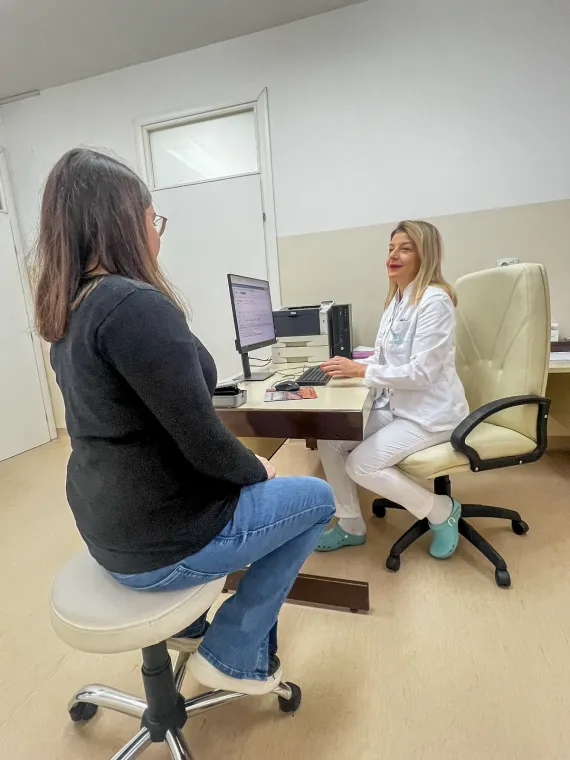


Both doctors brought their own children for vaccination without any dilemma.
“As a mother and as an epidemiologist with almost 15 years of experience in immunisation, I know that this is the best protection I can give my child. The HPV virus is responsible for almost all cases of cervical cancer, as well as other malignancies that can develop in both women and men. The vaccine is safe, effective and has been used worldwide since 2006. To date, over 500 million doses of HPV vaccine have been given,” says Dr Aćimović.
Dr Nikićević adds: “I understand parents’ concerns – new vaccines always raise questions. But this is a vaccine that has been used for 20 years, and the data on its safety and efficacy are clear. No serious side effects have been recorded. My daughter received the vaccine, just like thousands of other children in Europe. This is not an experimental vaccine; it is an effective vaccine.”
HPV is the most common sexually transmitted infection. Most sexually active people encounter it at some point in their lives, most often between the ages of 20 and 30. Although it often passes without symptoms, certain types of the virus can cause cancer of the cervix, vagina, penis, anus, as well as the throat and tongue.
The vaccine is given in two doses, six months to one year apart. In Bosnia and Herzegovina it is available free of charge for everyone up to age 18. Those who missed the schoolage appointment can contact their paediatrician or the relevant public health institute.
According to Dr Jelena Đaković Dević, epidemiologist at the Institute of Public Health of the Republic of Srpska, the vaccine management system has been significantly improved in recent years.
“We have worked especially on the cold chain, the temperature monitoring system during transport and storage of vaccines, vaccine management procedures, etc. With the support of UNICEF and the European Union, storage and vaccine management capacities have been increased in all institutions in the field. The vaccine journey is absolutely safe, and today it is carried out using stateoftheart equipment,” emphasises Dr Đaković Dević.
This is a key message for parents who doubt vaccine safety. The vaccines available in Bosnia and Herzegovina are under strict supervision.
The biggest challenge to achieving high vaccination coverage and protecting children’s and young people’s health remains insufficient trust. Many parents fear vaccines, partly due to lack of information, partly due to misinformation circulating on social networks.
“We hear various stories about vaccines that cause fear or mistrust, even though they are not true at all,” says Dr Aćimović. “What often reassures parents is the example of us doctors vaccinating our own children. There is no stronger message than that.”
On the other hand, more and more young people, students and older teenagers are coming for the vaccine on their own, without parental pressure. The same applies to families where cervical cancer or another HPVrelated malignancy has already occurred. Painful personal experiences are often the best motivator.
The occasion for this story is the marking of Immunisation Week, during which the promotion of routine vaccines and especially the HPV vaccine will be organised throughout the country. Media appearances, school forums and public health campaigns are planned.
One of the key elements of success is peer education. Anja and Petar are aware that their example influences their friends.
“When we talked among our friends, several of them said they didn’t know the vaccine existed or that it protects boys as well, not just girls,” says Petar.
After the vaccination, Anja and Petar went to training the very next day. They experienced no side effects. Their mothers are proud – not only of their own children, but also of the system that today enables safe and effective protection.


HPV vaccine coverage in Bosnia and Herzegovina is slowly increasing. But the road to collective immunity is still long. Every vaccinated child is one step closer to a future without HPV caused cancer.


