Interview with Dr. Belma Krdžalić Zečević, Pediatrician
"When an unvaccinated child falls ill, parents turn to us at the doctor's office and place their trust in us - because they have no alternative."

- Bosanski/Hrvatski/Srpski
- English
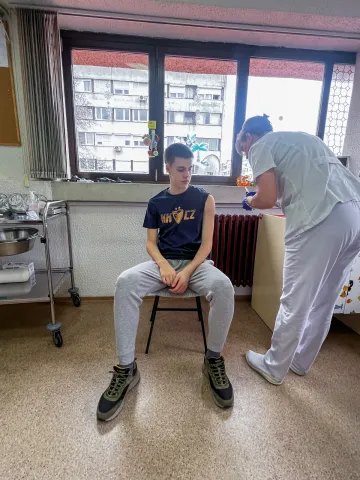
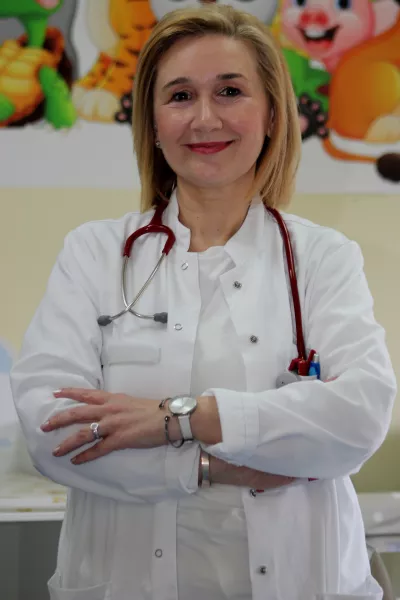
Dr Belma Krdžalić Zečević, a specialist in paediatrics who interacts daily with children and parents at the preschool clinic of the Vrazova Health Center in Sarajevo, provides crucial insights in a significant interview for UNICEF Bosnia and Herzegovina. She addresses various aspects of immunization, including the recent measles epidemic declared in Sarajevo, distinguishing between measles and chickenpox, the heightened vulnerability of newborns and infants, and strategies for their protection. Dr Zečević also discusses how and where parents can access reliable information about vaccines that safeguard their children from vaccine-preventable diseases. Additionally, she explains her decision to adhere to the regular immunization schedule for her children, supplemented by the human papillomavirus (HPV) vaccine.
Following the outbreaks in Bijeljina and Tuzla, a measles epidemic has now been declared in Sarajevo. What implications does this hold, and what insights does it offer?
It's not entirely surprising; in some ways, it was foreseeable. After the epidemic in 2019, which saw a significant rise in measles cases among children, there was a corresponding increase in vaccinations as parents grew apprehensive and opted for immunization. However, this was followed by a decline in vaccination rates, particularly concerning the MMR vaccine targeting measles, rubella, and parotitis (mumps). Consequently, it was foreseeable that another epidemic might occur. The low immunization coverage highlights a concerning trend. Despite medical staff being prepared to handle such situations and being readily available to provide vaccination guidance, the inadequate coverage below 60 per cent is disheartening and poses a significant risk to our children. Ideally, vaccination coverage should exceed 95 per cent to effectively prevent epidemics.
The epidemic could be anticipated, but how equipped are we to handle it?
In terms of medical personnel, we are prepared. Doctors remain accessible to patients for vaccinations and guidance. However, despite our ability to foresee the situation, the insufficient immunization coverage tells a different story. With coverage rates falling below 60 per cent, the situation is dire for our children and the community at large. It's crucial to recognize that vaccination coverage ideally needs to reach at least 95 per cent to effectively thwart epidemics.
What are measles, and how dangerous are they for children?
Measles is a highly contagious viral infectious disease, easily transmitted from one child to another. If a child with measles, still in its incubation stage and unaware of the infection, is brought into contact with other unvaccinated children, the disease spreads rapidly among them, akin to a wildfire. This poses significant dangers, as measles can have long-lasting effects. While common complications like ear infections, pneumonia, or diarrhoea are usually treatable, there are also potential severe consequences, including brain diseases that can be fatal for the child.
What is the current situation in the medical offices?
The offices are crowded, especially during the winter season when typical respiratory illnesses emerge. Diseases like measles, mumps, or whooping cough are transmitted through droplets, sharing a common initial phase. In our waiting rooms, where we often encounter numerous children with elevated temperatures, coughing, and runny noses, there is a palpable uncertainty regarding the potential outcomes. With low vaccination coverage for the MRP vaccine, there is a heightened risk of outbreaks not only for measles but also for rubella and mumps, all of which the MRP vaccine protects against. Since the declaration of an epidemic in the Canton of Sarajevo a few days ago, we have encountered 45 suspected cases of measles, with 15 of them confirmed through laboratory testing.
At what age are children especially vulnerable?
The most vulnerable are the youngest, those under one year old. Unfortunately, they cannot receive the MRP vaccine until they reach 12 months of age. This underscores the importance of adhering to the vaccination schedule. We continually urge parents to vaccinate their children according to the recommended calendar to ensure protection for these infants who are unable to receive the vaccine due to their age. Therefore, newborns and infants are particularly susceptible to measles. Additionally, whooping cough poses a significant threat to them, with a high mortality rate among the infant population. Small babies struggle to combat these respiratory illnesses effectively.
How to recognize measles?
When a child presents to us, and the mother reports symptoms such as a high temperature, a runny nose, and watery eyes, it may not immediately raise suspicions, as these symptoms are common with various respiratory infections. However, the telltale sign of measles is the appearance of a characteristic rash. Until this rash emerges, we typically treat the child for a respiratory infection of the upper respiratory tract.
Measles and chickenpox are frequently confused in the media, but they are distinct diseases. They exhibit different rash patterns and distributions on the body. Measles, being a more serious illness, manifests with a rash appearing first on the face and neck, then spreading across the entire body. In addition to the rash, the child often experiences a decline in general health. On the other hand, chickenpox may not always cause a significant deterioration in the child's overall condition and can even occur without an elevated temperature. Nonetheless, both diseases warrant attention due to their potential dangers.
The confusion often stems from the incorrect use of terminology, leading to instances where individuals claim to have contracted "chickenpox" despite being vaccinated against measles. This misunderstanding may wrongly lead to the assumption that the vaccine is ineffective. Let's clarify this distinction.
Unfortunately, some parents hold this mistaken belief. Measles and chickenpox are two separate diseases. Measles, known as "krzamak" or "rubeola," is distinct from chickenpox, also referred to as "varicella."
It's important to understand that measles and chickenpox are not the same. In our country, vaccination against measles is mandatory, but there's no such requirement for chickenpox, although the vaccine is available and can be administered to children.
When a child receives the MRP vaccine, it does not confer immunity against mumps. This is because the MRP vaccine targets measles, rubella, and parotitis, which are different diseases requiring distinct vaccines. Therefore, vaccinating a child against measles does not guarantee protection against chickenpox.
You also mentioned the potential resurgence of rubella. How much knowledge do doctors possess about this disease, especially considering its prolonged absence due to vaccinations?
Rubella has become relatively rare, and its resurgence is a cause for concern, particularly among pregnant women. If a pregnant woman contracts rubella during the first trimester of pregnancy, it can have devastating consequences for the fetus. While rubella has been largely absent, doctors remain vigilant and knowledgeable about its potential risks and treatment options. Like many viral diseases, rubella requires symptomatic treatment, and the early stages of the disease can be challenging to distinguish from other illnesses.
The negative anti-vaccination campaign has unfortunately led to the resurgence of diseases that can easily be prevented by vaccines, diseases from which children shouldn't have to suffer in the 21st century. How can we combat this?
In recent years, the negative anti-vaccination campaign has been gaining momentum. However, we cannot solely blame the parents who choose not to vaccinate their children, as the anti-vaccination propaganda has played a significant role in shaping their decisions. Additionally, institutions may have fallen short in some cases, particularly in terms of lacking sufficient personnel to address prevention and protect children. There is also a shortage of paediatricians and school medicine doctors, resulting in reduced individualized attention for each parent. Increasing the number of doctors involved would provide more time for each patient and undoubtedly lead to higher vaccination rates.
Why do you believe some parents hesitate to bring their children for vaccinations?
We encounter a significant number of parents who don't inquire much and simply view vaccinations as routine. They bring their children regularly and only inquire about the next vaccination appointment. The majority of those who opt not to vaccinate their children seem to harbour some level of fear or uncertainty. They postpone, waiting for certain developmental milestones like walking or talking, which is fundamentally flawed. Some even delay until the child is two or three years old, hoping the child will develop some natural immunity. This approach is misguided; vaccinations should align with the immunization calendar's recommendations. It shouldn't matter whether the child has reached certain developmental milestones; the doctor will assess the situation accordingly. When questioned about the delay, parents often offer various excuses, but ultimately, I believe fear of the vaccine lurks in the background.
How crucial is vaccine availability in achieving broader coverage?
Following the measles outbreak, we established vaccination centres where parents could bring their children without prior appointments, a commendable initiative by the Ministry of Health. In just about a month since their inception, approximately 2,500 children received vaccinations at these centres. The public became alarmed and regained their senses. They trust us, the doctors who care for their children, and they do come. However, the most significant response is still elicited when media reports indicate the emergence of an epidemic.
Where should individuals exclusively seek information about vaccines?
They should solely rely on information provided by doctors or healthcare professionals who are trained to offer accurate guidance. If the doctor is not readily available, they should be directed to reliable sources for information. In our country, these include the websites of the Ministry of Health, the Institute for Public Health (both at the Federation and Canton of Sarajevo levels), and the Vakcine.ba portal, as well as the UNICEF website. These platforms publish credible and verified articles on vaccination. Individuals can access information from these sources until they consult with their paediatrician, who serves as the primary and most reliable source of information.
How do you personally perceive the situation where individuals who disseminate inaccurate information regarding the dangers of vaccines, causing fear of vaccination, later bring their sick children to the same doctors and accept the prescribed medication without hesitation?
Parents often lack medical knowledge and may believe what they read on the Internet to be accurate. Upon visiting our clinic, if they haven't vaccinated their child before, it's often too late as the child is already ill. Despite their previous concerns, they place their trust in us, relying on our expertise to provide the best care for their child. Subsequently, many express a willingness to vaccinate their child in the future, recognizing the importance of protection against diseases like rubella and mumps. While they entrust us with their child's health during illness, it's apparent that their confidence in the broader healthcare system, institutions, and vaccines may be compromised due to the misinformation they encounter.
How do you interpret the fact that most of those who oppose vaccines were vaccinated because they were born in a period when coverage was high?
It's simply unfair to their children - these individuals have vaccinated themselves during a time of high coverage but failed to ensure the same protection for their children. Many of the children who end up at the doctor's office with measles and whooping cough are unvaccinated. Even receiving just one dose of the MRP vaccine can offer some defence against measles, but complete protection requires both doses. We strongly urge parents not to hesitate and to prioritize vaccinating and safeguarding their children.
Are vaccines safe, and how safe are they?
Vaccines are unequivocally safe, and any reputable doctor will attest to that. The MRP vaccine, for instance, has been administered for over 40 years, proving its safety and efficacy. Moreover, vaccines like Di-Te-Per and polio have been in use for even longer periods. They are firmly rooted in medical science and have been instrumental in saving countless lives, particularly those of children. Vaccines stand as the primary defence against vaccine-preventable diseases.
What distinguishes possible side effects of vaccines from severe forms of vaccine-preventable diseases in unvaccinated children?
The contrast is significant. When a child receives a vaccine, the potential side effects are typically minor, such as elevated body temperature or pain and redness at the injection site. These effects are thoroughly explained to every parent. Conversely, without vaccination, there's a risk of the child contracting the disease and experiencing severe complications, as discussed earlier.
What about HPV Vaccines?
We offer a vaccine against the human papillomavirus (HPV) designed for females aged 12 to 26, and we've seen a positive response to it. I believe it's time to extend HPV vaccination to boys in the eighth grade, as they can also become carriers later on. The HPV vaccine, in simple terms, guards against cervical cancer, a major cause of death among women in our country and globally. It's crucial to raise awareness so that all girls and women can avoid the painful stages of cervical cancer treatment by getting vaccinated. Vaccination points are available at all health centres. Currently, the vaccine is administered in two doses, with the second dose given after six months. We have the vaccines ready; all we ask is for you to trust your doctors and get vaccinated.
Vaccination of Pregnant Women?
Pregnant women should receive the acellular di-te-per vaccine against whooping cough during the second or third trimester. This helps prevent illness in the mother and protects the newborn against whooping cough immediately after birth. This practice is followed in many neighbouring countries.
Vaccines and Autism?
The MRP vaccine does not cause autism, and the study that once raised concerns about the MRP vaccine and autism, which has since been retracted, has caused significant damage. We emphasize every day that this correlation is not true. Despite declining vaccination coverage, autism rates continue to rise, indicating that there are other factors at play. It remains unclear what causes autism, but vaccines are not among the contributing factors. Moreover, cases of autism have been observed in children who were never vaccinated. Children with autism must receive vaccinations like the MRP vaccine, as contracting measles could pose serious challenges for them.
Claims are often made that paediatricians themselves do not vaccinate their children. Have you vaccinated your children?
That claim is entirely false. My children received vaccinations according to the recommended schedule, including the MRP vaccine shortly after their first birthday, as I advise all parents to do. To my knowledge, all of my colleagues have vaccinated their children and even their grandchildren. Additionally, I ensured that both of my daughters received the HPV vaccine.
What is your general message to all parents?
My message to all parents is to prioritize the health and protection of their children. By ensuring they receive vaccinations, you are safeguarding them from preventable illnesses. Vaccination is a crucial tool in keeping our children healthy and safe.