Bhutan launches UPSHIFT on Google Classroom at 4th National Innovation Challenge
Celebrating five years of UPSHIFT in Bhutan, eight schools pitched bold green innovation ideas to tackle real‑world challenges.
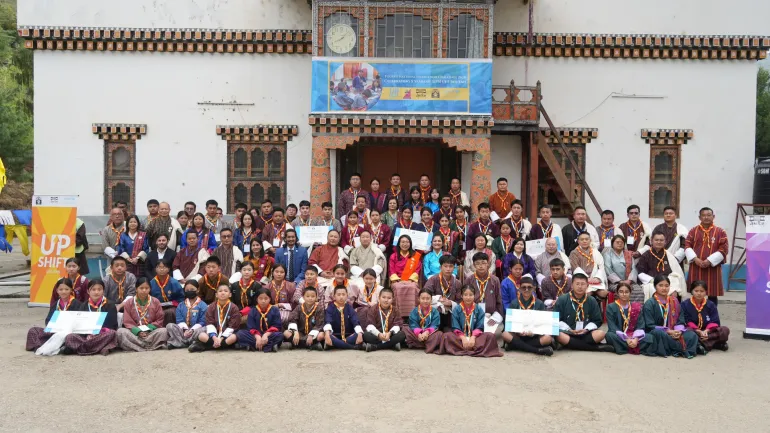
Thimphu, 30 March 2026: UNICEF’s social innovation accelerator, UPSHIFT, went live on Google Classroom today as Bhutan marked its fourth National Innovation Challenge. Developed by the Ministry of Education and Skills Development, UNICEF Bhutan, the UNICEF Office of Innovation, and Google, the platform expands digital access to the UPSHIFT programme for students and teachers nationwide.
The Google Classroom was found to significantly lighten the administrative load for teachers, according to reports from 44 schools that piloted the platform. Teachers reported reduced workload thanks to automated tracking and grading, while students were found to be more motivated through digital badges. As the system runs on existing infrastructure with no added licensing costs, the digitalisation ensures long‑term sustainability and secures data management while positioning Bhutan as a regional leader in digitally enabled education.
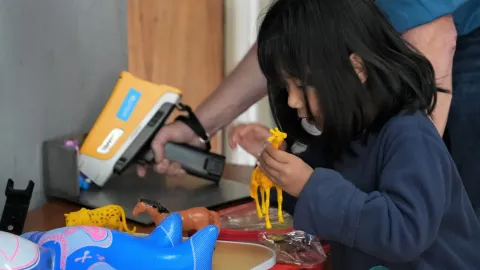
The fourth annual National Innovation Challenge, themed “UPSHIFT for a Greener Bhutan,” saw 32 students from eight schools competing to tackle real world environmental hurdles. The students have innovated and designed ways to decompose kitchen waste faster, make paper from discarded banana plants, and turn wastepaper in school into eco-friendly pens. They also pitched ideas on producing decomposable, nontoxic bioplastic and intergraded smart irrigation to better utilise greywater.
Organised by the Ministry of Education and Skills Development (MoESD) in collaboration with the Bhutan Youth Development Fund (YDF) and UNICEF, the challenge serves as a platform for young people to showcase green innovation.
Education and Skills Development Minister Yeezang D Thapa, commended the schools, teachers, students and development partners in empowering thousands of young people with skills in creativity, problem-solving, and innovation over the years.
“As we celebrate five years of UPSHIFT implementation in Bhutan, it is encouraging to see the programme evolve further through the development of the Digital UPSHIFT platform and its integration into the Scouting programme. These efforts will help expand opportunities for many more students to learn innovation and leadership skills,” the minister said.
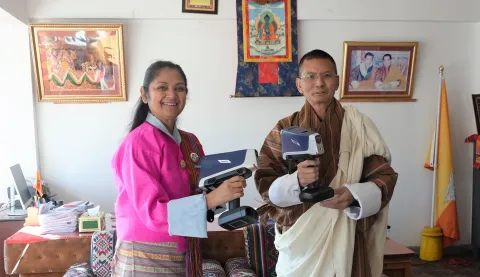
The event also marked the launch of the UPSHIFT handbook for teachers, developed with support from the UNICEF Office of Innovation. UPSHIFT focal teachers will use the handbook as a reference to guide students and transform schools into places of creativity and innovation.
Since 2022, over 27,000 UPSHIFTers from 264 schools have dedicated a staggering 1.3 million hours to shaping more than 1,500 smart solutions across Bhutan.
UNICEF Representative Rushnan Murtaza called for a strong partnership between the government ministries, development partners and the private sector to invest in this potential. “UPSHIFT has shown us what young people can do inside classrooms. Now, we need development partners and the private sector to help take these ideas outside the classroom into entrepreneurship hubs, into financing opportunities, into real businesses that can transform communities,” the Representative said. “With this bridge, we will not only skill young people. We will empower them to become job creators, innovators, and leaders in Bhutan’s economy.
The National Innovation Challenge is held annually to encourage adolescents and young people to apply the skills and knowledge learnt through the UPSHIFT programme, and to scale up their social innovation ideas.
Today’s challenge saw, Khamdang Lower Secondary School from Trashiyangtse, winning first place in the junior category for their idea, “Green Heart Ngugu.” This project turns recycled paper into eco‑friendly pens with plantable seed caps, reducing school waste while giving free pens to disadvantaged students and offering affordable ones to everyone else. The second place went to Royal Academy, Paro, for their Aqua Reclaim: Integrated Smart Irrigation project, which addresses water scarcity and the inefficient greywater discharge. Tingtibi Primary School, Zhemgangs, secured third place for their “Eco-Peel Paper” project, which repurposes discarded banana plant materials after harvest and transforms them into paper.
In the senior category, Tendruk Central School, Samtse, won the first place for their idea, “Druk Eco Nova”. This project creates a biodegradable plastic made from natural, locally sourced materials to help tackle Bhutan’s 172 metric tons of daily waste, offering a safe alternative that breaks down within just four to five months. The second place went to Motithang Higher Secondary School, Thimphu, for their idea “FLINT”, an IoT-based monitoring system designed to help rural communities mitigate human–wildlife conflict and detect forest fires. Norbugang Central School, Samtse, secured third place with their idea “Vayu Vant”, (Eco-Friendly Flowerpot), which absorbs carbon dioxide in crowded classrooms and homes, addressing respiratory risks from incense smoke, forest fires, and poor indoor air quality.
The top three winners in both categories received seed funding of Nu 120,000, Nu 100,000, and Nu 80,000, respectively, to further refine and scale up their innovations.
Tingtibi Primary School students from Zhemgang said they were nervous and excited to be part of the innovation challenge. Sonam Yuthra Tobden, 10, said, “UPSHIFT program helped us create new things and made us creative.” Her teammate, Jamyang Rigden Dorji, also 10, added, “We don’t need to be an adult to be a climate leader.”
The UPSHIFT programme trains young people to tackle community challenges using digital tools while building practical skills like research and collaboration. In 2026, UPSHIFT aims to expand to 40 additional schools and engage more than 6,000 new UPSHIFTers.
Download pictures here
For additional information: UPSHIFT Digital Skills Training Package 2024 - Google Drive
Participating schools and their ideas:
1. Norbugang Central School, Samtse- Vayu Vant (Eco-Friendly Flower-Pot)
2. Yangchengatshel Higher Secondary School, Thimphu- Zero Nimic- Zero Waste to Landfill.
3. Tingtibi Primary School, Zhemgang- Eco-Peel Paper
4. Motithang Higher Secondary School, Thimphu- FLINT: Harmony with Nature.
5. Khamdang Lower Secondary School, Trashiyangtse- Green Heart Ngugu
6. The Royal Academy, Paro- Aqua Reclaim: Integrated Smart Irrigation
7. Tendruk Central School, Samtse, Druk Eco Nova
8. Yangchenphug Higher Secondary School, Thimphu- Electric Incense
Media contacts
About UNICEF
UNICEF promotes the rights and wellbeing of every child, in everything we do. Together with our partners, we work in 190 countries and territories to translate that commitment into practical action, focusing special effort on reaching the most vulnerable and excluded children, to the benefit of all children, everywhere.
For more information about UNICEF and its work for children, visit www.unicef.org.