The Coaching Book: a mobile app and an interactive handbook
Teenagers from Belarus have invented how their peers can take care of their psychological health

- русский
- English
In Minsk, 100 boys and girls aged 14-17 years have developed 20 projects as part of the UPSHIFT National Social Design Training. The projects should help peers cope with challenging life situations and strengthen psychological well-being.
UPSHIFT is a social design methodology. Methodological training teaches how to identify, study and understand challenges in local communities, and create effective solution projects in the form of products, digital solutions or services. It also helps teenagers develop social innovation and entrepreneurial thinking skills, including communication, problem-solving, critical thinking, financial literacy, and budgeting skills. This program currently operates in 22 countries, and it has been implemented in Belarus since 2019. Thanks to the methodology, Belarusian teenagers have already developed their environmental protection and bullying prevention projects.
Teenagers from all over Belarus started attending a social design training in psychological well-being in March. During online training sessions, they worked on project ideas that would help peers understand feelings and emotions, improve their relationships with parents and friends, influence their emotional state, and most importantly, remind them of the importance of psychological health self-care. In April, they came to Minsk for a three-day final training, where they finalized their solutions, tested prototypes, assessed implementation resources and risks, and estimated the budget. 20 teams tried to convince the expert jury that their project was worthy of receiving financial support.
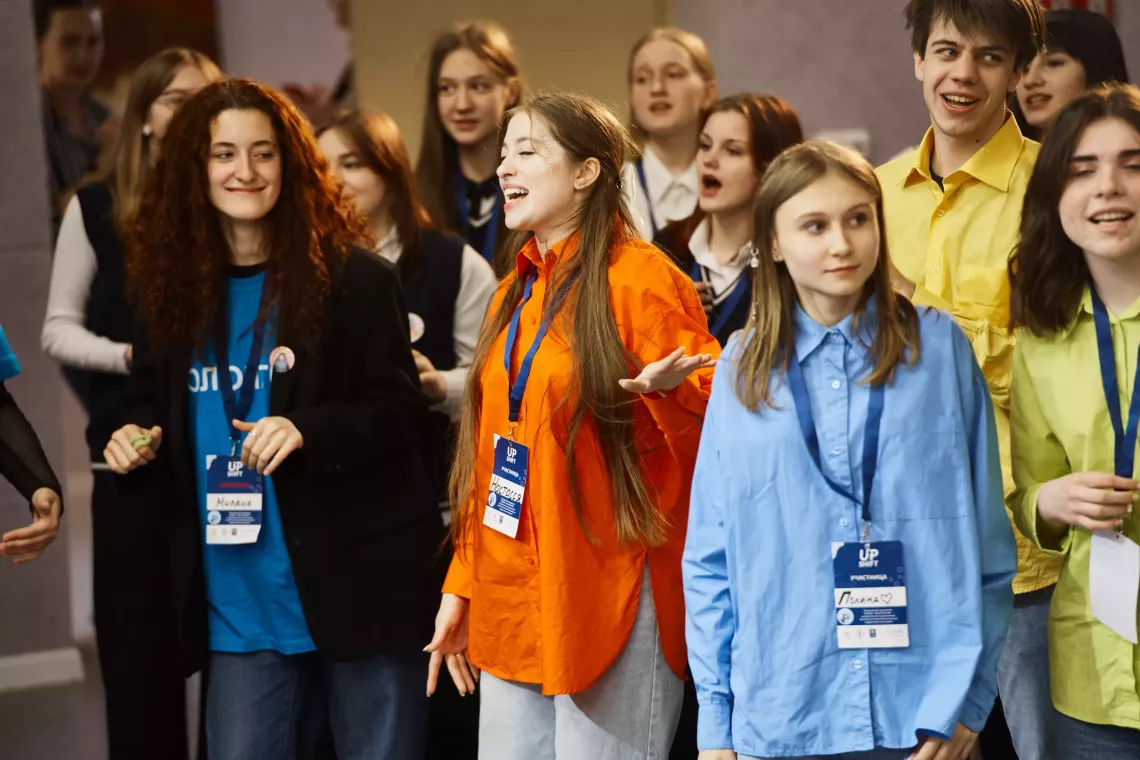
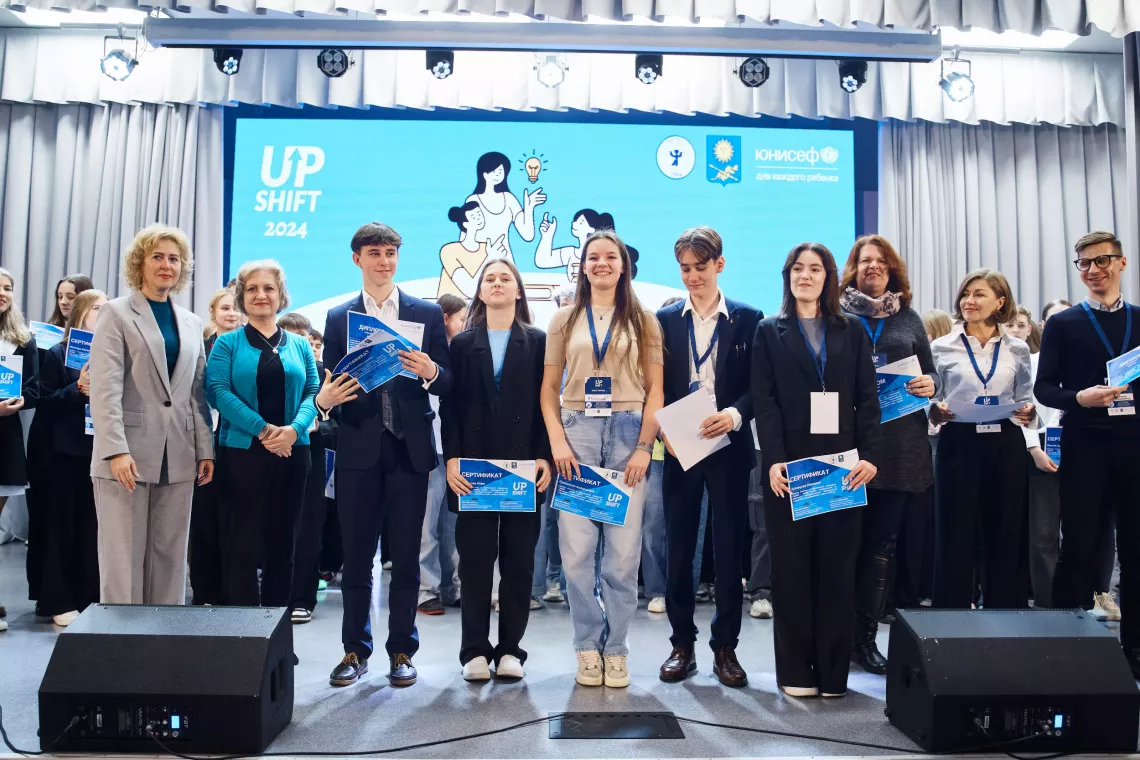
The training program aimed at strengthening the psychological well-being of adolescents and young people was implemented by the Institute of Psychology of the Belarusian State Pedagogical University in collaboration with the United Nations Children's Fund (UNICEF) in Belarus. As a result, seven teams became winners; each of them will receive funding for their projects.
Among them are students from Secondary School 16 from Baranovichi, who presented the RAZMOVA project. This is a mobile game where teenagers can communicate, thereby improving their communication skills. As planned, the user creates her/his own prototype: a unique character. You can choose the character’s mood, record feelings every day, and — at the end of the month — analyze what feelings have predominated. This will teach you to understand your emotions and track your mood.
Gymnasium No. 1 in Vitebsk will be able to publish a coaching book: “The ABCs of Resolving Teenage Conflicts.” This book describes game exercises and art therapy techniques that will help teenagers correctly interact and hear each other when in conflict with parents, teachers or peers.
Students from School No. 2 from Borovlyany presented a project at the training: informational and motivational videos will encourage teenagers to contact a psychologist and attend the school elective called “My Psychological Well-Being and Helping Peers in Crisis.”
“Of course, we are very happy to be a winner!”, shares emotions Anastasia, a team member from Borovlyany. “We understand that receiving financial support is a very solemn moment. A lot of work has been done, but much more remains to be done. We have the most vivid memories of the training. Once we graduate from school, we are unlikely to remember how we solved an equation. We will remember our friends, emotions and events, like this training. The more you see around, the more new knowledge, acquaintances and experience you have.”
Secondary School No. 1 from Logoysk was also in the winners list. The team presented an interactive guide with audio recordings: PODROSTOK.FM. By using it, peers will be able to find out about self-care tools for those in challenging life situations.
Minsk Gymnasium No. 56 presented the SUNLITE mobile application; it develops teenagers' communication skills, how to get to know each other, how to find like-minded people, and how to improve your health.
Secondary School No. 2 from Soligorsk will release a card game called “Let's Address Difficulties Together,” which will help find constructive ways to resolve conflicts with parents. A team from School No. 45 from Minsk created the “I Can Handle It” workbook; by using it, teenagers will develop their self-care and stress-coping skills through stressful situation exercises, breathing and physical practices.
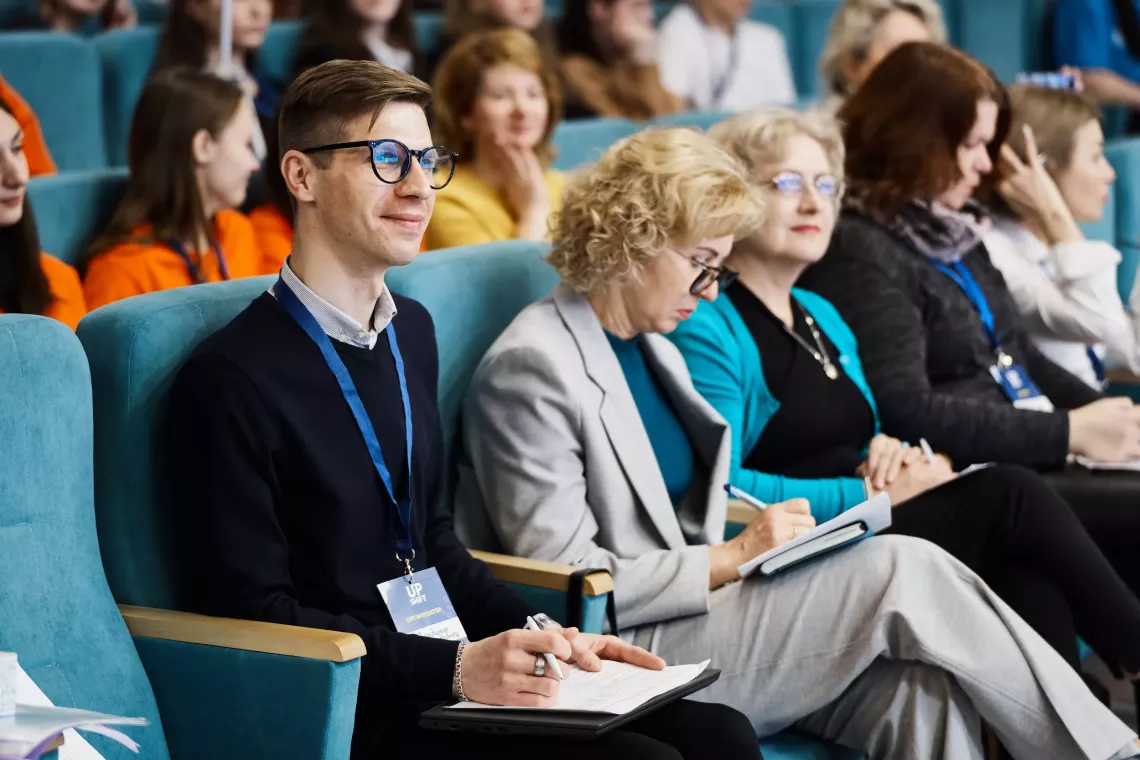
“It is very important to talk openly with teenagers about their psychological well-being. The pace of today’s life is very high; it has become difficult for young people to process incoming information and make decisions,” says Natalya Drozdova, Director of the Institute of Psychology at the Belarusian State Pedagogical University named after Maxim Tank. “Adolescence is the age of youthful maximalism, where there is a lot of search, experimentation, openness to the world and ideas. The format of this national training allows you to go beyond educational institutions and bring innovative projects of the younger generation into reality.”
“Adolescence is associated with a lot of concerns, anxieties and experiences. Therefore, we believe it is important to talk with teenagers about psychological health, options for getting help from a psychologist, and the principles of self-care. It is especially gratifying that teenagers from all over Belarus were so enthusiastically involved in designing their thematic projects that would help them and their peers take care of themselves. We will be happy to support them to implement these projects. UNICEF has been conducting such training sessions in Belarus since 2019. They help young people develop problem-solving skills, critical thinking, creativity, effective communications, and leadership. This also engages them more actively in the life of their cities,” says UNICEF.